
Your roof protects everything you value most. In Hemet and San Jacinto, where summer highs regularly top 100°F and intense UV beats down all season, choosing the right roofing contractor is critical — hiring the wrong contractor can lead to property damage, leaks, and thousands in unexpected repairs.
If you’re ready to hire a roofing contractor in the Inland Empire / Hemet area, start by getting answers to the right questions. The questions you ask before signing a contract determine whether your new roof lasts 20–30+ years or fails prematurely. Use this guide to learn exactly what to ask roofer before roof replacement and how to evaluate the answers.
Quick answer — if you only do a few things, do these: verify licensure and insurance, compare 2–3 written estimates, and confirm clear warranty and contract terms. These one important steps protect your home and your investment on any home project involving a new roof.
Keep reading for the full checklist of questions to ask, or act now: call (951) 466-0035 to speak with a Hemet roofing contractor or visit our contact page to schedule a free inspection and estimate.
Why Hemet and San Jacinto Homeowners Need Specialized Roofing Expertise
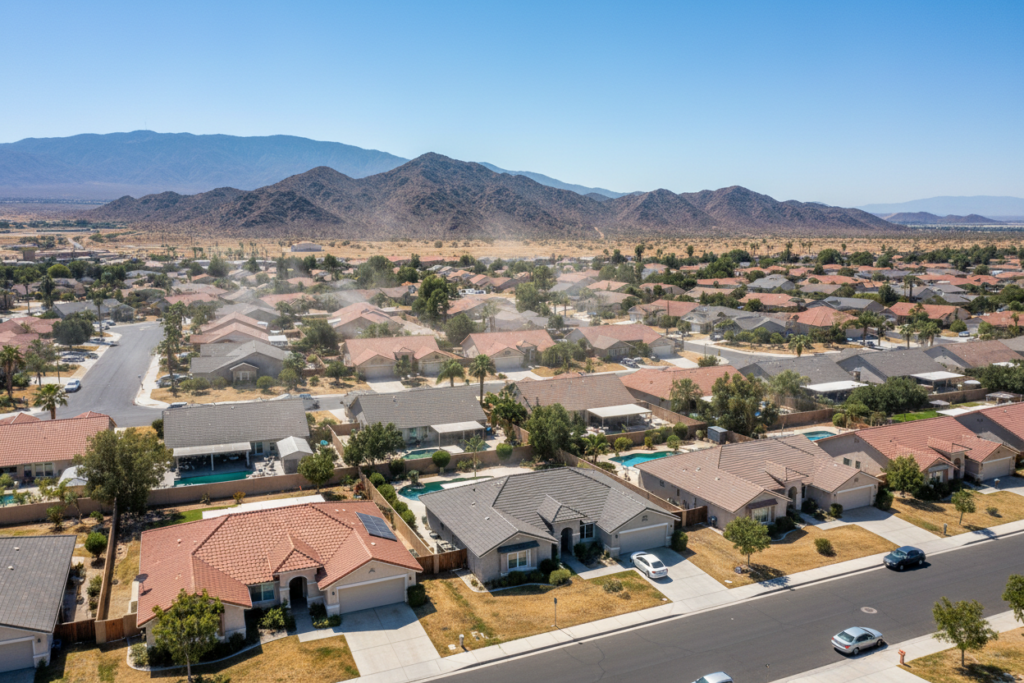
Hemet and San Jacinto face roofing conditions that differ significantly from coastal and temperate regions. Local temperature extremes, intense UV exposure, and unique seasonal rainfall patterns affect material performance and installation methods — which is why hiring a roofing contractor experienced in the Inland Empire / Hemet area matters. For local services and materials tailored to these conditions, see Outer Shield Roofing.
Extreme Temperature Fluctuations
Summers in Hemet routinely exceed 100°F, and roof surfaces can climb much higher during peak sun. That constant expansion and contraction stresses roofing components and fasteners — increasing the risk of splits, shingle cracking, or premature sealant failure.
Winters bring cooler nights, sometimes into the 30s, so the roof cycles between hot and cold repeatedly. Materials that work well in milder climates often fail sooner here unless the right high-heat-rated products and installation techniques are used.
Intense UV Radiation Exposure
The Inland Empire records some of California’s highest UV index hours. Prolonged UV exposure accelerates degradation: asphalt shingles can become brittle and lose granules faster, adhesives can break down, and poorly installed systems can show signs of failure within a few years.
Ask contractors about attic ventilation strategies and UV-resistant materials — proper ventilation plus heat-rated products extend the life of a new roof and reduce the likelihood of premature damage.
Seasonal Weather Patterns
Hemet averages relatively low annual rainfall (roughly 11 inches), but rain often arrives in concentrated storms. Your roof must endure long dry spells with intense sun, then quickly move large volumes of water during storms. That pattern places special importance on proper flashing, underlayment selection, and drainage.
Local warranty claims we commonly see result from improper flashing, inadequate underlayment choices, or skipped ventilation upgrades — issues a contractor unfamiliar with these areas may miss.
Essential Licensing and Insurance Questions
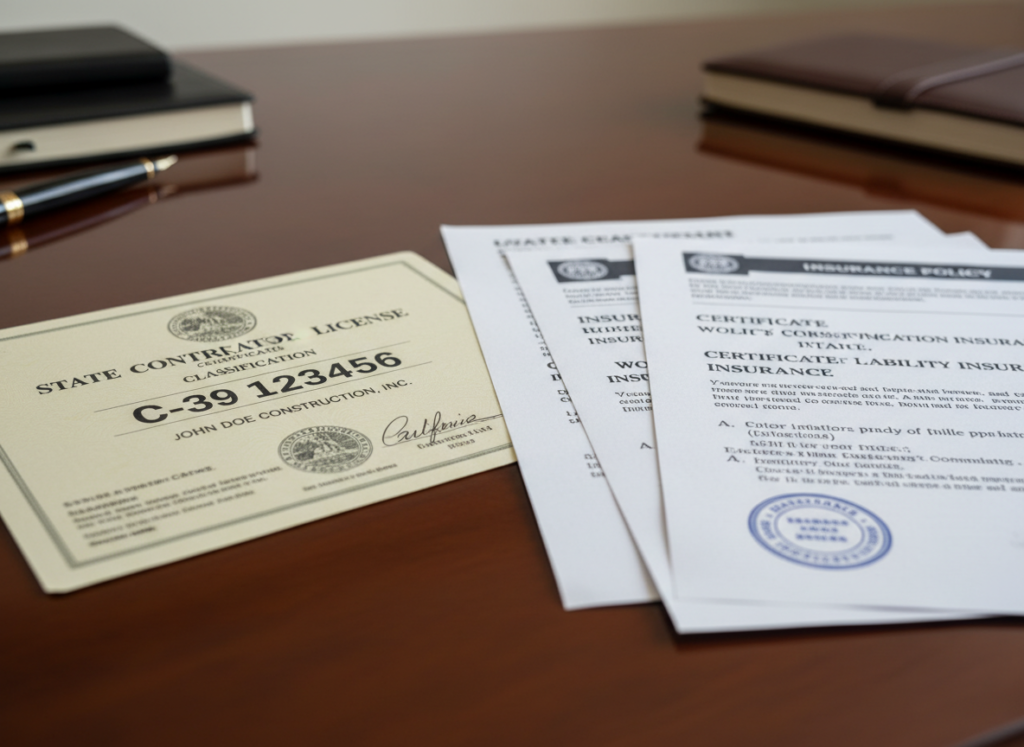
Your first questions should protect you legally and financially. Licensing and insurance verify a contractor’s professionalism and shield you from liability if accidents or property damage occur during the job.
Valid California Contractor License
Ask the roofing contractor for their California license number and verify it with the Contractors State License Board (CSLB). In California, the C-39 classification covers roofing work — make sure the license matches the roofing scope (roof replacement, reroofing, etc.).
How to verify: copy the license number the contractor gives you, then check the CSLB website. If a contractor hesitates or can’t produce a current license number, walk away — unlicensed work can void warranties and create legal headaches.
Workers Compensation Insurance
Request proof of current workers compensation coverage. This insurance protects you from claims if a worker is injured on your property; without it you could face medical bills or lien claims. Ask to see the insurer’s certificate (COI) and confirm effective dates directly with the insurer if necessary.
Can’t find the policy on their paperwork? Call (951) 466-0035 and we can help verify contractor coverage — or visit Outer Shield Roofing to request proof of insurance and credentials before you hire.
General Liability Insurance
Confirm the contractor carries general liability insurance to cover property damage or accidental jobsite incidents. Ask for coverage limits — a minimum of $1 million per occurrence is a common baseline for residential projects.
Request a certificate of insurance naming you as an additional insured when the work is scheduled; that provides extra protection if a policy cancels or lapses mid-project. Also ask how insurance affects warranty handling and claims.
Required Contractor Credentials
- Active C-39 California roofing contractor license (verify on CSLB)
- Current workers compensation insurance policy (valid for project dates)
- General liability insurance with minimum $1M per occurrence
- Clean record with Contractor State License Board (no unresolved complaints)
- Bonding documentation if requested for financial protection
Warning Signs to Avoid
- Reluctance to provide a license number immediately
- Expired or suspended contractor licenses
- Missing workers compensation coverage or unverifiable COI
- Insufficient liability limits for your project
- Multiple unresolved complaints on CSLB or poor responses to issues
Questions About Experience and Local Expertise
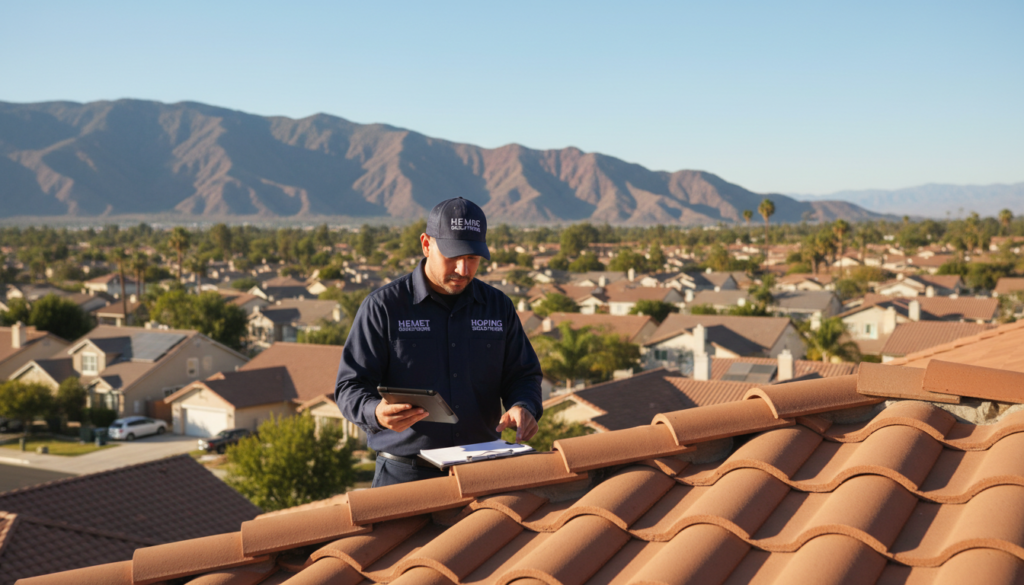
Experience matters in roofing — especially in Hemet and San Jacinto. Ask questions that reveal whether a contractor has real, local hands‑on experience with the types of roofs and climate challenges in these areas. Generic experience outside the Inland Empire doesn’t guarantee quality results here.
Years in Business and Project History
Ask how long the company has served Hemet and San Jacinto and how many roof replacements they perform annually. Numbers matter: contractors who consistently do roofing show repeatable processes and local code knowledge. Also ask about their experience with your roofing material (asphalt shingles, metal, tile): each material requires different techniques.
Suggested questions to ask references: “Did the crew meet the schedule?”, “Was the jobsite kept clean?”, “Were change orders handled fairly?”, and “Did the roof perform as promised after one year?” Contact at least three local customers to confirm consistency.
Local References, Photos, and Completed Projects
Request photos of recent Hemet/San Jacinto projects and, if possible, drive by a nearby completed job. Seeing real work locally shows quality and helps verify claims. Also check the company’s Better Business Bureau profile and read patterns in reviews — look for how the company responds to complaints.
For fast verification, ask the contractor to provide a link to a project gallery or portfolio page (for example: Outer Shield Roofing project gallery) and to share three local references with contact details.
Specialized Climate Knowledge
Ask about attic ventilation strategies, flashing details, and material choices tailored for high-heat, high-UV environments. A knowledgeable roofing contractor for the Inland Empire / Hemet area will explain why certain underlayments, ventilation improvements, and higher-UV-rated asphalt shingles or metal profiles perform better here.
Also ask about warranty implications in this climate — some manufacturer warranties require certified installers or specific installation methods to remain valid. Make sure the contractor can provide manufacturer certifications and warranty registration documentation when the job is complete.
Protect Your Hemet Home with Expert Roofing Service
Outer Shield Roofing brings years of local roofing experience in Hemet and San Jacinto. We use climate‑appropriate materials, maintain a project gallery of local work, and provide manufacturer-certified installations. See our portfolio or schedule a free inspection to get a tailored recommendation for your home.
Project Timeline and Scheduling Questions
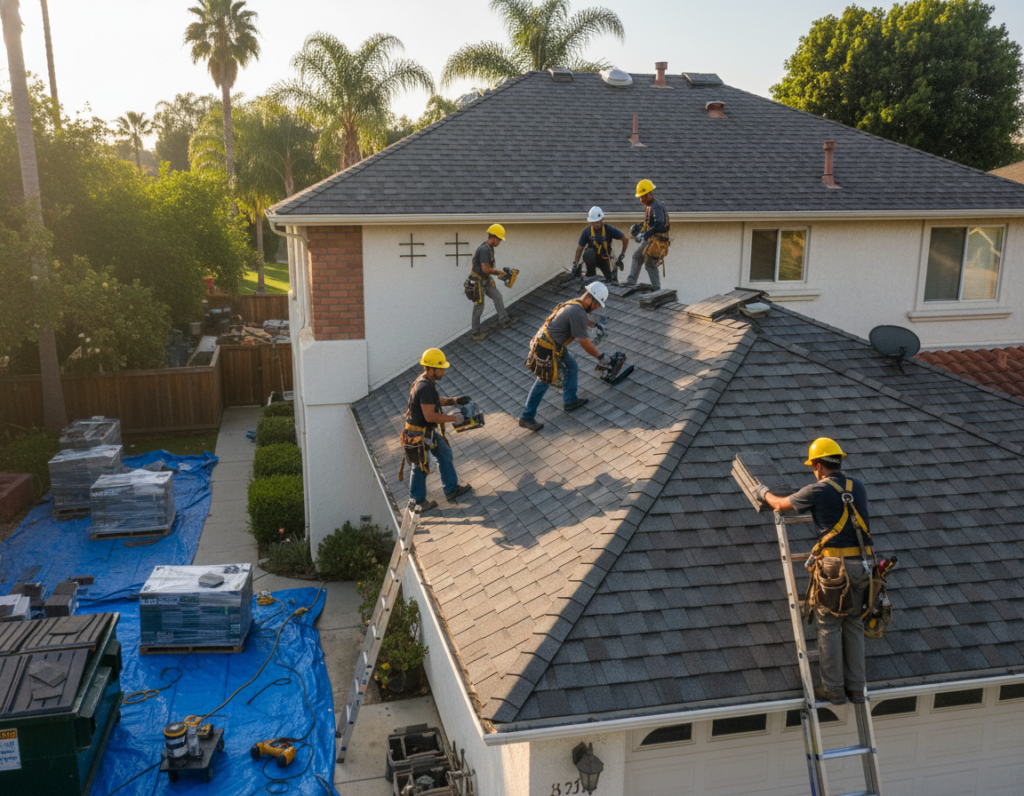
Clear timeline expectations keep your project on track and minimize disruption. Before you sign, get firm dates, understand likely delays, and confirm daily routines so you can plan around the work and protect your home.
Estimated Start and Completion Dates
Ask for specific start and completion dates in writing — vague answers like “sometime next month” are a red flag. For a typical single‑family home with a full crew, a standard roof replacement often takes about two to four days; larger or more complex roofs take longer. Ask what would change that estimate and how you’ll be notified.
What to ask: “When will you start?”, “What is the expected completion date?”, “Who is my point of contact if the schedule shifts?”
Weather Contingency Plans
Discuss how the contractor handles weather interruptions. Even in Hemet, sudden storms happen — ask whether they use tarps and temporary seals to protect your attic and interior during rain, and whether they proactively monitor forecasts and reschedule for extreme heat or storms.
Also ask about heat policies: responsible contractors avoid unsafe working conditions and may pause work during dangerous heat to protect materials and crew safety.
Daily Work Hours and Disruption
Clarify daily start/stop times, noise expectations, and site access. Most crews start early to beat the afternoon heat; knowing the hours helps you plan household routines and notify neighbors.
Ask about parking and property protection (where trucks and dumpsters will sit), and confirm cleanup procedures — reputable crews perform daily cleanup and use magnetic nail sweepers to protect driveways and lawns.
Ready to lock in a date? Schedule your free inspection or call (951) 466-0035 to discuss timing and get a written project schedule for your roof.
Roofing Material and Warranty Questions
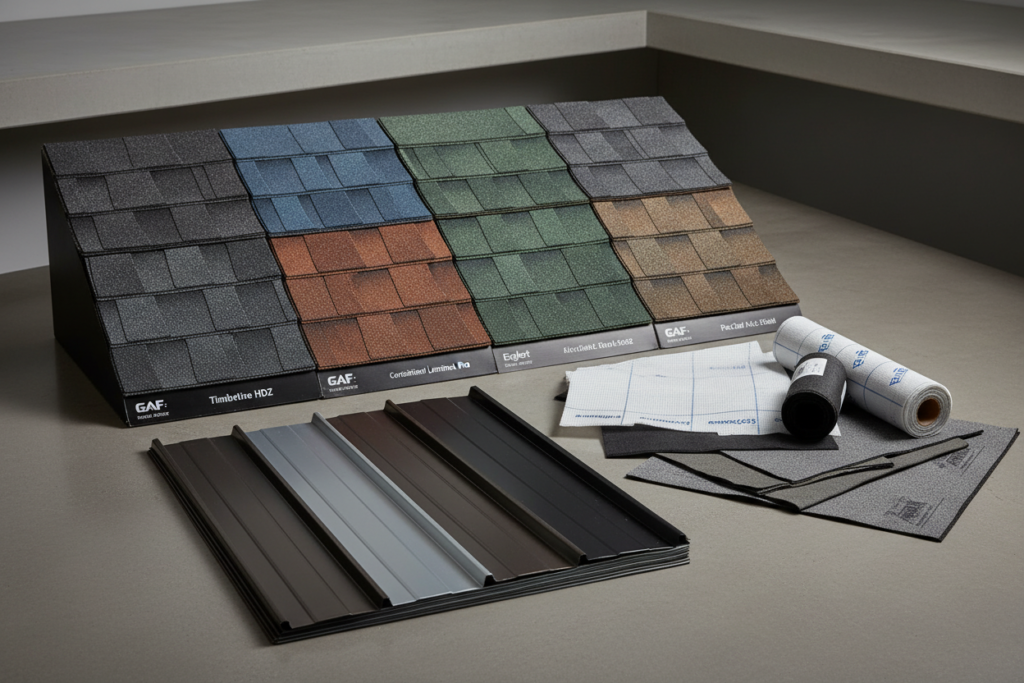
Material selection is one of the biggest determinants of how long your new roof will last and how well it performs in Hemet’s climate. A contractor’s material recommendations and the warranties they offer reveal whether they prioritize long‑term quality or short‑term savings.
Recommended Materials for Inland Empire Climate
Ask why a contractor recommends a particular roofing material for your home — not just which product, but why it suits Hemet’s high heat and UV exposure. Quality contractors explain tradeoffs (cost vs. longevity vs. energy performance) and show manufacturer data or local performance examples.
Quick material guide: economy options (standard asphalt shingles), mid-range (premium asphalt with UV additives), and premium (engineered metal or specialty shingles). Each tier has different expected lifespans and warranty profiles — choose based on budget and long-term value for your home.
If you want Outer Shield Roofing’s material recommendations and certified product lists, visit our materials page or request a free materials comparison when you schedule an inspection.
Manufacturer Warranties
Request written warranty details for every proposed product. Typical ranges (for context only): many asphalt shingles carry 25‑year to lifetime manufacturer warranties depending on grade; metal roofing products often have 30–50 year manufacturer coverage. Verify exact terms and what triggers registration requirements.
Important: some warranties require professional installation by certified installers and timely registration. Ask the contractor to confirm who registers the warranty and to show proof of previous warranty registrations for similar jobs.
Clarify what manufacturer warranties cover — defects in material versus labor costs — and whether coverage is prorated over time. Knowing limits up front prevents surprise out‑of‑pocket expenses later.
Workmanship Warranties
Workmanship warranties cover the installation. Ask the contractor to provide this in writing and explain the length and scope (e.g., one to ten years). A solid workmanship warranty shows the contractor stands behind their crew and installation practices.
Ask how warranty claims are handled: who to contact first, expected response times, and whether the contractor covers labor for warranty repairs versus passing claims to the manufacturer. Get these processes in writing.
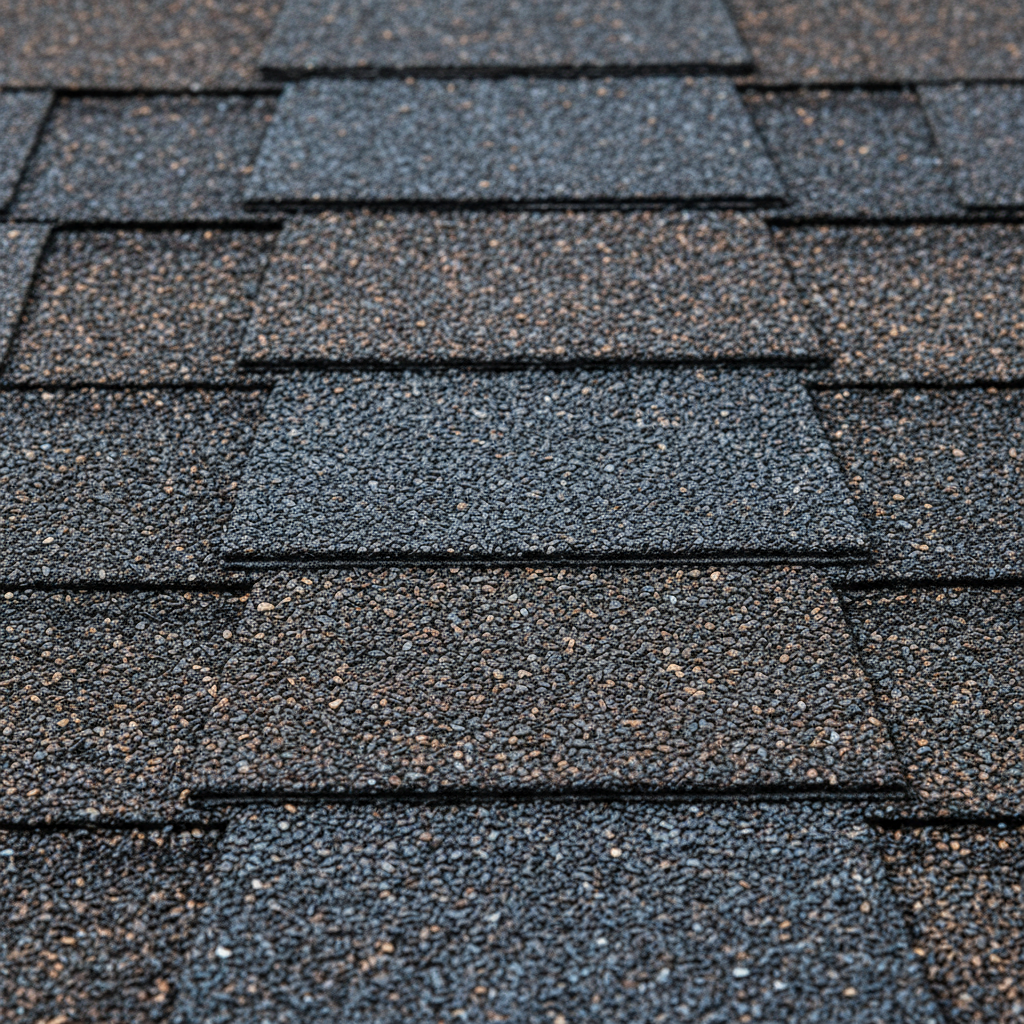
Asphalt Shingles for Hemet Climate
Choose premium asphalt shingles rated for high temperatures and UV exposure to reduce granule loss and brittleness. Look for enhanced UV coatings, heat‑resistant adhesives, and high wind ratings for local durability.
- Enhanced UV protection coatings
- Heat‑resistant adhesive strips
- Impact‑resistant options available
- Reflective color options to reduce heat absorption
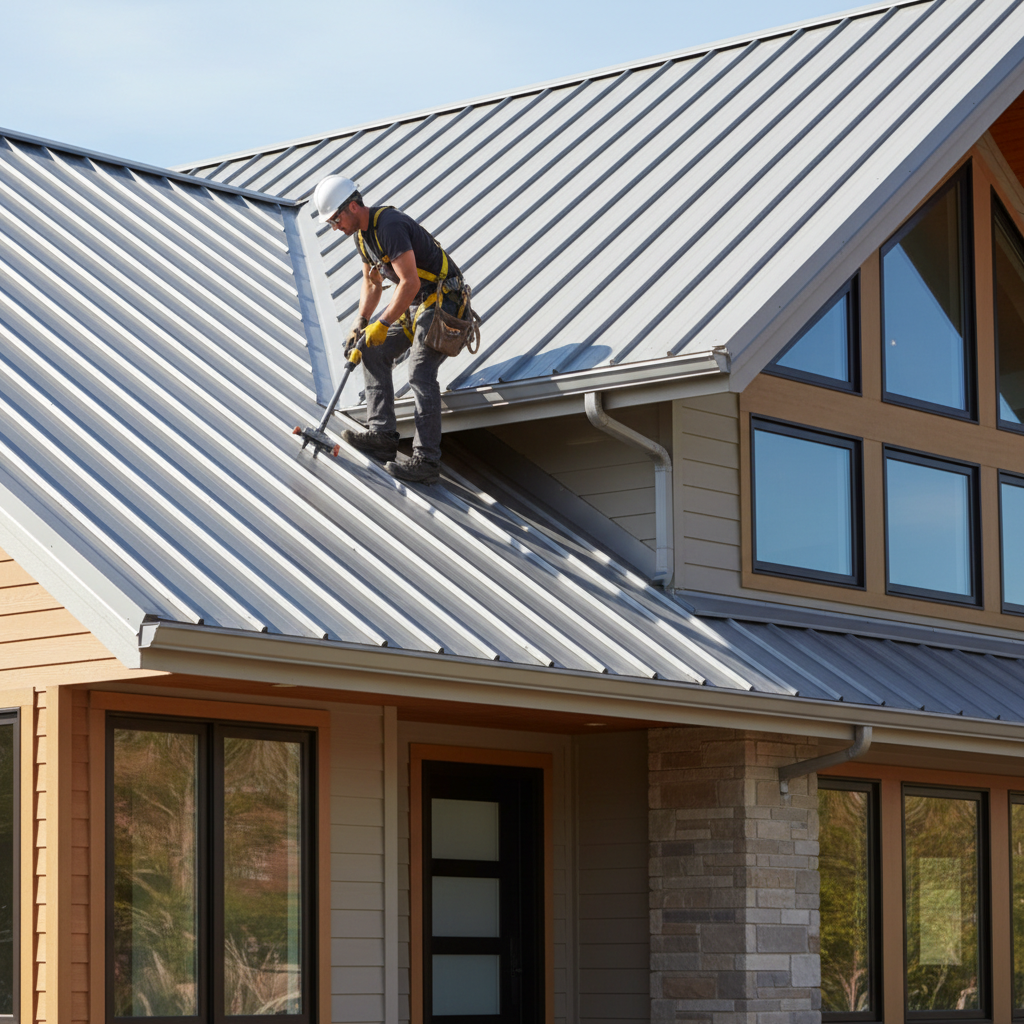
Metal Roofing Performance Benefits
Metal roofs reflect solar radiation instead of absorbing it, which can lower attic temperatures and reduce cooling demands. Properly coated metal roofs resist UV degradation, handle thermal cycling well, and can last 50+ years with correct installation.
- Superior heat reflection properties
- 50+ year lifespan potential with proper materials
- Excellent wind resistance ratings
- Minimal maintenance requirements
Still unsure which material is right? Ask for a free materials & warranty comparison from the contractor — request manufacturer spec sheets, proof of certifications, and examples of local jobs using those materials. That documentation shows they understand how to protect your new roof and honor warranties in Hemet’s climate.
Cost Estimates and Payment Terms Questions

Transparent, itemized estimates protect you from surprise costs and help you compare roofing proposals fairly. Before signing, make sure every expected cost and payment milestone is spelled out in writing so your project finishes on time and on budget.
Detailed Written Estimates
Require a written, itemized estimate that breaks down costs for tear-off, underlayment, shingles or metal panels, flashing, labor, disposal, permits, and any attic ventilation upgrades. A lump-sum quote hides details — an itemized quote shows exactly where your money goes.
Ask what is included and excluded: will the estimate cover removal and disposal of the old roof, permit fees, permit inspections, replacement decking if found damaged, and final cleanup? Clarify how change orders are handled and how unexpected decking repairs will be priced and approved.
Payment Schedule Terms
Understand the payment schedule before signing. Typical, reasonable arrangements include a modest deposit (often 10%–30%), one or more progress payments tied to clear milestones, and final payment only after a satisfactory final walkthrough. Avoid contractors demanding 50%+ upfront or full payment before work begins.
What to ask: “What triggers each payment?”, “Will I receive invoices at each stage?”, and “Do you provide lien waivers with payments?” Get payment terms in the contract and never make final payment until you confirm the job is complete and all documentation (permits, warranties, lien waivers) is delivered.
Financing and Budget Options
If paying cash is difficult, ask about financing options and typical interest rates or third-party lenders the contractor works with. Some contractors offer in-house promotions or partner financing — get terms in writing before you commit.
Also ask for cost-saving alternatives that don’t sacrifice longevity: different material tiers (economy asphalt, premium asphalt, metal), phased upgrades (ventilation now, full decking later), or timing options that may reduce labor premiums.
How much does roof replacement typically cost in Hemet and San Jacinto?
Costs vary by roof size, slope, material, and complexity. Homeowners in these areas commonly spend between $8,000 and $25,000 for a full roof replacement, with premium materials or extensive structural repairs pushing costs higher. Use multiple detailed estimates to compare true value, not just the bottom line.
Should I pay a large deposit before roofing work begins?
Reasonable deposits typically range from 10% to 30% of the total project cost to secure materials and scheduling. Avoid contractors who demand 50% or more upfront or full payment before work starts — large upfront payments greatly increase your risk if the contractor fails to complete the job.
What payment terms should I expect for roof replacement?
Expect three common payment stages: initial deposit at contract signing, progress payment when materials arrive or work reaches a major milestone, and final payment at project completion after a formal walkthrough. Always verify acceptable payment methods and request receipts and lien waivers.
Example itemized line items: Tear-off & disposal; underlayment; shingles/metal panels; flashing & vents; labor; permit fees; dumpster & disposal; final cleanup; warranty registration. Ask each contractor to provide a similarly detailed breakdown.
Ready to compare estimates? Request a free estimate or call (951) 466-0035 to start a no-obligation quote and get help comparing 2–3 written proposals for your new roof.
Permit and Building Code Compliance Questions
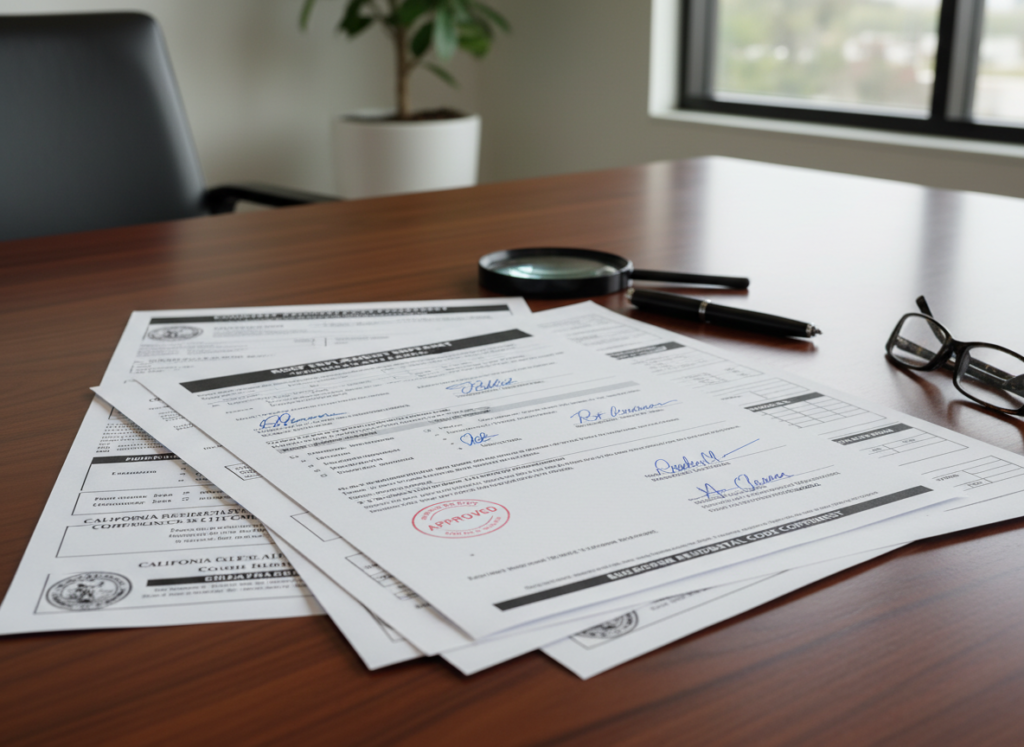
Proper permits and code compliance protect your investment, keep insurance valid, and prevent problems when you sell your home. Skipping permits or cutting corners on code requirements can create expensive headaches down the road.
Required Permits and Applications
Ask which permits are required for your roof replacement and who will obtain them. In Hemet and San Jacinto most full roof replacements require building permits; a professional contractor typically handles applications and fees as part of the service.
Quick checklist to confirm: Permit needed? Who files it (contractor or homeowner)? Estimated permit processing time? Expected inspection milestones? If your contractor suggests skipping permits to save money, walk away — that creates liability and resale issues.
Building Code Requirements
Ask how the contractor ensures code compliance with current California regulations for roof installation, ventilation, fire resistance, and structural support. Confirm they schedule required inspections and will correct any issues identified by the inspector.
Missing or improper permits can affect insurance claims and create problems when you try to sell your home. Ask the contractor to provide copies of permits and final inspection approvals as part of your project closeout documentation.
HOA Approval Requirements
If you live in an HOA, ask whether the contractor will assist with architectural reviews and submission materials. Many HOAs require pre-approval for roofing materials or colors — clarify who prepares and submits the paperwork to avoid delays.
For more information about how we handle permitting and HOA coordination, or to have Outer Shield Roofing manage the process for you, visit our services page or call (951) 466-0035.
Safety Protocols and Property Protection Questions
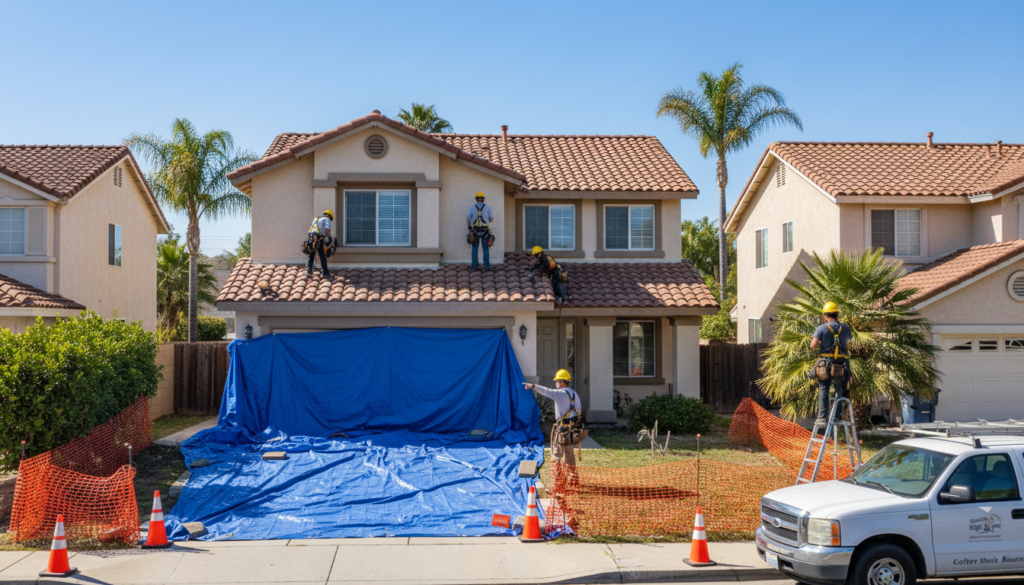
Safety protects workers and your property. A professional roofing contractor follows documented safety protocols, carries proper insurance, and uses property‑protection measures so your home avoids accidental damage during the job.
Worker Safety Measures
Ask what safety equipment and training the crew receives. Reputable crews use harnesses, roof anchors, hard hats, eye protection, and PPE appropriate for the job, and they follow fall‑protection procedures that meet OSHA requirements. Request their written safety plan and recent safety record if you want proof.
Tip: ask how often crews receive safety training and whether the company maintains records. Contractors with strong safety cultures have fewer incidents and more reliable job performance.
Property Protection Procedures
Ask exactly how they will protect landscaping, gutters, pools, driveways and outdoor furniture. Quality contractors use tarps, plywood ramps, careful dumpster placement, and protective coverings to avoid driveway and lawn damage.
Debris management is critical — ask whether they perform daily cleanup, use magnetic nail sweepers, and provide final site inspections. If accidental property damage occurs, their general liability insurance should cover repairs — request a Certificate of Insurance (COI) that names you as additional insured.
Neighborhood Consideration
Discuss noise windows, parking plans, and neighbor notifications. Professional crews work reasonable hours, avoid blocking driveways, and may notify immediate neighbors before noisy work begins to minimize disruptions.
Outer Shield Roofing will provide proof of insurance and our safety plan on request — and we can email a downloadable “Safety & Property Protection Plan” before work starts. Call (951) 466-0035 or visit Outer Shield Roofing to request documentation or to arrange a site protection walkthrough.
Experience Professional Roofing Service in Hemet
Outer Shield Roofing maintains strict safety protocols and thorough property protection on every job. We document our processes, carry full insurance, and take care to minimize disturbance to your home and neighbors. Request our COI and safety plan before your project starts for full peace of mind.
Contract Terms and Documentation Questions

Your contract is the legal backbone of the job — it defines scope, cost, schedule, and who is responsible if something goes wrong. Read every line, ask for clarifications, and insist that key protections are written into the agreement before you pay or sign.
Essential Contract Components
Make sure the contract includes a detailed scope of work, specific materials and product models, start and completion dates, an itemized cost breakdown, payment schedule, and both manufacturer and workmanship warranty terms. Missing or vague items are a major red flag.
Suggested contract language to request: “Contractor provides a workmanship warranty of X years covering installation defects; contractor will respond to warranty claims within 48 hours of notification.”
Ask about change order procedures: how are unforeseen conditions priced and approved? Insist all change orders be documented in writing with signed approval before work begins.
Lien Waivers and Legal Protections
Protect yourself from mechanics liens by requiring conditional lien waivers with progress payments and a final unconditional lien waiver upon final payment. Ask the contractor when you will receive these documents and include the timing in the contract.
Clarify dispute resolution procedures. If the contract includes arbitration or binding clauses, make sure you understand the implications — consult an attorney if needed. Avoid contracts that pressure you to waive important legal rights without clear benefit.
Project Completion Documentation
Ask what documentation you will receive at project closeout: copies of permits and inspection approvals, warranty paperwork (manufacturer + workmanship), material specification sheets, and care/maintenance instructions. These documents are essential for future warranty claims and if you later sell your property.
Confirm the contractor’s final walkthrough process: schedule a formal inspection with the contractor on completion, document any punch-list items, and only provide final payment after satisfactory completion and receipt of all documentation.
- Detailed scope of work specifications
- Itemized cost breakdowns (materials, labor, permits, disposal)
- Clear timeline with specific dates
- Manufacturer and workmanship warranty details in writing
- Defined change order procedures
- Conditional and final lien waiver process outlined
- Final walkthrough and punch-list process defined
- All key terms documented in the contract
- Reasonable payment schedule tied to milestones
Good Contract Practices
- Vague or incomplete scope descriptions
- Lump-sum pricing without itemization
- Missing or vague timeline information
- Unclear warranty terms or no workmanship warranty
- No change order procedures or verbal-only agreements
- Missing lien waiver provisions
- Pressure to sign immediately or large upfront payment demands
- Arbitration clauses without clear explanation
- Failure to provide final permit/inspection documentation
Contract Red Flags
Want a simple contract checklist to use when reviewing proposals? Download our contract checklist or call (951) 466-0035 for help reviewing a contract before you sign. Protecting your home starts with clear written terms and trustworthy contractors.
Questions About Subcontractors and Crew
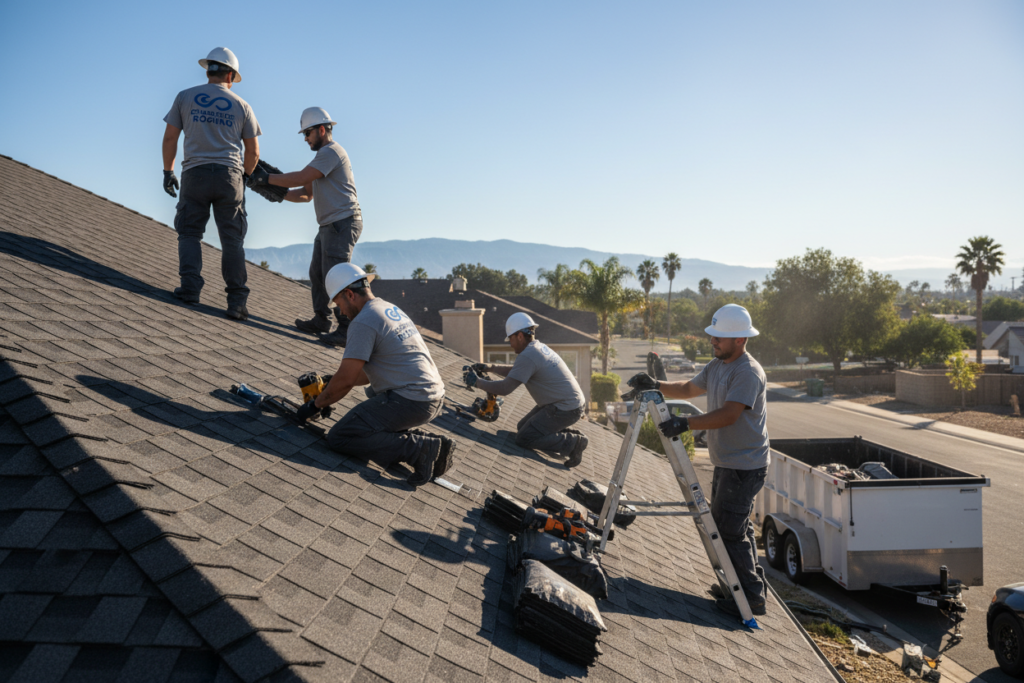
Knowing who will actually perform the work on your roof affects quality, timelines, and your legal protections. Ask direct questions so you understand whether the contractor uses in‑house crews or subcontractors and how those teams are vetted and supervised.
In-House Crews vs. Subcontractors
Ask plainly: “Will your employees or subcontractors work on my roof?” If subcontractors are used, follow up: “What vetting do you perform, and do they carry their own insurance?” Make sure the contractor confirms they accept responsibility for any subcontracted work and will provide proof of insurance for each party.
Suggested script to use when hiring: “Who will be on my roof? Please provide names, roles, and proof of insurance or certifications before work begins.” Getting names or crew IDs reduces surprises and improves accountability on the job.
Crew Experience and Training
Ask about experience levels and certifications: “How long have these crew members worked for you? Are they manufacturer‑certified for the materials you plan to install?” Certified installers and experienced teams reduce the risk of installation errors and warranty problems.
Also ask about ongoing training: reputable contractors invest in regular crew training for safety, new materials, and updated installation techniques.
Communication and Supervision
Clarify supervision and communication: “Who is my on‑site supervisor or foreman? How can I reach them during the job?” Confirm whether a company representative performs daily checks and whether you’ll receive end‑of‑day updates about progress or discoveries.
For added confidence, request links to the contractor’s crew or certifications page (for example: Outer Shield Roofing crew & certifications) and ask for references for recent jobs where the same crew worked.
Material Sourcing and Quality Assurance
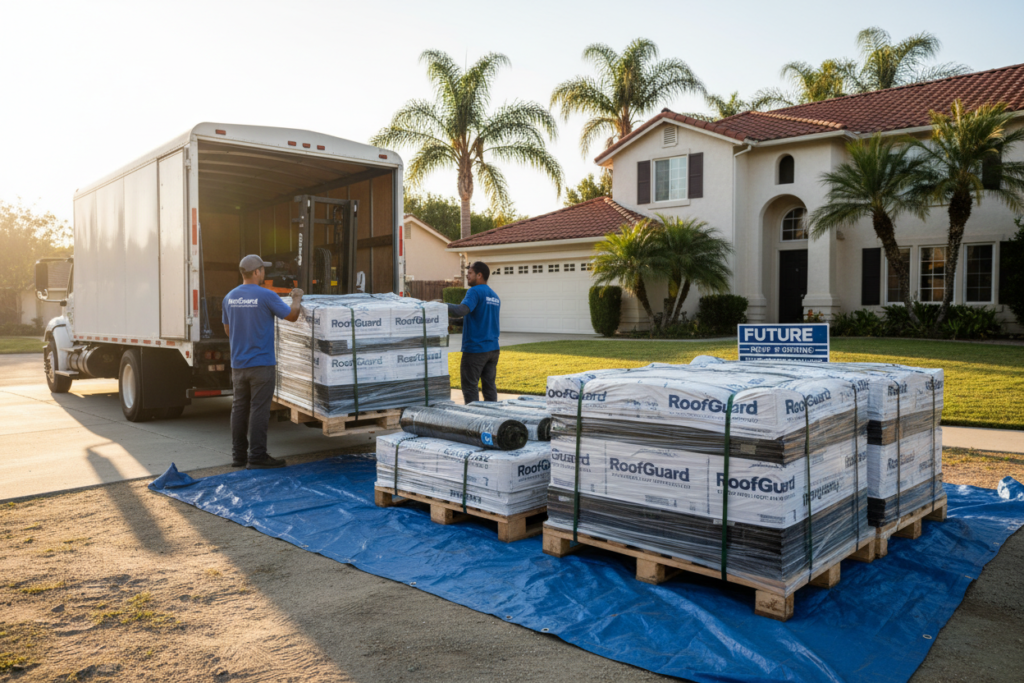
The materials your contractor uses determine how well your new roof performs in Hemet’s heat and sun. Ask where materials come from, whether they use name‑brand products, and how they protect and handle those materials on site.
Material Supplier Relationships
Ask which suppliers and manufacturers the contractor works with. Established relationships with reputable suppliers mean better availability, documented provenance, and often faster warranty support. Prefer contractors who use recognized brands rather than untested off‑brand products.
Suggested questions to ask: “Which manufacturer and product line will you install?”, “Can you provide specification sheets and material samples?”, and “Do you have proof of purchase/chain of custody for these materials?” For a list of our preferred manufacturers and supplier partnerships, visit Outer Shield Roofing.
Quality Control Measures
Ask how the contractor inspects materials on delivery and documents installation quality. Reputable contractors perform delivery inspections, follow manufacturer installation specifications exactly, and perform scheduled quality checks during the job.
Request photographic documentation of key installation stages (underlayment, flashing, ventilation work) — these photos help verify the job was done to spec and provide important records if you need warranty service later.
Material Waste and Disposal
Ask how they calculate material quantities to minimize waste and how they handle disposal of your old roof. Responsible contractors include safe disposal in their estimates and can provide proof of legal disposal at approved facilities.
Clarify whether disposal appears as a separate line item or is bundled into the total price to avoid surprises. If you want material samples or a spec sheet emailed to you, request them up front — many contractors, including Outer Shield, will send samples or a materials comparison when you request an estimate.
How to Prepare Your Home and Final Questions to Ask
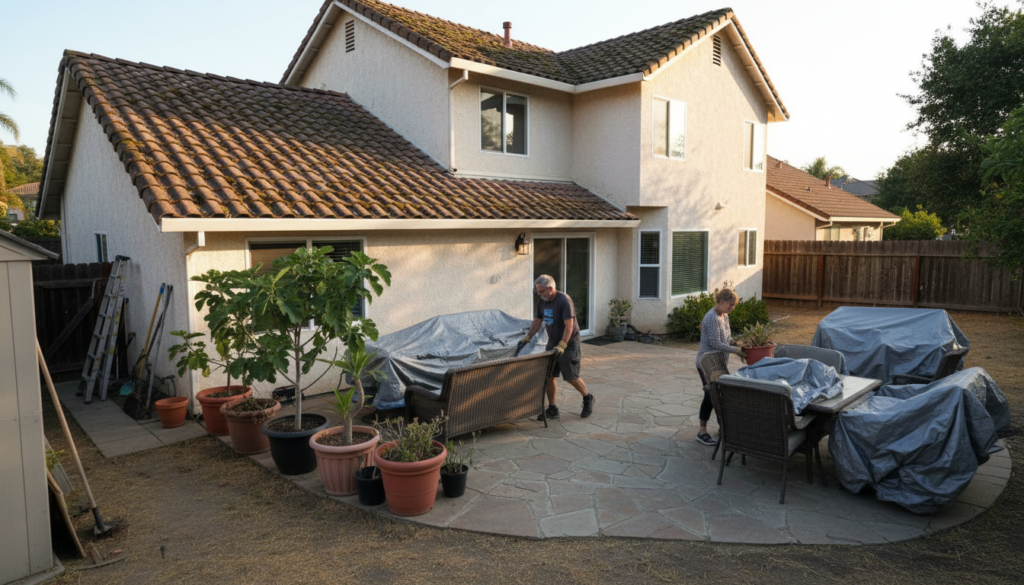
Proper preparation reduces disruption, protects belongings, and helps your roofing project finish smoothly. Use the final questions below to confirm responsibilities, timing, and follow-up so there are no surprises on your home project.
Property Preparation Requirements
Ask what you need to do before work begins. Typical requests include removing items from the roof perimeter, taking down fragile wall hangings that could fall from vibration, and protecting valuables stored in the attic.
Clarify vehicle and parking arrangements: Where should you and your neighbors park during the project to avoid debris or accidental damage? Your contractor should specify safe parking zones away from drop areas.
Confirm access needs: Will workers need attic access, electrical outlets, or water? Knowing requirements ahead of time avoids delays on day one.
During Project Expectations
Ask about expected noise levels and timing so you can plan your days and protect children, pets, and sensitive items. Roof replacement is noisy — most crews start early to avoid afternoon heat.
Discuss worker amenities and site rules: if you prefer crews not to use your home bathrooms, request portable facilities; set reasonable rules about smoking, music, and conduct on your property.
Also confirm daily cleanup practices and protection for landscaping. Professional teams perform daily debris sweeps and use magnetic nail sweepers to keep driveways and lawns safe.
Post-Completion Follow-Up
Ask whether the contractor schedules a follow-up inspection and when it occurs. Follow-up visits show commitment to customer satisfaction and can catch minor issues before they become major problems.
Clarify long-term support: “Can I call months later with a question?” and “How are warranty claims handled?” Good contractors maintain a relationship after project completion and provide clear maintenance guidance.
Maintenance note: manufacturer warranties sometimes require periodic inspections or maintenance to remain valid — ask your contractor for recommended service intervals and get those recommendations in writing.
Before Project Starts
Prepare your property to protect belongings and ensure a smooth start.
- Move vehicles to safe locations away from work areas
- Cover or relocate outdoor furniture and decorations
- Remove wall hangings that might fall from vibrations
- Protect attic items from potential dust and debris
- Trim tree branches near the roof perimeter
- Notify immediate neighbors about upcoming work
During Active Work
Know daily routines to minimize stress and keep everyone safe.
- Expect noise starting in early morning hours
- Keep children and pets away from work areas
- Avoid parking in designated work zones
- Maintain clear communication with the project supervisor
- Inspect progress at convenient times with the crew
- Address concerns immediately rather than waiting
Project Completion
Confirm everything is complete before making final payment.
- Conduct thorough walkthrough with contractor
- Verify all debris removal and cleanup completion
- Test gutters and downspouts for proper function
- Confirm receipt of all warranty documentation
- Obtain copies of permits and inspection approvals
- Verify final invoice matches contract pricing
Long-Term Maintenance
Follow recommended care to extend roof life and protect warranties.
- Schedule annual professional roof inspections
- Clean gutters and downspouts seasonally
- Trim overhanging tree branches promptly
- Address minor issues before they become major problems
- Document all maintenance and repairs performed
- Keep your contractor’s contact information handy for quick support
Need a ready-to-use checklist? Download our pre-project checklist or call (951) 466-0035 to schedule a free pre-inspection and ensure your home is prepared for a successful roof replacement.
Protect Your Hemet Home with Informed Decisions
The questions you ask before signing a roof replacement contract determine whether your project succeeds or becomes a costly headache. Hemet and San Jacinto homeowners face unique challenges — extreme heat, intense UV exposure, and occasional heavy storms — so choosing the right roofing contractor matters more here than in many other areas.
Make sure you evaluate contractor answers carefully. Don’t rush the decision: verify licenses and insurance, compare 2–3 written estimates, confirm clear warranty and contract terms, and check local references. These steps protect your home and your investment when you replace a roof.
Professional roofing contractors welcome detailed questions because informed customers make better choices and experience higher satisfaction. Contractors who avoid clear answers or pressure you to sign immediately should raise red flags.
Remember: the lowest bid rarely provides the best long‑term value. Quality materials, certified installers, proper insurance, and solid workmanship warranties cost more up front but deliver superior results and fewer headaches over the years.
Trust Outer Shield Roofing for Your Hemet Roof Replacement
Outer Shield Roofing serves Hemet and San Jacinto with honest answers, proven workmanship, and a commitment to protecting your home. We use climate‑appropriate materials (including premium asphalt shingles and metal roof options), maintain full insurance, and back our work with clear warranties. For proof, ask us for our license number, Certificate of Insurance, and recent local project photos.
Next steps (fast): 1) Call (951) 466-0035 2) Schedule a free inspection 3) Get 2–3 written estimates and compare warranties. Need help evaluating proposals? Contact Outer Shield Roofing and we’ll walk you through the options so you can make a confident choice for your new roof.
FAQ: Hiring a Roofing Contractor
How do I know if a roofing contractor is legit?
Check license, insurance, and reviews.
How many quotes should I get?
At least 2–3.
Should I pay upfront?
Only a small deposit (10–30%). Never full payment.
How long does roof replacement take?
Usually 1–3 days.