
Living in Hemet means enjoying over 270 sunny days per year, but this intense Southern California sunshine takes a serious toll on your home’s first line of defense: your roof. The extreme heat cycles, intense UV radiation, and temperature fluctuations unique to our region can reduce a roof’s lifespan by 20-40% compared to milder climates. As licensed roofing professionals serving the Inland Empire for years, we’ve seen firsthand how Hemet’s climate creates specific challenges for homeowners.
In this guide, we’ll explain the science behind heat-accelerated roof aging, show you how to spot early warning signs, and provide a clear framework for making informed repair versus replacement decisions. Whether your roof is showing visible signs of wear or you’re simply being proactive, understanding how our local climate affects your roof will help you protect your home and avoid costly emergency situations.
The Problem: Why Hemet’s Climate is a Roof’s Biggest Enemy
Severe heat damage on asphalt shingles in Hemet showing curling, cracking, and granule loss
Hemet’s climate creates a perfect storm of conditions that accelerate roof aging. With summer temperatures regularly exceeding 100°F for extended periods, your roofing materials face extreme stress that few other regions experience. Here’s what happens to your roof in our unique climate:
- Thermal Cycling: Daily temperature swings of 30-40 degrees cause roofing materials to expand and contract repeatedly, creating microscopic cracks that worsen over time.
- UV Degradation: Our elevation and clear skies mean intense ultraviolet radiation that breaks down the oils in asphalt shingles, causing them to become brittle and lose protective granules.
- Heat Absorption: Dark roofing materials can reach surface temperatures of 150-175°F in peak summer, accelerating chemical breakdown of materials.
- Attic Overheating: Poor ventilation traps heat under your roof, creating a “double-cooking” effect that damages shingles from below while the sun bakes them from above.
These factors don’t just affect the visible shingles – they impact the entire roofing system, including underlayment, decking, and structural components. What might last 25-30 years in a milder climate often needs replacement after just 15-20 years in Hemet’s harsh conditions.
Early Warning Signs You Shouldn’t Ignore
Catching roof problems early can mean the difference between a simple repair and a complete replacement. Here are the key indicators that your roof is suffering from heat-related deterioration:
Visual Signs
- Curling or cupping shingles (edges turning upward)
- Cracked, brittle, or missing shingles
- Bald spots where granules have worn away
- Visible sagging or dips in the roofline
- Damaged or cracked flashing around vents and chimneys
Performance Signs
- Granules collecting in gutters or downspouts
- Increased cooling costs during summer months
- Attic temperature significantly hotter than outside
- Visible sunlight through roof boards in attic
- Shingle edges that appear warped or distorted
Interior Clues
- Water stains on ceilings or walls
- Peeling paint near roof areas
- Damp spots in attic after rain
- Musty odors in upper rooms
- Increased indoor temperature on hot days
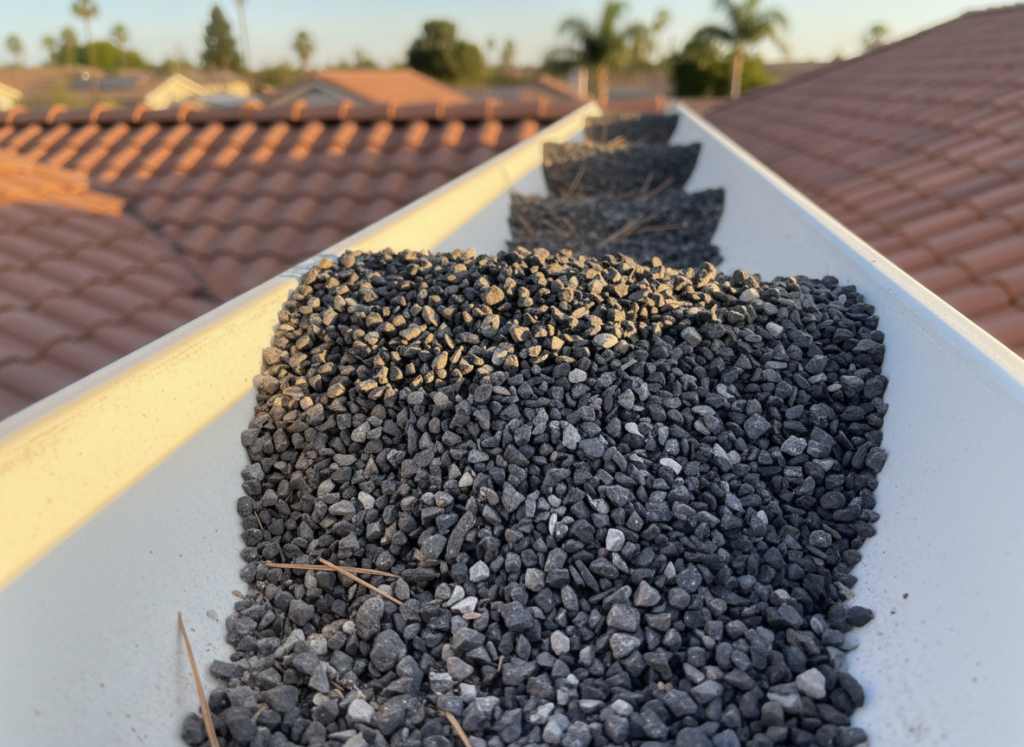
Granule accumulation in gutters is a clear sign of accelerated shingle deterioration
If you notice any of these signs, it’s important to have your roof professionally evaluated. According to the National Roofing Contractors Association (NRCA), addressing these issues promptly can prevent more extensive damage to your home’s structure and interior.
What a Professional Roofer Looks For
While homeowners can spot obvious signs of damage, professional roofers are trained to identify subtle indicators that might escape the untrained eye. Here’s what experienced roofing contractors evaluate during a comprehensive roof inspection in Hemet:
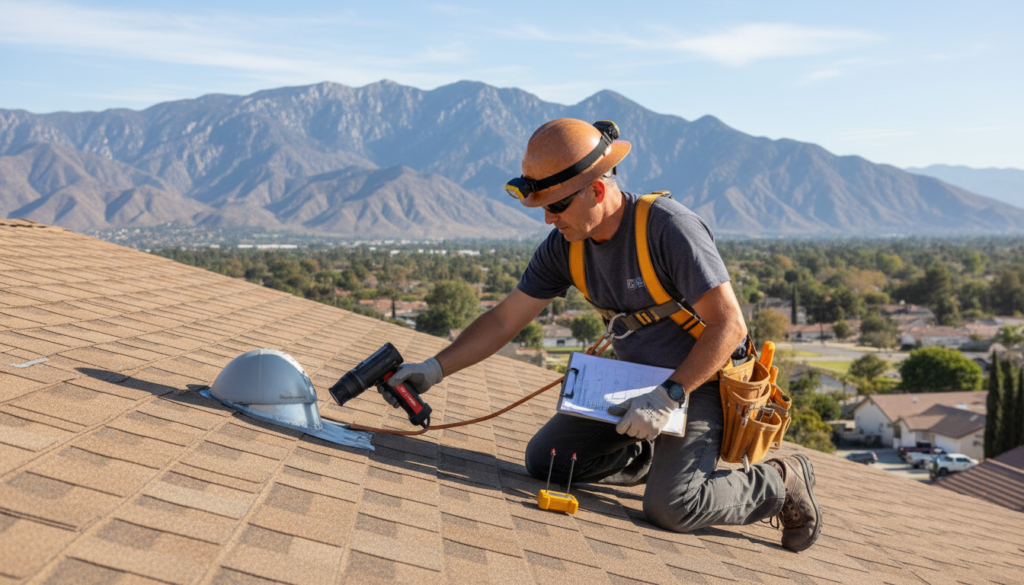
Professional inspections reveal hidden damage that homeowners often miss
Surface Evaluation
Professional roofers begin with a detailed surface assessment, looking for:
- Granule Loss Patterns: Excessive or uneven granule loss indicates advanced UV damage
- Shingle Pliability: Testing how brittle shingles have become by gently bending them
- Flashing Integrity: Examining seals around vents, chimneys, and valleys where leaks often begin
- Ridge Cap Condition: Checking the most exposed parts of the roof for damage
Structural Assessment
Beyond the surface, professionals evaluate:
- Decking Condition: Using moisture meters to detect hidden water damage
- Underlayment Integrity: Assessing whether the water barrier beneath shingles is still effective
- Ventilation Adequacy: Measuring airflow and attic temperature to identify ventilation issues
- Structural Sagging: Looking for signs that heat and moisture have compromised roof structure
According to the Roofing Contractors Association of California (RCACal), proper inspections should include both exterior and attic evaluations. Many homeowners miss critical signs because they never examine their roof from the underside, where heat damage often first appears as warped decking or moisture stains.
The Repair vs. Replacement Decision
One of the most challenging questions homeowners face is whether to repair an existing roof or invest in a complete replacement. This decision involves balancing immediate costs against long-term value and safety considerations.
| Consideration | When Repair is Viable | When Replacement is Smarter |
| Extent of Damage | Localized damage affecting less than 30% of roof surface | Widespread damage, multiple problem areas, or systemic issues |
| Roof Age | Less than 15 years old for asphalt shingles in Hemet’s climate | Over 15-20 years old with multiple repair history |
| Underlayment Condition | Intact, dry underlayment with no signs of moisture penetration | Deteriorated underlayment, water stains on decking, or mold presence |
| Cost Comparison | Repair cost less than 30% of replacement cost | Multiple repairs needed, approaching 30-50% of replacement cost |
| Energy Efficiency | Roof still provides adequate insulation and reflection | Significantly higher cooling costs due to heat absorption |
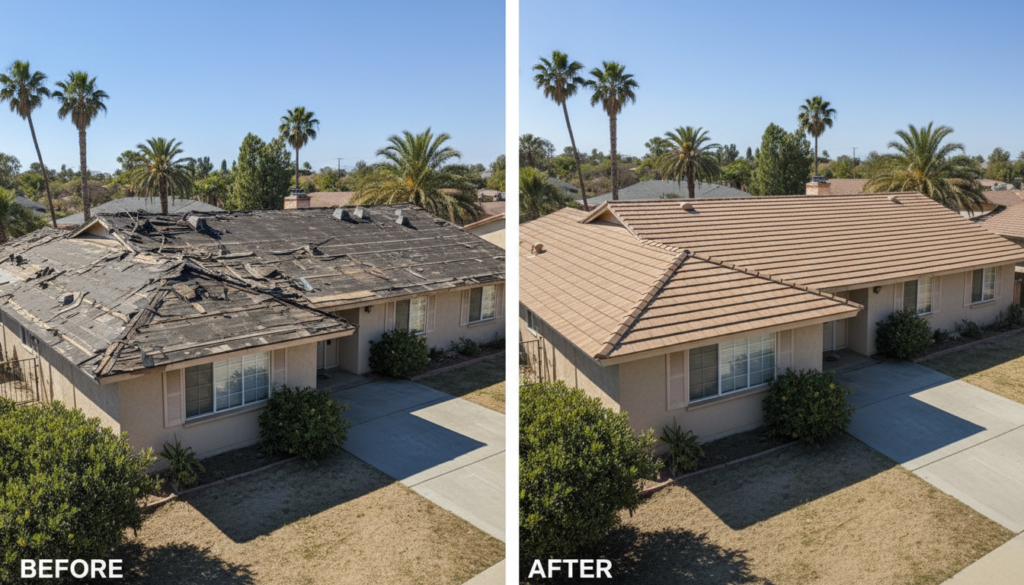
Before and after a complete roof replacement Hemet CA – note the improved appearance and structural integrity
The National Roofing Contractors Association recommends considering replacement when repairs would exceed one-third of the cost of a new roof, or when multiple issues are present simultaneously. In Hemet’s harsh climate, patching an aging roof often provides only a temporary solution that may cost more in the long run.
Roofing Materials & The Hemet Climate
Choosing the right roofing materials for Hemet’s extreme climate is crucial for maximizing lifespan and performance. Different materials respond differently to our intense heat, UV exposure, and occasional strong winds.
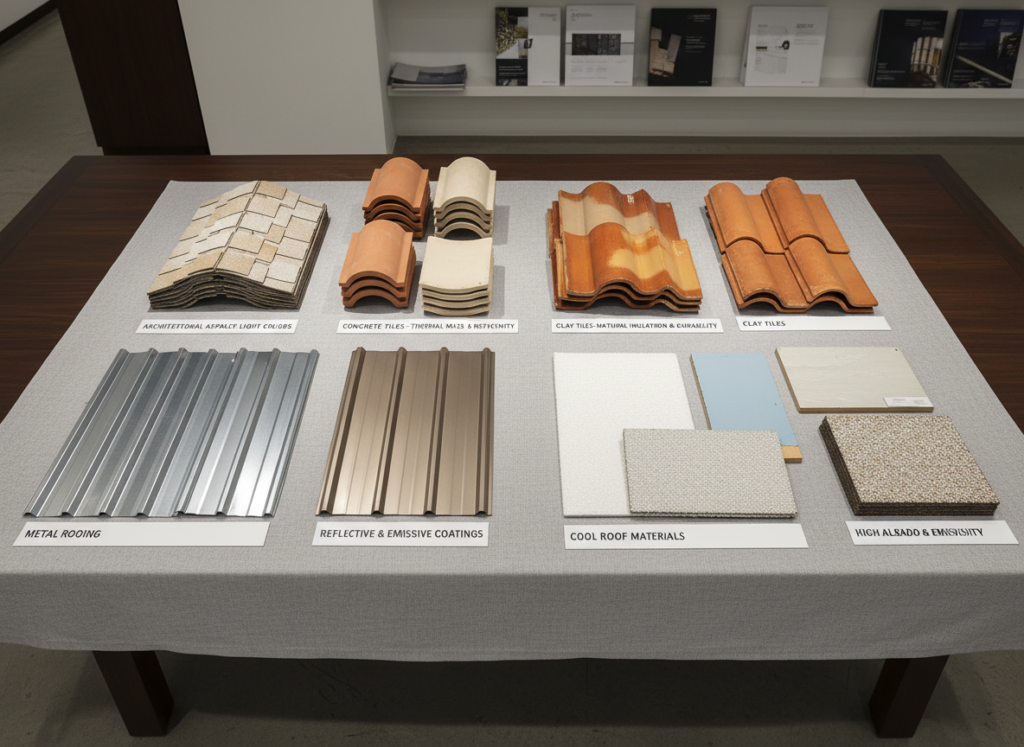
Roofing materials with different heat resistance properties and lifespans in Hemet’s climate
Asphalt Shingles
Performance in Hemet: Standard asphalt shingles often show significant deterioration after 12-15 years in our climate. However, architectural or premium shingles with enhanced UV protection can last 20+ years.
Heat Resistance: Choose light colors with high solar reflectance (SR) ratings and cool roof technology to reduce heat absorption.
Cost-Benefit: Most affordable initial investment but may require earlier replacement in our climate.
Tile Roofing
Performance in Hemet: Clay and concrete tiles excel in our hot climate, potentially lasting 40-50+ years with proper installation and maintenance.
Heat Resistance: Natural thermal properties create an air barrier that helps regulate temperature. Light colors reflect more heat.
Cost-Benefit: Higher upfront cost but superior longevity makes them cost-effective over time in Hemet’s climate.
Metal Roofing
Performance in Hemet: Modern metal roofing with reflective coatings performs exceptionally well, lasting 30-50 years even in extreme heat.
Heat Resistance: Highly reflective surfaces can reduce cooling costs by 20-30% compared to conventional roofing.
Cost-Benefit: Moderate to high initial investment but excellent durability and energy savings over time.
The Critical Role of Ventilation
According to the Roofing Contractors Association of Southern California, proper ventilation is as important as the roofing material itself in extending roof life. In Hemet’s climate, inadequate ventilation can create attic temperatures exceeding 150°F, which damages roofing from underneath while increasing cooling costs.
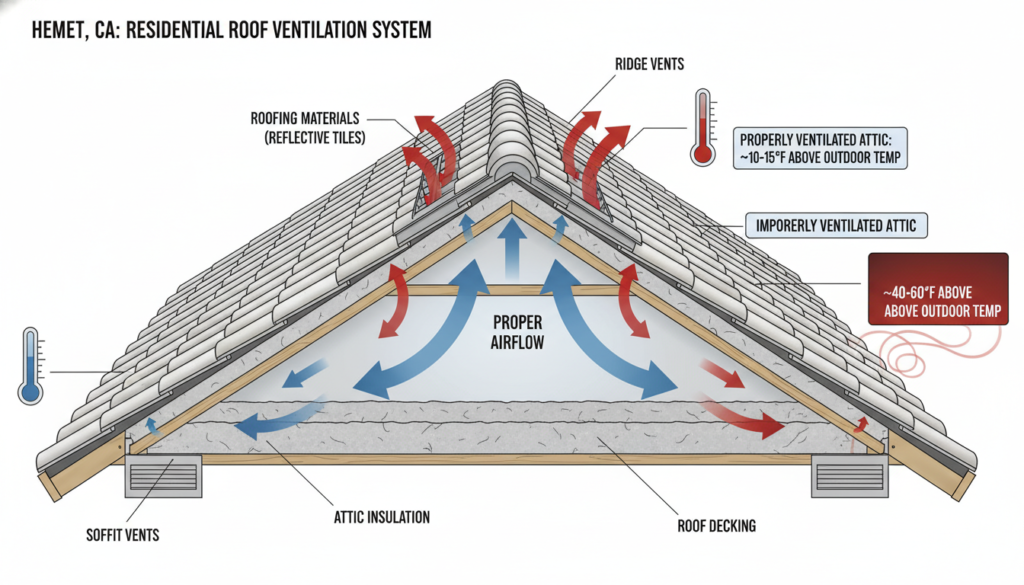
Proper ventilation creates airflow that reduces attic temperature and extends roof life
A properly ventilated roof system combines intake vents (usually at the eaves) with exhaust vents (at or near the ridge) to create continuous airflow that removes superheated air and moisture. This single upgrade can add years to your roof’s lifespan in Hemet’s challenging climate.
How to Choose a Quality Roofing Contractor
Selecting the right roofing professional is crucial for ensuring quality work that stands up to Hemet’s harsh climate. Here’s what to look for when vetting potential contractors:
- Proper Licensing: Verify active California Contractors State License Board (CSLB) licensing with a C-39 Roofing classification. Check license status at CSLB’s website.
- Insurance Coverage: Confirm both workers’ compensation and liability insurance with current certificates.
- Local Experience: Choose contractors with specific experience in Hemet and the Inland Empire who understand our unique climate challenges.
- Association Membership: Look for membership in professional organizations like the National Roofing Contractors Association (NRCA) or Roofing Contractors Association of California (RCACal).
- Detailed Inspections: Quality contractors perform thorough evaluations including attic inspections and moisture readings, not just quick visual checks.
- Written Documentation: Expect detailed written estimates, clear contracts, and explicit warranties covering both materials and workmanship.
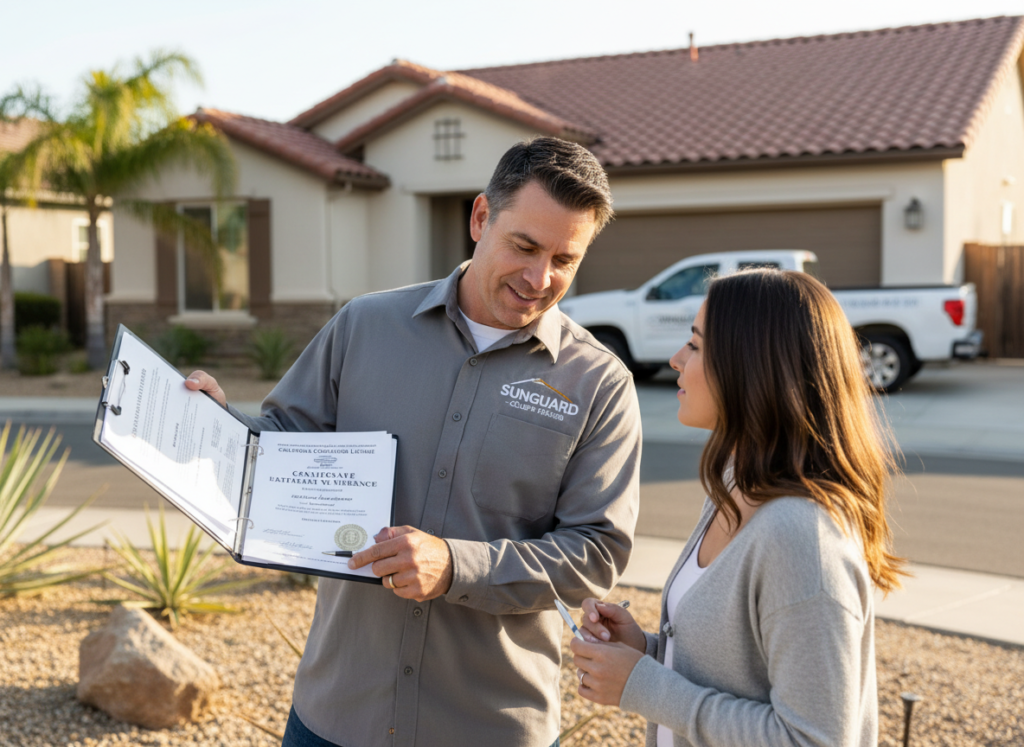
Professional contractors provide detailed documentation and clear communication
The Roofing Contractors Association of California recommends getting at least three detailed estimates for any major roofing project. This allows you to compare approaches, materials, and pricing while assessing each contractor’s knowledge and professionalism.
Common Mistakes Homeowners Make
Even well-intentioned homeowners often make decisions that compromise their roof’s performance and lifespan. Here are the most common pitfalls to avoid:
Delaying Necessary Maintenance
Many homeowners wait until they see interior water damage before addressing roof issues. By this point, the damage has typically extended well beyond the visible leak, affecting decking and potentially structural elements.
Better approach: Schedule professional inspections every 2-3 years, especially after extreme heat waves or rare storms.
Choosing Based on Price Alone
In Hemet’s challenging climate, cutting corners on materials or installation quality leads to premature failure. The lowest bid often excludes crucial components like proper underlayment or adequate ventilation.
Better approach: Compare detailed estimates that specify materials, preparation, and ventilation improvements.
DIY Repairs on Heat-Damaged Roofs
Amateur repairs on heat-compromised roofing often create more problems than they solve. Heat-brittled shingles can crack during repair attempts, and improper sealing creates new water entry points.
Better approach: Consult professionals who understand how heat affects different roofing components and can implement proper solutions.
Ignoring Ventilation Issues
Many Hemet homes have inadequate attic ventilation, creating a furnace-like environment that damages roofing from below. Simply replacing shingles without addressing ventilation means the new roof will face the same accelerated aging.
Better approach: Include ventilation assessment and upgrades with any major roof work.
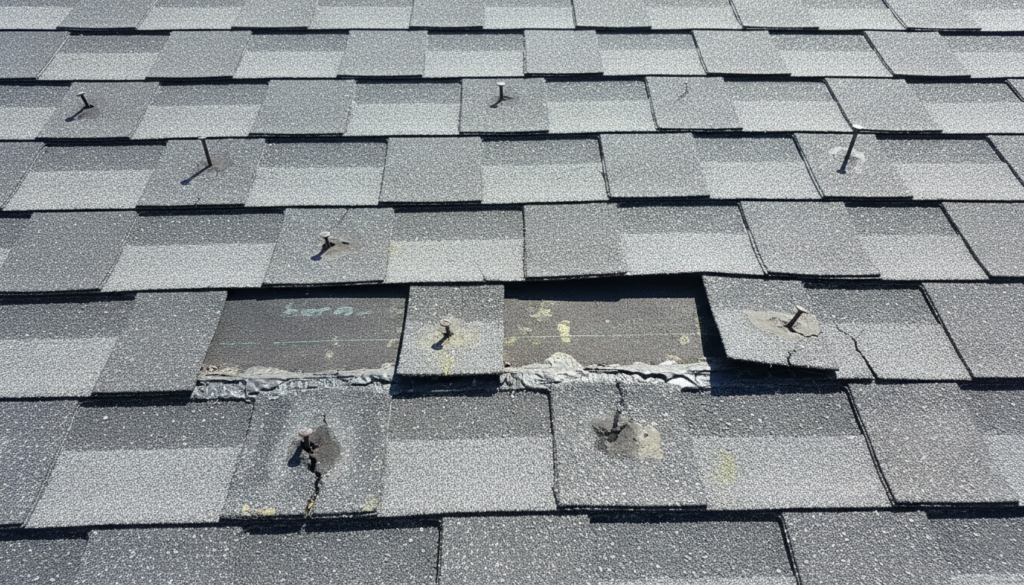
Improper installation accelerates heat damage, leading to premature failure
Long-Term Roof Maintenance for Hemet Homes
While you can’t prevent the effects of Hemet’s extreme heat entirely, proper maintenance can significantly extend your roof’s lifespan. Here are practical steps homeowners can take:
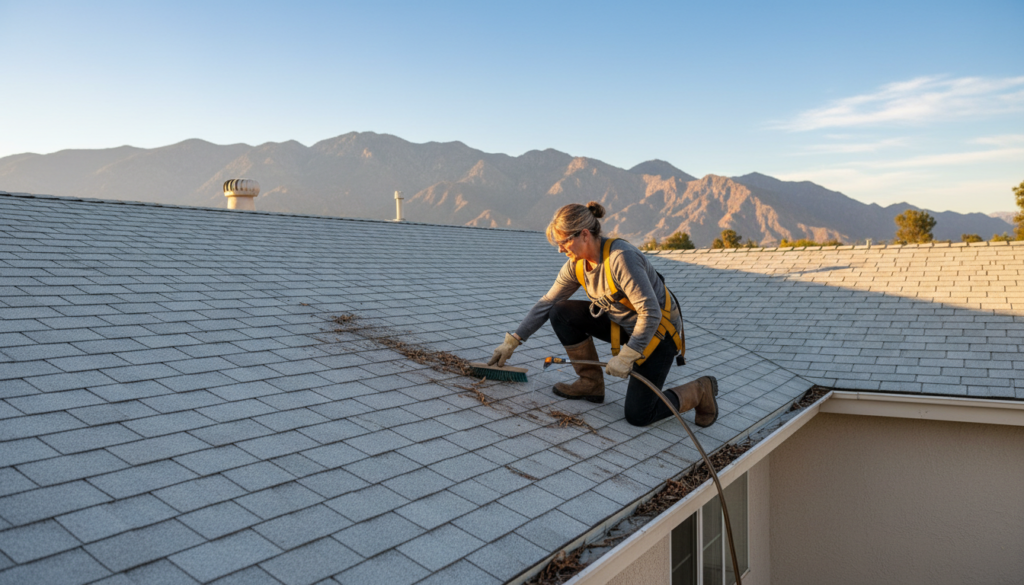
Regular maintenance helps prevent minor issues from becoming major problems
Seasonal Checks
- Inspect for cracked, curled, or missing shingles twice yearly (spring and fall)
- Check and clean gutters to prevent water backup
- Look for damaged flashing around chimneys, vents, and skylights
- Trim overhanging branches that can damage roofing during winds
Ventilation Maintenance
- Ensure attic vents remain unblocked by insulation
- Check that soffit vents are clear of debris
- Consider adding a solar-powered attic fan to reduce heat buildup
- Maintain proper insulation to create temperature barriers
Professional Services
- Schedule professional inspections every 2-3 years
- Have minor repairs addressed promptly before they spread
- Consider roof cleaning to remove algae or debris buildup
- Document all maintenance for warranty and insurance purposes
According to the National Roofing Contractors Association, regular maintenance can extend a roof’s lifespan by 20-30%. This is especially important in Hemet’s climate, where preventive care can significantly delay the need for full replacement.
Local Considerations for Hemet & San Jacinto
Hemet and San Jacinto homeowners face unique regional factors that affect roofing decisions beyond just the heat:
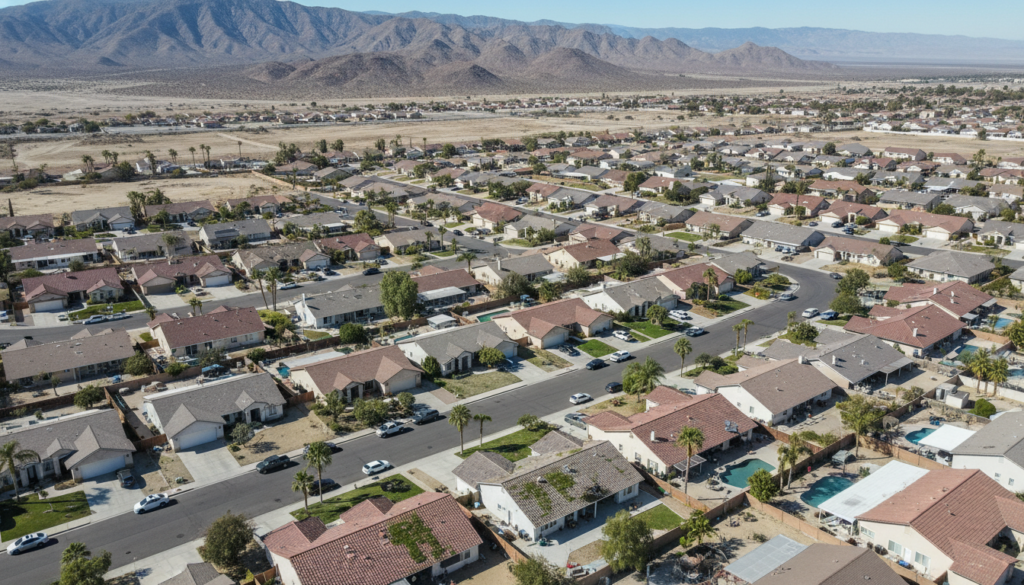
Hemet’s unique geography and climate create specific roofing challenges
Seasonal Planning
Timing your roof replacement or major repairs is important in our climate:
- Ideal Timing: Late fall through early spring provides moderate temperatures for optimal material installation
- Summer Challenges: Extreme summer heat can make shingles difficult to work with and potentially compromise installation quality
- Rain Considerations: Though rare, our occasional heavy rains require complete project planning to avoid exposure
Local Building Requirements
Hemet and San Jacinto have specific building code requirements that affect roofing:
- Permits: Most roof replacements require permits from the city building department
- Fire Ratings: Our region requires Class A fire-rated roofing materials due to wildfire risk
- Wind Resistance: Local codes specify minimum wind resistance ratings for roofing materials
Working with contractors familiar with these local factors ensures your roofing project complies with regulations while addressing the specific challenges of our region. The Roofing Contractors Association of Southern California maintains resources specific to our region’s building requirements.
Key Takeaways
- Hemet’s extreme heat can reduce roof lifespan by 20-40% compared to milder climates
- Early warning signs include curling shingles, granule loss, and increased cooling costs
- Professional inspections should evaluate both exterior surfaces and attic conditions
- Consider replacement when repairs would exceed 30% of a new roof’s cost
- Proper ventilation is as important as quality roofing materials in our climate
- Choose contractors with specific experience in Hemet’s unique conditions
- Regular maintenance can significantly extend your roof’s service life
Frequently Asked Questions
Can extreme heat really shorten the life of my roof?
Yes, absolutely. In Hemet’s climate, where summer temperatures regularly exceed 100°F for extended periods, roofing materials deteriorate much faster than manufacturer estimates (which are typically based on moderate climates). The combination of intense UV radiation, high temperatures, and thermal cycling (daily expansion and contraction) breaks down asphalt shingles and underlayment materials. Studies from the National Roofing Contractors Association show that roofs in extreme heat environments like ours can age 20-40% faster than the same materials in milder regions.
How do I know if my roof needs repair or full replacement?
This depends on several factors: the extent of damage, your roof’s age, and the condition of underlying components. Generally, if your asphalt shingle roof in Hemet is over 15 years old and showing multiple signs of heat damage (curling shingles, granule loss, brittle materials), replacement is often more cost-effective than repairs. If the damage is limited to a small area and your roof is relatively young, repairs may be sufficient. A professional inspection that includes attic evaluation and moisture testing provides the most accurate assessment of your specific situation.
What’s the average lifespan of a roof in Hemet?
Due to our extreme climate, roof lifespans in Hemet are typically shorter than national averages. Standard asphalt shingles often last 12-17 years (versus 20-25 in milder climates). Architectural shingles may reach 15-25 years with proper ventilation. Tile roofs perform exceptionally well, often lasting 40+ years even in our heat. Metal roofing with reflective coatings typically lasts 30-50 years. These estimates assume proper installation, adequate ventilation, and regular maintenance – all factors that significantly impact longevity in our challenging climate.
Does a new roof help with home cooling costs?
Yes, significantly. In Hemet’s hot climate, an old, heat-absorbing roof forces your air conditioning to work much harder. Modern roofing materials with high solar reflectance can reduce attic temperatures by 20-40°F. According to the U.S. Department of Energy, this can translate to cooling cost savings of 15-30% in hot climates like ours. The combination of reflective roofing materials and proper ventilation provides the greatest energy efficiency benefits. Many homeowners report that their new roof pays for part of itself through energy savings over its lifetime.
How do I check my roof’s ventilation?
Start by examining your attic on a hot day. If it feels significantly hotter than the outside temperature, your ventilation is likely inadequate. Look for intake vents (usually in the soffit/eaves) and exhaust vents (at the ridge or high on the roof). You should have both for proper airflow. Count the number of vents and calculate your attic’s square footage – most building codes require 1 square foot of ventilation for every 150 square feet of attic space, with half as intake and half as exhaust. Professional roofers can perform more precise measurements and recommend improvements specific to your home’s design.
What’s the first step if I think I have a leak?
First, try to locate and contain the interior water damage using buckets or towels. Then, make a careful inspection of your attic (if accessible) to identify the entry point – remember that water often travels along rafters or trusses before dripping down, so the leak source may not be directly above the visible water stain. Document the damage with photos for insurance purposes. Next, contact a licensed roofing professional for a thorough assessment. Avoid DIY repairs on heat-damaged roofs, as improper fixes often create bigger problems. In Hemet’s climate, what appears as a simple leak may indicate more extensive heat-related deterioration requiring professional evaluation.
Protecting Your Home in Hemet’s Challenging Climate
Living in Hemet means enjoying our beautiful desert landscape and abundant sunshine, but it also requires special attention to your home’s first line of defense. Understanding how our extreme climate accelerates roof aging empowers you to make informed decisions about maintenance, repairs, and eventual replacement.
By recognizing early warning signs, implementing proper ventilation, choosing appropriate materials, and working with qualified professionals, you can maximize your roof’s lifespan even in our challenging conditions. Remember that proactive care is always more cost-effective than emergency repairs, especially when it comes to protecting your home’s structural integrity and your family’s comfort.
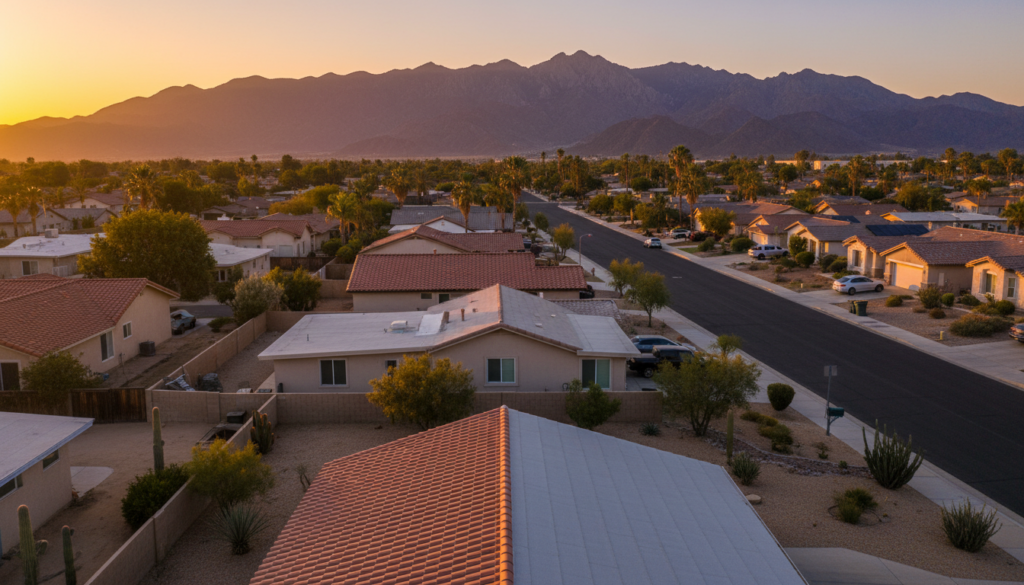
A well-maintained roof protects your home while enhancing its beauty and value
For additional educational resources about roofing in our region, consider visiting the websites of the National Roofing Contractors Association (NRCA) at www.nrca.net or the Roofing Contractors Association of California (RCACal) at rcacal.com.