
Fact: in many homes, slow leaks commonly move beneath shingles for months before a ceiling stain ever appears.
Small issues often tell the story long before a collapse or major loss.
Read on to learn practical, step-by-step ways to spot interior cues and safe exterior checks from the ground. You’ll also get clear guidance on when a targeted repair makes sense and when a full replacement is the wiser choice—so you can protect your home, avoid repeated costs, and keep your family comfortable. This article is aimed at homeowners in Hemet, Temecula, Murrieta, Menifee, Moreno Valley, Riverside, and Fallbrook.
Most roof failures start as patterns, not one-off events. Expect to read about storm damage, missing shingles, flashing failure, underlayment wear, heat stress, and cracked tiles. When fixes recur in the same spot, it often signals a larger moisture pathway that needs professional diagnosis.
Outer Shield Roofing is listed here as a local resource if you want a professional inspection or a second opinion. For a quick primer on installation and materials, see asphalt shingle installation basics. If you notice any of the signs below, schedule an inspection with Outer Shield Roofing to confirm the cause and avoid more extensive damage.
Key Takeaways
- Roofs rarely fail overnight; small clues matter.
- Look inside and outside—leaks can travel through layers before stains appear.
- Know when a local repair is enough versus when replacement is better long-term value.
- Common culprits include storm damage, flashing issues, and worn underlayment.
- Early action saves money and prevents mold, rot, and insulation loss.
- If you see any of these signs, book an inspection with Outer Shield Roofing for a clear, local evaluation.
Why catching roof problems early matters for homeowners
Catching small problems early keeps minor leaks from becoming costly structural failures. Your roof is the first line defense for the entire home: it must shed water, resist heat, and withstand changing weather without letting moisture inside.
Your roof as your home’s first line of defense against water, heat, and weather
Think of the roof system as a coordinated line defense: shingles, flashing, underlayment, and decking all work together. When one piece fails, water can travel beneath materials for some distance before a ceiling stain appears—so a drip at a ridge may show as a stain several feet away.
How small issues turn into rot, insulation damage, drywall repairs, and mold growth
A lifted shingle or tiny flashing gap may feel minor at first. Repeated moisture, however, weakens wood, encourages rot, soaks insulation (reducing its effectiveness), and invites mold growth—creating larger repairs and higher energy bills. Early action keeps fixes targeted and far less disruptive.
Why leaks often travel before you see a ceiling stain
Water follows the path of least resistance—along decking seams and underlayment laps—then drops into attics or walls where it becomes visible. Homeowners in Hemet, Temecula, and Murrieta especially know how seasonal dry spells can hide slow failures until wind-driven rain reveals a weak spot.
If you suspect a problem, schedule a roof inspection before storm season. For localized, step-by-step guidance, see local blog posts from Outer Shield Roofing. When to call: after a major storm, if you detect attic dampness or new interior stains, or anytime you notice missing or damaged shingles.
Interior clues that usually show up before exterior damage is obvious
Indoor symptoms often act as early alerts—especially right after rain when active moisture pathways are easier to trace. A round water mark on a ceiling usually means a slow drip straight down; a long streak often means water traveled along framing or underlayment before it fell.
A musty attic smell is a practical red flag for trapped moisture. Use a flashlight to inspect the attic for darkened or stained wood, damp or compressed insulation, or rusty nail heads. Safety first: stay on joists and the attic access area and avoid stepping on unsupported decking.
Damp insulation does more than smell bad — it can reduce insulation effectiveness (lower R-value), raise energy bills, and prolong wood wetting that leads to rot. Mold or mildew near top-floor ceilings, closet corners, or attic framing can affect indoor air quality and building materials quickly.
- Treat new indoor stains and odors as early warnings and photograph them right after rain.
- Note stain patterns—round drips vs. long runs—to help locate the water’s path.
- Look for wet, compressed, or discolored insulation and any soft or darkened sheathing in the attic.
One interior clue does not always mean full replacement. It signals the need to find the entry point and fix it before more damage occurs. For example, a long streak on attic sheathing that reappears only after heavy wind-driven rain often traced back to a failing valley flashing rather than the field shingles. When you see these clues, book a professional inspection to confirm the leak location and plan the appropriate repair or maintenance—Outer Shield Roofing can help diagnose the path and recommend the right fix.
Signs your roof needs repair you can spot from the ground
A quick ground-level scan can expose obvious damage while keeping you safely on the lawn. Use binoculars to check slopes, valleys, and ridge lines from several angles; avoid climbing the roof without training or fall protection.
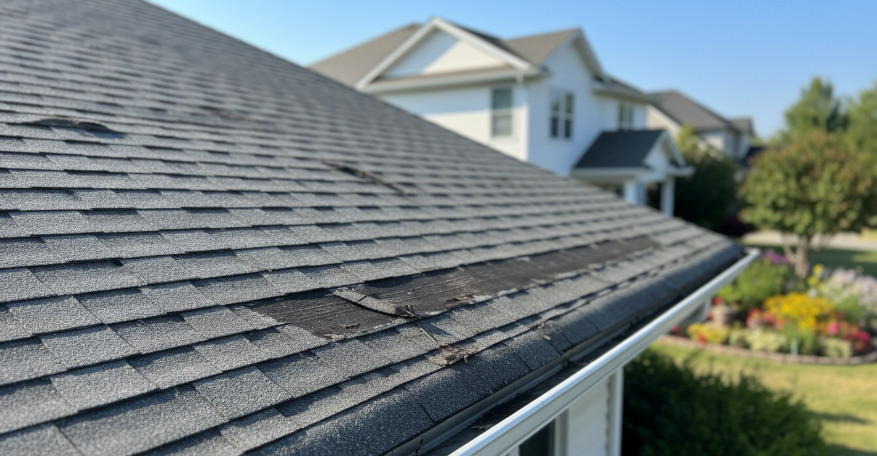
Missing shingles are an urgent sign. Gaps after a storm leave underlayment and decking exposed to wind-driven rain; if you see missing shingles across more than one slope, schedule an inspection right away.
Curling, cracking, buckling, or blistering
Curling or cracked shingles point to aging, prolonged heat exposure, or poor attic ventilation. These failures reduce seal integrity and wind resistance—isolated patches can be repaired, but widespread curling often signals a system-level review is needed.
Heat accelerates asphalt and adhesive breakdown and shortens shingle life. For guidance on reflective and heat-management options that affect material performance, consult local cool-roof resources when considering replacement choices.
Granules in gutters and downspouts
Granules naturally wash into gutters as asphalt shingles age. A light dusting is normal; heavy, sand-like buildup or bald spots on shingles indicate the asphalt protective layer is failing and the shingles are nearing the end of their useful life.
Dark streaks, moss, or algae that return
Dark streaks often signal algae; moss traps moisture against shingles and speeds deterioration in shaded areas. Persistent biological growth near eaves, valleys, or under overhangs can lead to accelerated wear and hidden moisture problems.
| Visible ClueWhat it meansAction | ||
| Missing shingles | Exposure of underlayment and decking | Call for immediate inspection |
| Curling / cracking | Aging, heat, or ventilation issues | Evaluate ventilation; consider targeted repairs |
| Granules in gutters | Asphalt wear and loss of protection | Schedule inspection to assess remaining life |
| Moss or dark streaks | Biological growth holding moisture | Clean, treat, and check for moisture damage |
Quick binocular scan tips: view the roof from the street at eye level and from a 45° angle to spot lifted edges and missing shingles; focus on valleys, ridges, and eaves where wear concentrates. Photograph any findings and note the slope and side of the house.
Decision guidance: A few isolated issues can often be repaired; patterns of damage across slopes usually indicate a larger problem. If you’re unsure, book a professional inspection. Outer Shield Roofing can confirm whether damage is cosmetic, heat/ventilation related, or a moisture-entry risk that requires prompt service.
Roof leak repair red flags around flashing, vents, skylights, and chimneys
Penetrations—vents, skylights, and chimneys—create complex junctions that rely on proper flashing to stay watertight.
Flashing is the metal or membrane detail that diverts water away from those weak junctions. When flashing corrodes, lifts, or gaps, water finds the easiest way in and creates hidden pathways for damage.
Why wind-driven rain is different
Wind-driven rain forces water sideways and upward into tiny openings. That pressure exposes flaws that light rains often do not, so a flashing problem may only show up during storms.
Homeowner-visible red flags
- Rust streaks or bent metal at flashings — a sign of corrosion or movement.
- Lifted edges, exposed fasteners, or cracked sealant beads — these allow water to penetrate.
- New staining near vents, skylights, or chimneys after a storm — a clear sign to investigate.
Valleys and transitions carry much more water than field areas; a failed valley detail can send leaks far from the original entry point.
“Tar patches often fail over time; they crack in sun and movement and only hide the real pathway.”
| Problem areaWhat to watch forRecommended action | ||
| Flashing at penetrations | Rust, lifted edges, gaps | Document and schedule a professional diagnosis |
| Valleys & transitions | Heavy wear, missing metal, pooling water | Replace detail with a water-shedding design |
| Tar or temporary patches | Cracked, brittle, hides failed detail | Remove temporary patch and correct flashing properly |
What to do next: Photograph problem areas after storms (include close-ups and shots showing slope orientation), note interior staining patterns, and book a full inspection. Outer Shield Roofing specializes in tracing the true leak pathway and repairing flashing and penetration details so leaks don’t return. Before hiring anyone, you can verify a contractor’s license at the California Contractors State License Board (CSLB) to confirm credentials.
Tile-specific warning signs for concrete tile roofing
Tile assemblies rely on more than surface coverage; the layer beneath carries the waterproofing burden.
Concrete tile roofing is durable, but it is not maintenance-free. Individual tiles can crack, slip, or lose corners after debris or hail impact, and those visible problems are only part of the picture.
Cracked tiles, slipped courses, and storm damage clues
Search for chipped pieces in the yard, uneven rows, gaps where tiles have shifted, or a new rattle after wind events. These are direct indicators of local damage that should be repaired promptly to prevent water entry and further roof damage.
Underlayment wear can cause deceptive leaks
Tiles primarily shed water at the surface, but the underlayment is the true waterproof layer. As underlayment ages or the laps fail, intermittent or seasonal leaks can appear even when tiles look intact—so recurring wet spots often point to underlayment or flashing issues rather than just broken tiles.
- Intermittent leaks after rain or attic moisture without obvious missing tiles.
- Localized wet insulation or stains that come and go with weather.
- Cracked pieces resulting from walking on tiles or improper handling during service.
Matching tile profiles, correct fastening, and replacing broken pieces matter for a long-lasting fix. If the system is older or you notice recurring wet spots, schedule an inspection so a pro can check both tiles and the underlayment layer.
Request a concrete tile roofing consultation from Outer Shield Roofing to confirm whether problems are isolated tiles or underlayment failure.
When the roof system is the problem, not just the shingles
Look beyond individual shingles to the full assembly and the vents that control heat, moisture, and structural stability. Treat the roof as a system made of covering, underlayment, flashing, decking, and attic ventilation working together—a failure in one part can undermine the whole roof.
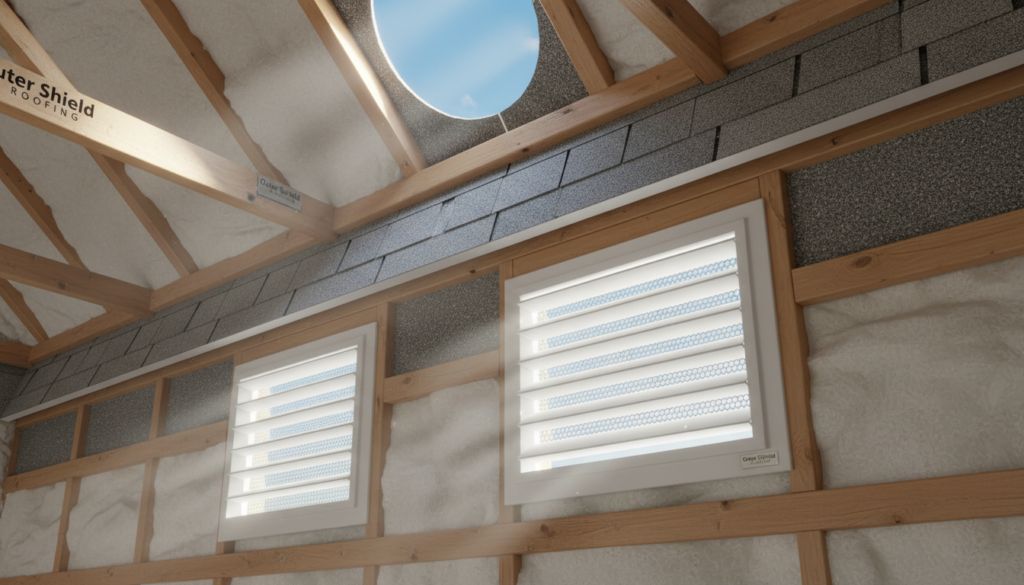
How trapped heat from poor ventilation harms materials
Poor airflow lets heat build in the attic, which accelerates aging of roofing materials and stresses shingles. Higher attic temperatures also force HVAC systems to work harder, raising energy costs and reducing comfort. Consider code and design options (for example, reflective or cool-roof choices) when assessing long-term material performance.
What “roof leaks after rain” often tells you
If leaks appear only during certain storms, suspect flashing laps, underlayment seams, or decking pathways — water can follow a hidden way along seams or laps before it drops, making interior stains misleading about the true entry point.
When repeat repairs point to a bigger moisture pathway
Repairing the same spot multiple times often means the real moisture pathway remains unaddressed. Soft or flexing decking, loosened fasteners, and unresolved flashing gaps let moisture move along joints and reappear elsewhere.
Do this: keep a simple log with date, weather, and stain location (example: “10/12 — heavy wind-driven rain, stain in hallway ceiling near north ridge”). That log helps a pro diagnose whether ventilation, underlayment, or decking is the root cause. Then schedule a professional roof inspection or consultation to diagnose system-level issues before further repairs are needed—ask about a ventilation check when you book.
Structural warning signs you should never ignore
Structural problems often begin quietly — a subtle dip in a ridge or a faint bow in a slope can indicate hidden, worsening damage.
Sagging lines are not cosmetic. A droop can mean weakened decking or framing that has suffered long-term moisture exposure and rot, increasing the risk of larger failures.
Soft spots are areas where wood has lost strength from repeated wetting or trapped moisture beneath the surface. These locations may fail under load and can expand the affected area quickly.
Safe checks and when to act
From the curb, scan for dips, waves, or uneven ridgelines. In the attic, look for bowed boards, darkened or spongy wood, and displaced rafters — but do not walk on unsupported decking; stay on joists and the access area for safety.
- Photograph visible dips and interior bowing after a storm to document condition and timing.
- Call for a professional structural inspection promptly when you see sagging or soft spots — what starts as a leak can become a framing problem.
- Be prepared that simple patching may not be enough; compromised decking or framing often requires sectional rebuilding or full roof replacement to restore safe condition.
Acting early keeps fixes smaller and safer. If you suspect structural compromise, cover affected areas temporarily to limit further water entry and contact a licensed roofing professional for urgent evaluation and next steps, including any necessary permits or structural repairs.
Roof inspections and roof maintenance that prevent expensive surprises
A scheduled inspection can stop small problems from turning into costly claims. Aim to book an inspection after wind events, before the rainy season, on older systems, or anytime you notice interior or exterior cues. Timely checks reduce long-term damage and often lower overall repair costs.
What a thorough inspection should include
An inspection must go beyond a quick ladder glance. A complete check covers shingles or tiles, flashing, valleys, penetrations (vents, skylights, chimneys), and underlayment exposure. Inspectors should also evaluate attic ventilation, signs of moisture in insulation or decking, and the condition of structural sheathing.
Top things inspectors look for (quick checklist)
- Shingle / tile condition: missing shingles, curling, granule loss, or cracked tiles.
- Flashing and penetrations: corrosion, gaps, or failed sealants around vents, skylights, and chimneys.
- Valleys and drainage: clear valleys, functioning gutters, and no pooling or blocked flow.
- Underlayment & decking: visible laps, exposed areas, soft spots or dark staining in the attic.
- Ventilation & attic: proper intake and exhaust balance and no trapped heat or moisture.
Simple maintenance you can do now
- Clear gutters so overflow cannot back up under eaves and damage fascia, decking, or shingles.
- Remove debris from slopes and valleys to prevent trapped moisture that leads to rot.
- Trim overhanging branches that scrape roofing materials or drop limbs in storms.
- Document findings with dated photos and notes to track changes and support insurance claims.
Outer Shield Roofing offers targeted inspections and tailored maintenance guidance for asphalt shingle and concrete tile systems, including annual maintenance plans to catch wear before it becomes an emergency. For claims guidance and what insurers typically require, see the California Department of Insurance – residential guidance.
How to document for a claim: photograph the damage from multiple angles (slope view + attic), include a ruler or smartphone for scale, note the date and weather conditions, and retain inspection reports and contractor estimates.
If you want a professional inspection, schedule with Outer Shield Roofing so an experienced inspector can create a prioritized report of issues, recommended repairs, and an estimated cost—helping you avoid surprises and plan maintenance efficiently.
Roof repair vs roof replacement decisions that make financial sense
Deciding between a targeted repair and a full replacement begins with a clear look at the roof’s age, overall condition, and long-term value to your home.
How age and material affect the choice
Age matters. A costly patch on a roof near the end of its useful life often leads to repeated repairs and higher cumulative costs. Consider how many years of reliable service you’ll get from a repair versus a new system.
Materials change the math: asphalt shingles generally wear sooner than tile or slate; tile can last decades but often requires underlayment or fastening attention long before the surface reaches end-of-life.
The practical cost guideline
A common rule of thumb is that if repairs approach roughly 30% of a full replacement cost, replacement usually provides better long-term value. Example: if a full replacement is estimated at $10,000, and repairs today would total $3,000 or more (with likely follow-up work), replacement is often the smarter financial choice.
Average lifespans by material
| MaterialTypical lifespanPlanning note | ||
| 3-tab asphalt | 15–20 years | Consider replacement near end-of-life |
| Architectural shingles | 25–30 years | Repairs useful mid-life; replacement later |
| Concrete / clay tile | 50–100+ years | Watch underlayment and fasteners |
| Metal | 40–70 years | Good longevity; check fastenings |
Questions to ask when comparing estimates
- Does the estimate include decking replacement allowances if rot is found?
- Will flashing and penetrations be replaced or only resealed?
- What ventilation or underlayment upgrades are included or recommended?
- What warranties cover materials and workmanship, and for how long?
- Are cleanup and disposal included in the price?
Insurance basics and documentation
Insurance typically covers sudden storm damage but not wear-and-tear. Policies differ: ACV (actual cash value) reflects depreciation; RCV (replacement cost value) covers the full replacement cost when allowed by the policy. For state-specific consumer guidance, see the California Department of Insurance – residential guidance.
“Take dated photos, save inspection reports, and file claims promptly after storm events.”
Next step: Document leaks and damage with photos, get a professional consultation, and ask for a repairs-vs-replacement cost comparison. Outer Shield Roofing can produce a side-by-side estimate showing repair scope, expected useful life after the work, and full replacement options so you can make an informed financial decision.
How to choose a roofing contractor in Hemet, Temecula, Murrieta, and nearby
A good contractor explains the diagnosis, not just a quick patch, so hidden problems are found and fixed correctly. Start with firms that provide clear written scopes and can explain how they trace leak pathways through valleys, transitions, and penetrations.
Credentials and workmanship that protect homeowners
Look for licensing, local references, and proof of insurance before you hire anyone. Verify a contractor’s standing with the California Contractors State License Board (CSLB) and use the online license lookup to confirm license number, classification, and any disciplinary history.
Quick verification links: California Contractors State License Board (CSLB) — Check a contractor’s license (CSLB license lookup)
Key checklist:
- Exact areas being serviced (by slope or section) — avoid vague language like “repair roof.”
- Flashing replacement versus reseal, and whether underlayment will be exposed and inspected.
- Ventilation checks and decking inspection policy — who inspects the attic and how are soft spots handled?
- Cleanup, debris disposal, and warranty details with clear timeframes and what each warranty covers.
Materials questions: asphalt shingle roofing vs concrete tile roofing
Ask how the crew will match shingle profile, fastener pattern, and ventilation strategy for asphalt shingle jobs. For concrete tile roofing, ask about tile matching, underlayment strategy, and safe walking practices to avoid causing tile damage during repairs.
Comparing estimates fairly
| Line ItemWhat to expectWhy it matters | ||
| Labor | Hours, crew size | Impacts costs and schedule |
| Materials | Brand, type, quantity | Determines longevity and condition |
| Decking repairs | Allowances or inspection findings | Hidden problems can raise costs |
| Warranty & cleanup | Workmanship term, disposal | Protects homeowners after work |
When you review estimates, watch for red flags: overly broad scopes (“repair roof” with no details), extraordinarily low bids with no allowance for decking repair, or missing warranty language. Good estimates include itemized line items, photos of observed damage, and a clear description of what’s excluded.
Request photo documentation from both the slope and the attic so you can confirm what was found and what was fixed. Ask each contractor to explain how they diagnose issues rather than simply sealing surfaces.
Outer Shield Roofing provides roof repair, roof replacement, roof inspections, and roof consultation across Hemet CA, Temecula CA, Murrieta CA, Menifee CA, Moreno Valley CA, Riverside CA, and Fallbrook CA. The best contractor helps you make the right call for the home—not the most expensive one for their schedule. If you want help comparing estimates, request a “how to verify your estimate” micro-guide and local references or case studies from each bidder.
Conclusion
Small patterns of damage usually tell the full story better than a single symptom. The key warning cues covered here include interior stains and attic moisture, missing shingles, curling or cracking, granules in gutters, flashing problems, tile cracks or slipped tiles, structural dips or soft spots, and repeated leaks. Look for patterns—multiple signs across the system usually point to a larger issue.
The core takeaway is simple: leaks often travel through roofing layers before they appear inside. Early inspection protects framing, insulation, and indoor air quality. Good maintenance—clearing gutters, removing debris, and trimming overhanging branches—reduces risk and extends roof life.
If you notice one or two signs, act now. Schedule a roof inspection to confirm the cause and avoid bigger damage; a timely check can prevent mold, rot, and higher repair or replacement costs. Prefer to plan? Download a quick checklist or contact Outer Shield Roofing for a calm, local consultation—available for homeowners in Hemet, Temecula, Murrieta, Menifee, Moreno Valley, Riverside, and Fallbrook. Act early to stay in control of timing, scope, and budget.