
.os-callout{background:#eef6ff;border-left:5px solid #1a56db;padding:18px 20px;border-radius:8px;margin:22px 0;}
.os-callout.green{background:#f0faf3;border-left-color:#16a34a;}
.os-callout.amber{background:#fff8eb;border-left-color:#d97706;}
.os-callout h4{margin:0 0 8px;color:#1a56db;font-size:1.05rem;}
.os-callout.green h4{color:#16a34a;}
.os-callout.amber h4{color:#d97706;}
.os-callout p{margin:0;color:#374151;}
.os-callout ul{margin:8px 0 0;padding-left:20px;color:#374151;}
.os-callout li{margin:5px 0;}
.os-stat-grid{display:grid;grid-template-columns:repeat(auto-fit,minmax(160px,1fr));gap:14px;margin:24px 0;}
.os-stat{background:linear-gradient(135deg,#1a56db,#3b82f6);color:#fff;border-radius:10px;padding:18px;text-align:center;}
.os-stat .num{font-size:2rem;font-weight:800;line-height:1;}
.os-stat .lab{font-size:.85rem;opacity:.95;margin-top:6px;}
.os-bar{margin:14px 0;}
.os-bar .bar-lab{display:flex;justify-content:space-between;font-weight:600;font-size:.9rem;margin-bottom:5px;color:#1f2937;}
.os-bar .track{background:#e5e7eb;border-radius:20px;height:22px;overflow:hidden;}
.os-bar .fill{height:100%;border-radius:20px;display:flex;align-items:center;padding-left:10px;color:#fff;font-size:.8rem;font-weight:700;}
.os-bar .fill.b-blue{background:linear-gradient(90deg,#1a56db,#3b82f6);}
.os-bar .fill.b-green{background:linear-gradient(90deg,#16a34a,#22c55e);}
.os-bar .fill.b-amber{background:linear-gradient(90deg,#d97706,#f59e0b);}
.os-bar .fill.b-red{background:linear-gradient(90deg,#dc2626,#f87171);}
.os-table{width:100%;border-collapse:collapse;margin:22px 0;font-size:.95rem;border-radius:10px;overflow:hidden;box-shadow:0 1px 4px rgba(0,0,0,.08);}
.os-table th{background:#1a56db;color:#fff;padding:12px 14px;text-align:left;}
.os-table td{padding:11px 14px;border-bottom:1px solid #e5e7eb;vertical-align:top;}
.os-table tr:nth-child(even) td{background:#f8fafc;}
.os-table tr:last-child td{border-bottom:none;}
.os-check{background:#fff;border:1px solid #e5e7eb;border-left:5px solid #16a34a;border-radius:8px;padding:16px 18px;margin:18px 0;box-shadow:0 1px 3px rgba(0,0,0,.05);}
.os-check ul{margin:6px 0 0;padding-left:20px;}
.os-check li{margin:6px 0;}
.os-badge{display:inline-block;background:#1a56db;color:#fff;font-size:.72rem;font-weight:700;text-transform:uppercase;letter-spacing:.5px;padding:3px 10px;border-radius:20px;margin-bottom:8px;}
.os-img{border-radius:10px;margin:20px 0;box-shadow:0 4px 14px rgba(0,0,0,.12);}
figure.wp-block-image img{border-radius:10px;}
Roof Inspection in Hemet: What a Complete Evaluation Should Show
A professional inspection should give you evidence, priorities, options, limitations, and a written path forward—not a vague pass/fail opinion.
Concrete tile roof details photographed during an Outer Shield Roofing project.
A roof can look acceptable from the street while concealing cracked tile, lifted shingles, brittle underlayment, deteriorated flashing, blocked ventilation, or prior repairs that changed the drainage path. The opposite is also true: a roof may show normal weathering and still have years of dependable service left. The value of a professional inspection is not a dramatic verdict. It is a documented assessment that separates cosmetic aging, maintenance needs, localized defects, and system-wide risk.
Outer Shield Roofing customers often mention photos, videos, clear explanations, and multiple options because those elements make a roof decision easier to verify. Whether the inspection is for a leak, a real-estate transaction, storm concerns, maintenance planning, solar work, or an insurance question, the homeowner should be able to see what the roofer saw and understand what happens if the condition is left alone.
Start by Defining the Purpose of the Inspection
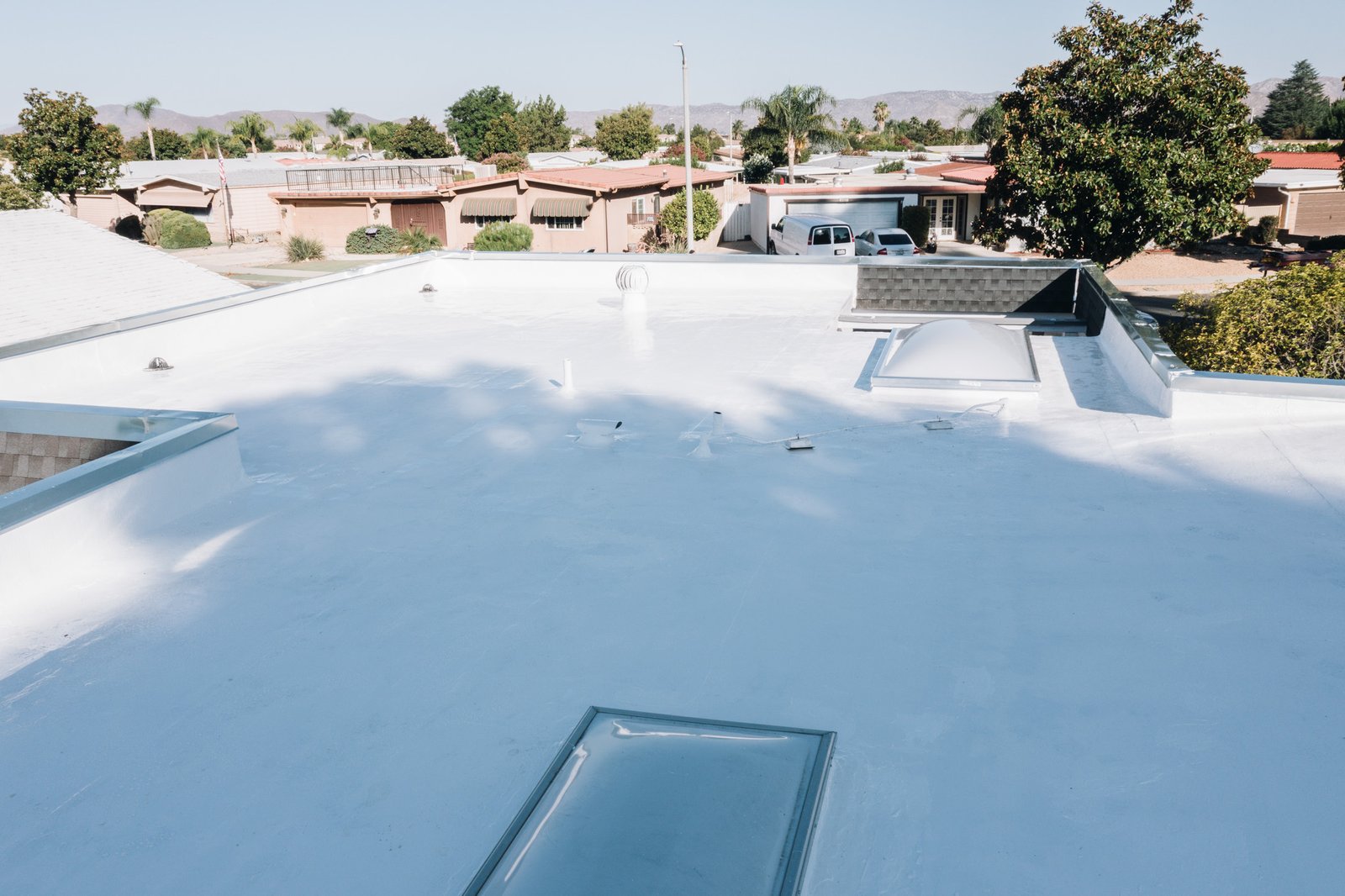
The same roof may receive different recommendations depending on the decision being made. A maintenance inspection asks what can prevent future failure. A leak inspection asks where water entered and how to rebuild the failed detail. A pre-purchase inspection asks what risk and expense a buyer may inherit. A roof certification, when requested, has its own scope, assumptions, and duration and should not be confused with a general visual inspection.
What a Complete Exterior Inspection Should Cover
The inspector should examine the roof as a connected system. Individual defects matter, but their location and relationship matter more. A cracked tile at a dry, uncomplicated field area is different from a cracked tile above a valley intersection. A lifted shingle at the center of a roof is different from a loose perimeter course where wind can get underneath the covering.
Completed asphalt shingle roof with multiple roof planes and penetrations photographed by Outer Shield Roofing.
What the Interior and Attic Can Reveal
Exterior observations should be compared with interior evidence whenever access is available and safe. A ceiling stain is a clue, not a map pin. Water can follow underlayment, framing, pipes, fasteners, or the top of drywall before it becomes visible. Attic conditions can also reveal ventilation and condensation problems that resemble a roof leak.
- Active moisture, staining, rusted fasteners, darkened wood, delamination, or prior patching on the underside of the deck.
- Wet, compressed, displaced, or contaminated insulation.
- Daylight at penetrations, edges, or damaged deck areas, while recognizing that some ventilation openings are intentional.
- Blocked soffit pathways, disconnected ducts, bathroom or dryer exhaust terminating in the attic, and signs of trapped heat or moisture.
- Framing movement, cracked members, sagging, or alterations that require evaluation beyond the roofer’s scope.
- Electrical, plumbing, HVAC, or pest conditions that may contribute to staining or require another qualified trade.
- The relationship between the stain and roof features above it, including valleys, walls, penetrations, and transitions.
Tile, Shingle, and Low-Slope Roofs Need Different Inspection Methods
Learn how Outer Shield evaluates concrete tile roof systems and asphalt shingle roof systems before comparing recommendations.
Photos and Video Are Part of the Diagnosis
A useful inspection report should let a homeowner follow the reasoning without climbing onto the roof. Wide photos establish location. Medium views show the relationship to nearby features. Close-ups show the defect. Labels or captions should explain why the condition matters. Video can be helpful for showing movement, soft areas, long drainage paths, or multiple connected details.
Condition Assessment, Repair Estimate, and Roof Certification Are Not the Same
A condition assessment records what was visible and provides recommendations. A repair estimate defines a proposed scope and price. A roof certification, when offered, is a separate written representation with specific terms, exclusions, and duration. Homeowners should ask what document they are receiving and what it does not cover.
- Does the report state whether the inspection was visual, invasive, moisture-assisted, or limited?
- Were all roof areas accessible, and were any sections excluded for safety, height, fragility, solar panels, equipment, or property access?
- Does the estimate address only observed defects, or does it include allowances for concealed conditions?
- Is a certification included, available after repairs, or not part of the service?
- What events or conditions void or limit the certification or warranty?
- Does the document assign a remaining service-life number, and if so, what evidence and assumptions support it?
Buyer and Seller Guidance
Real-estate timelines create pressure to turn a complex roof into a yes-or-no answer. That can lead to overstatement. A buyer does not need false precision; the buyer needs enough evidence to understand likely near-term work, uncertainty, and negotiation priorities. A seller benefits from addressing obvious defects early and keeping invoices, permits, warranties, and photos organized.
Red Flags in a Roof Inspection
Red flags a Hemet inspector looks for
- The inspector provides a replacement price without showing the failure pattern or discussing repairability.
- The report uses only distant photos or images that cannot be matched to a roof location.
- Every observation is labeled urgent, or no priorities are assigned at all.
- The inspector relies on roof age alone and does not discuss actual material, flashing, or deck condition.
- A ceiling stain is treated as proof of the exact exterior entry point.
- Hidden damage is described as unlimited, with no unit pricing, approval process, or documentation requirement.
- The inspector will not explain what was inaccessible or outside the inspection scope.
- A certification, warranty, and inspection are treated as interchangeable documents.
- The proposal depends on exposed sealant or surface coating without correcting how water enters and drains.
How Often Should a Hemet Roof Be Inspected?
There is no universal schedule that fits every roof. Inspection timing should reflect roof type, age, prior leaks, tree exposure, wind exposure, solar or equipment traffic, and the quality of previous work. A practical approach is to inspect after a known damaging event, before or after major rooftop work, when interior symptoms appear, and periodically as the system ages. Homeowners should also perform safe ground-level observations after strong wind or unusual rain.
After a wind event, use the Hemet wind-damage roof checklist as a ground-level review, then request professional documentation if anything changed.
What a High-Quality Inspection Report Should Include
What a strong inspection report covers
| Section | What it shows |
|---|---|
| Photos & video | Documented condition of shingles/tiles, flashing, penetrations |
| Condition assessment | Age, wear, material condition ratings |
| Repair estimate | Prioritized list with cost ranges |
| Roof certificate | Condition rating useful for buyers/sellers |
| Recommendations | Repair vs. replace with reasoning |
- Property and inspection date, weather context, stated purpose, inspector, and roof areas reviewed.
- Roof type, visible material condition, major features, additions, and accessible attic/interior areas.
- Labeled photos and explanations for each significant observation.
- Priority classification: immediate water-entry/safety issue, repair, maintenance, monitor, or elective improvement.
- Likely failure mechanism and how the conclusion was reached.
- Repairability, alternative options, expected limitations, and conditions that could change the recommendation.
- Inaccessible areas and any need for tile lifting, moisture testing, structural review, HVAC/plumbing review, or other follow-up.
- A written scope for recommended work, including flashing, underlayment, deck allowances, protection, cleanup, and documentation.
- Clear distinction between observed fact, professional judgment, estimate, warranty, and certification.
Request a Documented Roof Inspection in Hemet
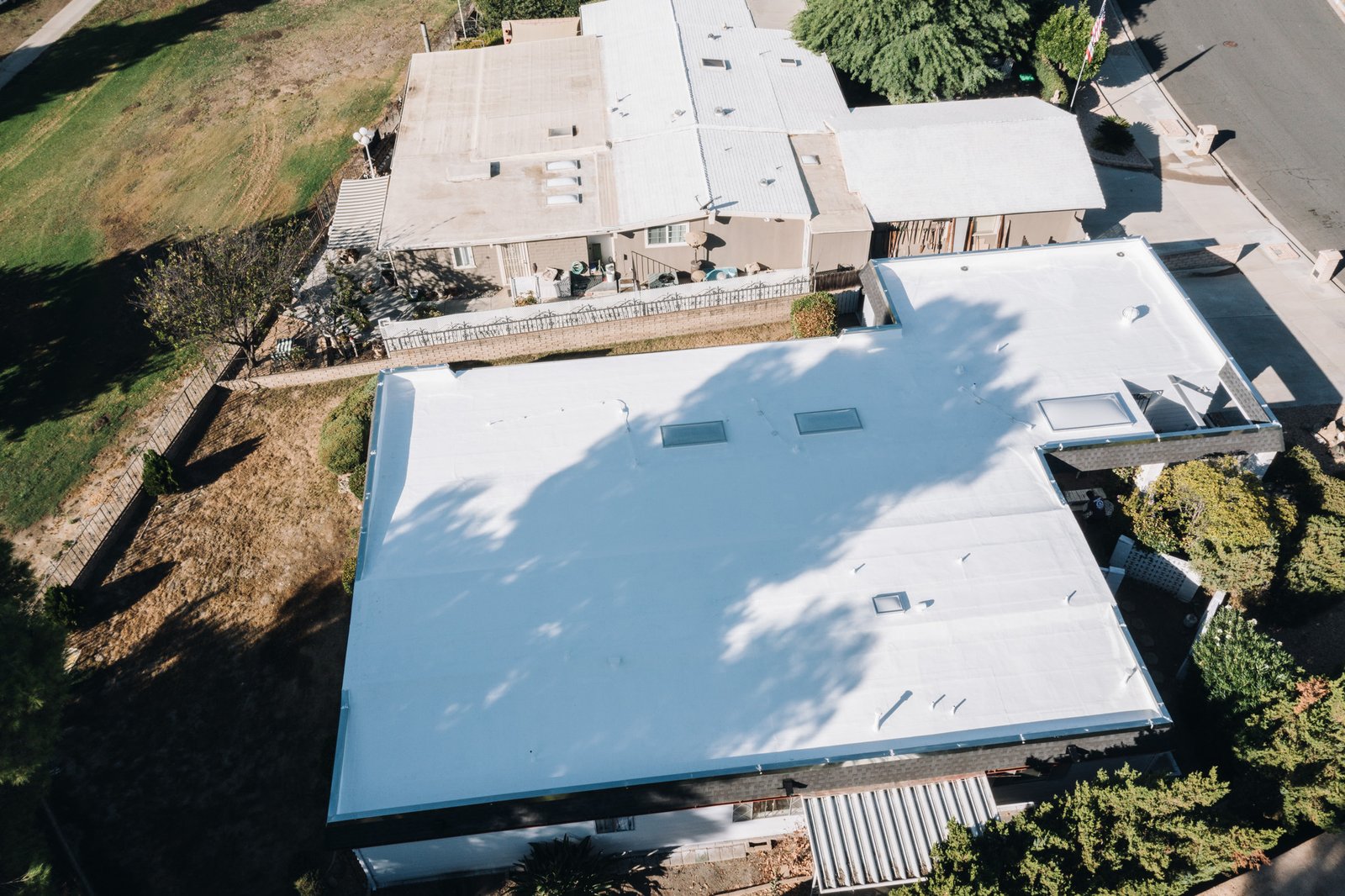
Outer Shield Roofing provides a local roof inspection Hemet assessment focused on visible evidence, clear options, and practical next steps. The objective is to show what is failing, what remains serviceable, and what information is still needed before work is authorized.
Review the company’s roof repair options and completed roofing projects, then contact Outer Shield Roofing to schedule an inspection.
Completed concrete tile roof photographed during an Outer Shield Roofing project.
- Define the purpose — routine, before sale, after storm, pre-warranty
- Get exterior + attic covered, not just a ground look
- Ask for photos & video as part of the report
- Request a written report with condition and cost ranges
- Review red flags before a purchase or major decision
What Hemet Homeowners Should Know
Hemet’s climate — intense summer heat, UV exposure, and seasonal wind — makes regular roof inspections especially valuable. These conditions age roofing faster than in milder areas, so an annual inspection plus a check after major wind events helps homeowners catch problems before they become leaks. Understanding what a complete evaluation covers helps you get a report you can act on.
Hemet inspection guidance
- Inspect annually and after major wind or storm events
- Include the attic, not just the exterior surfaces
- Ask for a documented report with photos and cost ranges
- Use it before purchase, not just for routine maintenance
Published with Local Expertise
This guide was prepared by Outer Shield Roofing, a licensed, insured roofing contractor serving Hemet and the surrounding area. The recommendations reflect real conditions we see on Hemet-area roofs. We follow California contractor licensing requirements and recommend every homeowner independently verify a contractor’s license and insurance before starting work.
Last reviewed: August 2026. If you have a roof in need of attention in Hemet, East Hemet, Valle Vista, and San Jacinto, contact Outer Shield Roofing for a detailed inspection and written estimate.
Frequently Asked Questions
How long does a roof inspection take?
Timing depends on roof size, height, access, material, number of penetrations, attic access, and the purpose of the inspection. A complex leak or tile-underlayment question requires more investigation than a simple ground-level maintenance review.
Can a roofer determine roof condition from the ground?
Ground observations can identify some missing materials, edge damage, debris, and obvious movement. They usually cannot evaluate concealed underlayment, fine flashing details, soft deck areas, or subtle wind damage.
Does a roof inspection include a certification?
Not automatically. Ask whether the service is a condition assessment, estimate, certification, or combination. A certification should have separate written terms and limitations.
Should a buyer rely on the general home inspection?
A home inspector provides valuable whole-property information, but a specialist roof evaluation may be appropriate when the roof has active symptoms, complex materials, prior repairs, uncertain age, or a high-cost recommendation.
Can an inspection find every hidden leak?
No visual inspection can guarantee discovery of every concealed condition. A strong report identifies limitations and recommends targeted tile lifting, moisture testing, water testing, or another trade when needed.
What should I do after the inspection?
Prioritize active water entry and safety issues, obtain a written scope, compare options line by line, clarify hidden-damage pricing, and keep the report and photos with the property records.
Sources and Further Reading
- Insurance Institute for Business & Home Safety roof and wind research
- FORTIFIED Roof program
- ENERGY STAR attic ventilation guidance
- Tile Roofing Industry Alliance technical resources
{
“@context”: “https://schema.org”,
“@graph”: [
{
“@type”: “Article”,
“headline”: “Roof Inspection in Hemet: What a Complete Evaluation Covers”,
“description”: “What does a thorough roof inspection in Hemet include? Exterior, attic, materials, reports, buyer/seller guidance, red flags, and how often to inspect.”,
“inLanguage”: “en-US”,
“image”: “https://outershieldroofingcorp.com/wp-content/uploads/2025/09/Hemet-After-05.jpg”,
“publisher”: {
“@type”: “Organization”,
“name”: “Outer Shield Roofing”,
“url”: “https://outershieldroofingcorp.com”
},
“author”: {
“@type”: “Organization”,
“name”: “Outer Shield Roofing”
},
“datePublished”: “2026-08-04”,
“dateModified”: “2026-08-04”
},
{
“@type”: “BreadcrumbList”,
“itemListElement”: [
{
“@type”: “ListItem”,
“position”: 1,
“name”: “Home”,
“item”: “https://outershieldroofingcorp.com/”
},
{
“@type”: “ListItem”,
“position”: 2,
“name”: “Roof Inspection in Hemet: What a Complete Evaluation Covers”,
“item”: “https://outershieldroofingcorp.com/roof-inspection-hemet-complete-evaluation/”
}
]
},
{
“@type”: “LocalBusiness”,
“@id”: “https://outershieldroofingcorp.com/#business”,
“name”: “Outer Shield Roofing”,
“url”: “https://outershieldroofingcorp.com”,
“image”: “https://outershieldroofingcorp.com/wp-content/uploads/2025/09/Hemet-After-05.jpg”,
“priceRange”: “$$”,
“areaServed”: [
“Hemet”,
“San Jacinto”,
“East Hemet”,
“Valle Vista”,
“Winchester”
],
“knowsAbout”: [
“Roof inspection”,
“Roof certification”,
“Roof repair”,
“Roof maintenance”,
“Tile roofing”
]
},
{
“@type”: “FAQPage”,
“mainEntity”: [
{
“@type”: “Question”,
“name”: “How long does a roof inspection take?”,
“acceptedAnswer”: {
“@type”: “Answer”,
“text”: “Typically 30 to 60 minutes for a standard residential roof, depending on size, slope, and number of penetrations, plus time to document findings.”
}
},
{
“@type”: “Question”,
“name”: “Can a roofer determine roof condition from the ground?”,
“acceptedAnswer”: {
“@type”: “Answer”,
“text”: “A ground inspection gives an overview, but a complete evaluation needs an on-roof and attic look to assess shingles, flashing, decking, and ventilation properly.”
}
},
{
“@type”: “Question”,
“name”: “Does a roof inspection include a certification?”,
“acceptedAnswer”: {
“@type”: “Answer”,
“text”: “An inspection is not automatic certification. A roof certificate is a separate condition rating some insurers and buyers require. Ask whether it is included or extra.”
}
},
{
“@type”: “Question”,
“name”: “Should a buyer rely on the general home inspection for the roof?”,
“acceptedAnswer”: {
“@type”: “Answer”,
“text”: “A general home inspection gives a useful overview, but a dedicated roofing inspection provides the depth needed for purchase decisions, especially on older roofs.”
}
},
{
“@type”: “Question”,
“name”: “Can an inspection find every hidden leak?”,
“acceptedAnswer”: {
“@type”: “Answer”,
“text”: “Not every hidden issue is visible, but a good inspection identifies high-risk areas, moisture evidence, and factors that point to potential problems under the surface.”
}
},
{
“@type”: “Question”,
“name”: “What should I do after the inspection?”,
“acceptedAnswer”: {
“@type”: “Answer”,
“text”: “Review the written report, address urgent red flags, prioritize repairs, and keep the report for your records — it is useful for insurance and future decisions.”
}
}
]
}
]
}