
.os-callout{background:#eef6ff;border-left:5px solid #1a56db;padding:18px 20px;border-radius:8px;margin:22px 0;}
.os-callout.green{background:#f0faf3;border-left-color:#16a34a;}
.os-callout.amber{background:#fff8eb;border-left-color:#d97706;}
.os-callout h4{margin:0 0 8px;color:#1a56db;font-size:1.05rem;}
.os-callout.green h4{color:#16a34a;}
.os-callout.amber h4{color:#d97706;}
.os-callout p{margin:0;color:#374151;}
.os-callout ul{margin:8px 0 0;padding-left:20px;color:#374151;}
.os-callout li{margin:5px 0;}
.os-stat-grid{display:grid;grid-template-columns:repeat(auto-fit,minmax(160px,1fr));gap:14px;margin:24px 0;}
.os-stat{background:linear-gradient(135deg,#1a56db,#3b82f6);color:#fff;border-radius:10px;padding:18px;text-align:center;}
.os-stat .num{font-size:2rem;font-weight:800;line-height:1;}
.os-stat .lab{font-size:.85rem;opacity:.95;margin-top:6px;}
.os-bar{margin:14px 0;}
.os-bar .bar-lab{display:flex;justify-content:space-between;font-weight:600;font-size:.9rem;margin-bottom:5px;color:#1f2937;}
.os-bar .track{background:#e5e7eb;border-radius:20px;height:22px;overflow:hidden;}
.os-bar .fill{height:100%;border-radius:20px;display:flex;align-items:center;padding-left:10px;color:#fff;font-size:.8rem;font-weight:700;}
.os-bar .fill.b-blue{background:linear-gradient(90deg,#1a56db,#3b82f6);}
.os-bar .fill.b-green{background:linear-gradient(90deg,#16a34a,#22c55e);}
.os-bar .fill.b-amber{background:linear-gradient(90deg,#d97706,#f59e0b);}
.os-bar .fill.b-red{background:linear-gradient(90deg,#dc2626,#f87171);}
.os-table{width:100%;border-collapse:collapse;margin:22px 0;font-size:.95rem;border-radius:10px;overflow:hidden;box-shadow:0 1px 4px rgba(0,0,0,.08);}
.os-table th{background:#1a56db;color:#fff;padding:12px 14px;text-align:left;}
.os-table td{padding:11px 14px;border-bottom:1px solid #e5e7eb;vertical-align:top;}
.os-table tr:nth-child(even) td{background:#f8fafc;}
.os-table tr:last-child td{border-bottom:none;}
.os-check{background:#fff;border:1px solid #e5e7eb;border-left:5px solid #16a34a;border-radius:8px;padding:16px 18px;margin:18px 0;box-shadow:0 1px 3px rgba(0,0,0,.05);}
.os-check ul{margin:6px 0 0;padding-left:20px;}
.os-check li{margin:6px 0;}
.os-badge{display:inline-block;background:#1a56db;color:#fff;font-size:.72rem;font-weight:700;text-transform:uppercase;letter-spacing:.5px;padding:3px 10px;border-radius:20px;margin-bottom:8px;}
.os-img{border-radius:10px;margin:20px 0;box-shadow:0 4px 14px rgba(0,0,0,.12);}
figure.wp-block-image img{border-radius:10px;}
Roof Flashing Repair in Hemet: Why Small Metal Details Cause Major Leaks
Client project photo: roof flashing repair Hemet project example by Outer Shield Roofing
Roof Flashing Repair in Hemet: Why Small Metal Details Cause Major Leaks
Quick answer: Flashing is the shaped metal that redirects water at roof transitions and penetrations. Because these areas interrupt the roofing surface, they are common leak points. Lasting flashing repair requires more than applying sealant; it requires restoring the layered drainage path.
A dependable roof flashing repair Hemet recommendation should identify the failed flashing detail, the surrounding underlayment and the materials that must be removed for access.
Roofing decisions are easier when the homeowner can see what failed, which layers are affected and how the proposed work restores drainage or structural performance. Outer Shield Roofing uses inspection photos and scope explanations to help Hemet-area homeowners understand those decisions before work begins.
Where Flashing Is Used
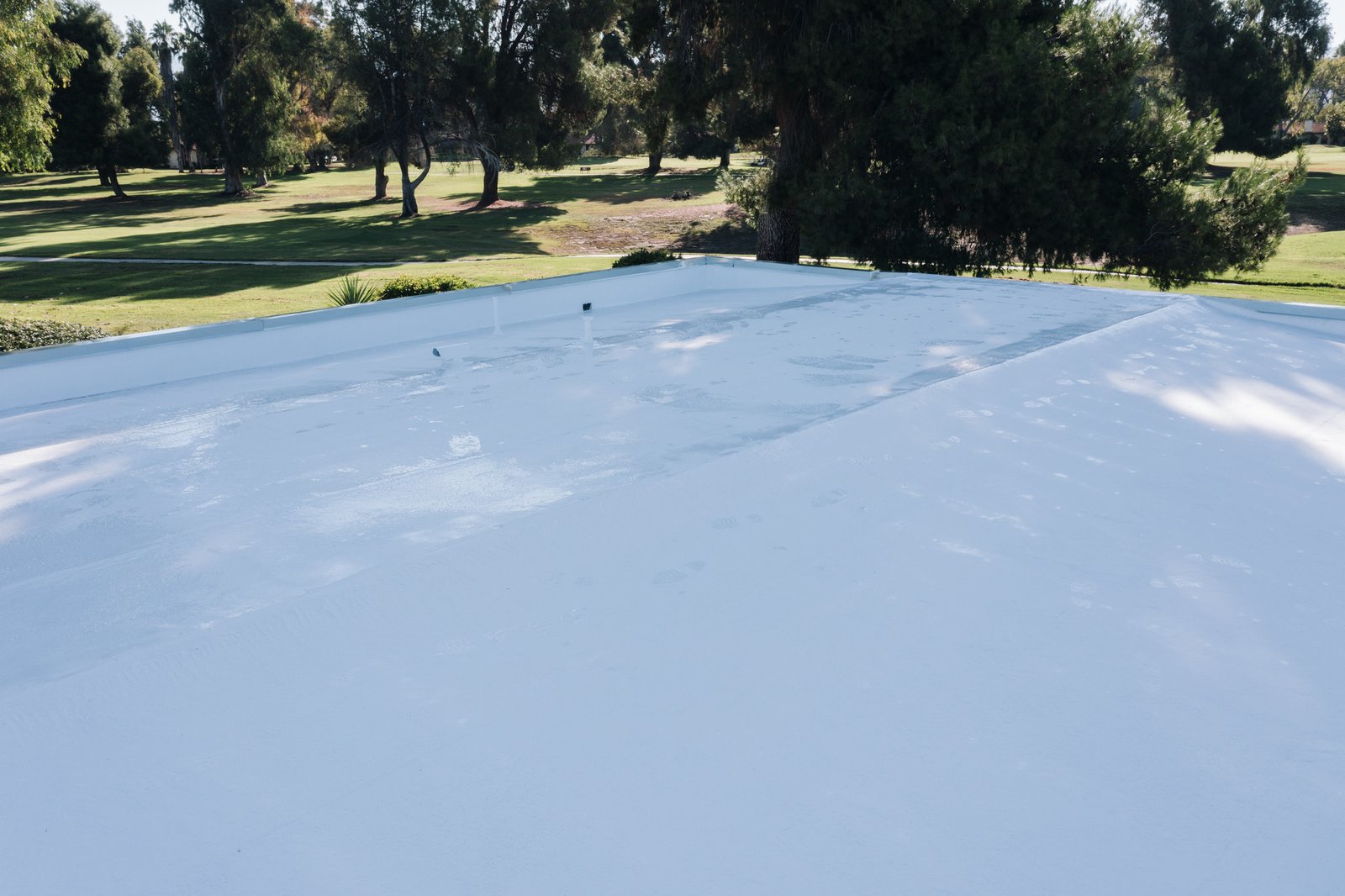
Flashing is installed at sidewalls, headwalls, chimneys, skylights, plumbing vents, roof-to-wall transitions and valleys. Each location uses a different detail because water approaches from different directions. The purpose is always the same: move water back onto the finished roof surface without relying on exposed sealant as the primary defense.
Practical takeaway: ask the contractor to connect the visible symptom to the concealed roof assembly. A useful explanation should identify the entry path, affected materials and the reason the repair method is expected to last.
When a localized correction remains appropriate, Outer Shield roof repair services provide a useful reference for how inspection findings should become a defined repair scope rather than a surface patch.
Why Flashing Fails in Inland Empire Conditions
Flashing failure points
Heat cycles expand and contract metal, sealants and roofing materials at different rates. Fasteners can loosen, sealant can split, and older metal can corrode. Wind-driven rain can also push water into laps that performed adequately during lighter rain.
For Hemet homes, exposure can vary significantly by roof orientation, nearby trees, valleys, walls and wind direction. The inspection should evaluate the entire water path rather than only the spot visible from the ground.
The Difference Between Step Flashing and Counterflashing
Step flashing is woven with each shingle course along a wall. Counterflashing covers the upper edge so water cannot run behind it. On masonry, counterflashing should be integrated into a mortar joint or another durable termination. Smearing roof cement across the joint may hide the defect briefly without restoring the system.
Practical takeaway: ask the contractor to connect the visible symptom to the concealed roof assembly. A useful explanation should identify the entry path, affected materials and the reason the repair method is expected to last.
Client project photo: roofing workmanship and material condition documented by Outer Shield Roofing
Warning Signs of Flashing Failure
Recurring stains near walls or chimneys, leaks that appear only during wind, rust marks, lifted metal, cracked sealant and visible gaps are common clues. Interior staining may not appear directly below the failed detail because water can travel along decking or framing.
For Hemet homes, exposure can vary significantly by roof orientation, nearby trees, valleys, walls and wind direction. The inspection should evaluate the entire water path rather than only the spot visible from the ground.
Material-specific recommendations should also match the roof already installed. Review Outer Shield asphalt shingle roofing for shingle systems and Outer Shield concrete tile roofing for tile assemblies, underlayment and related flashing details.
What a Proper Flashing Repair Includes
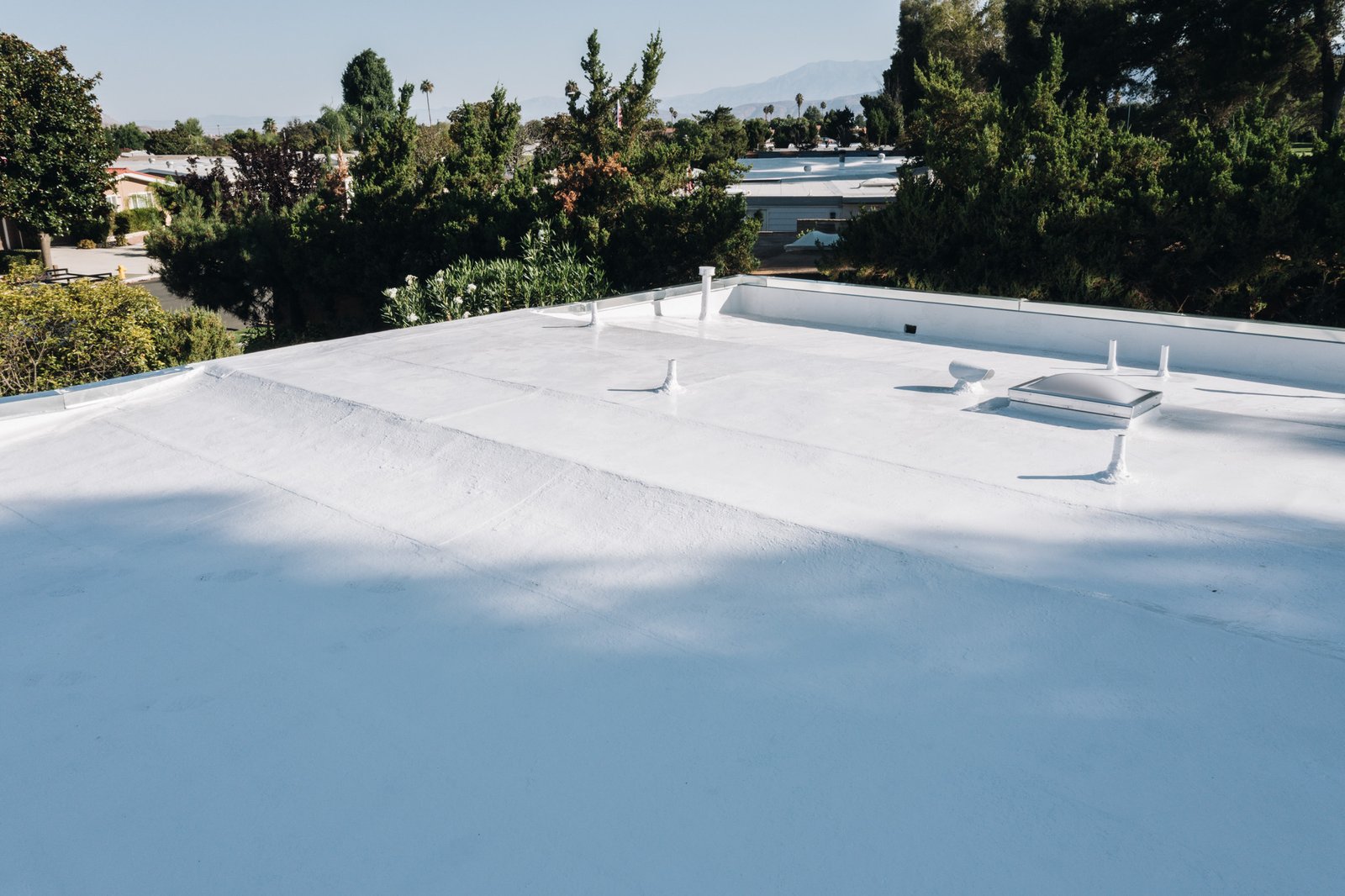
The contractor should remove enough roofing to see the full detail, replace damaged metal, restore underlayment continuity, use compatible fasteners and seal only where the assembly calls for sealant. Adjacent shingles or tiles must be reinstalled without creating new penetrations or broken pieces.
Practical takeaway: ask the contractor to connect the visible symptom to the concealed roof assembly. A useful explanation should identify the entry path, affected materials and the reason the repair method is expected to last.
When Replacement Is Better Than Resealing
If flashing is rusted, incorrectly shaped, buried beneath layers of patching or installed without the required laps, replacement is more reliable than another coating of sealant. Repeated resealing is often evidence that the underlying detail was never corrected.
For Hemet homes, exposure can vary significantly by roof orientation, nearby trees, valleys, walls and wind direction. The inspection should evaluate the entire water path rather than only the spot visible from the ground.
Questions to Ask the Roofer
Ask which flashing component failed, whether surrounding roofing must be removed, how the new metal will be integrated with underlayment, and whether photos will be provided before and after the repair. The answers should describe layers and water flow, not only products.
Practical takeaway: ask the contractor to connect the visible symptom to the concealed roof assembly. A useful explanation should identify the entry path, affected materials and the reason the repair method is expected to last.
Homeowner Decision Table
| Condition | Likely Next Step | Why It Matters |
|---|---|---|
| Localized defect with sound surrounding materials | Targeted professional repair | Preserves serviceable roofing while correcting the defined failure |
| Repeated leaks, brittle materials or widespread deterioration | Broader evaluation or replacement comparison | Multiple failures may indicate declining system reliability |
| Unknown source or conflicting evidence | Diagnostic inspection before authorizing work | Prevents paying for a repair that does not address the actual source |
| Active water entry or safety concern | Emergency stabilization first | Protects occupants and limits secondary damage |
Inspection Checklist
- Identify the exact transition or penetration
- Inspect both flashing and underlayment
- Remove failed sealant and corroded metal
- Restore proper laps
- Use compatible metals and fasteners
- Document concealed conditions
- Water-test when appropriate
How Outer Shield Roofing Approaches This Type of Work
Outer Shield Roofing begins with the source of failure and the condition of the surrounding roof. The team documents visible and concealed conditions when accessible, explains whether the problem is isolated or widespread, and separates temporary stabilization from permanent work. This helps homeowners compare recommendations based on scope rather than price alone.
For projects in Hemet and nearby Riverside County communities, the proposed repair or replacement should account for high heat, ultraviolet exposure, seasonal wind and the roof material already installed. The goal is not to add the most products; it is to restore a clear, durable path for water to leave the roof.
Hemet Flashing: Heat and Wind Take a Toll
Hemet’s high temperatures and seasonal wind hit flashing especially hard. Heat expands and contracts metal, cracking sealant and pulling flashing away from walls and chimneys, while wind-driven rain finds those openings. Regular inspection of flashing details helps Hemet homeowners catch problems before they become leaks.
Hemet flashing questions to ask
- Ask which flashing method is used for the specific joint
- Verify step flashing is properly woven with shingles
- Confirm counter flashing is set into the masonry or wall
- Get sealants and metal types specified in the estimate
Published with Local Expertise
This guide was prepared by Outer Shield Roofing, a licensed, insured roofing contractor serving Hemet and the surrounding area. The recommendations reflect real conditions we see on Hemet-area roofs. We follow California contractor licensing requirements and recommend every homeowner independently verify a contractor’s license and insurance before starting work.
Last reviewed: August 2026. If you have a roof in need of attention in Hemet, East Hemet, Valle Vista, and San Jacinto, contact Outer Shield Roofing for a detailed inspection and written estimate.
Frequently Asked Questions
Can flashing be repaired without removing roofing?
Sometimes a limited repair is possible, but many durable repairs require lifting or removing nearby shingles or tiles to restore the concealed laps.
How long should flashing last?
Properly installed metal can last many years, but its service life depends on metal type, exposure, roof movement and surrounding roofing condition.
Why does the leak return after sealant?
Sealant may bridge a crack temporarily while water continues entering behind the flashing or through a failed lap.
Schedule a Professional Roof Evaluation
When the source or scope is uncertain, a documented inspection is more valuable than another surface patch. Schedule a roofing consultation with Outer Shield Roofing for a Hemet-area home or property.
Technical Sources for Editorial Review
- California Contractors State License Board
- GAF Roofing Resources
- International Code Council
- National Roofing Contractors Association
U.S. Department of Energy – Roofs
{
“@context”: “https://schema.org”,
“@graph”: [
{
“@type”: “Article”,
“headline”: “Roof Flashing Repair in Hemet: Why Small Metal Details Prevent Big Leaks”,
“description”: “Flashing is a top leak source in Hemet. Learn where flashing is used, why it fails in the Inland Empire, and when to repair vs replace.”,
“inLanguage”: “en-US”,
“image”: “https://outershieldroofingcorp.com/wp-content/uploads/2025/09/Hemet-After-03.jpg”,
“publisher”: {
“@type”: “Organization”,
“name”: “Outer Shield Roofing”,
“url”: “https://outershieldroofingcorp.com”
},
“author”: {
“@type”: “Organization”,
“name”: “Outer Shield Roofing”
},
“datePublished”: “2026-08-04”,
“dateModified”: “2026-08-04”
},
{
“@type”: “BreadcrumbList”,
“itemListElement”: [
{
“@type”: “ListItem”,
“position”: 1,
“name”: “Home”,
“item”: “https://outershieldroofingcorp.com/”
},
{
“@type”: “ListItem”,
“position”: 2,
“name”: “Roof Flashing Repair in Hemet: Why Small Metal Details Prevent Big Leaks”,
“item”: “https://outershieldroofingcorp.com/roof-flashing-repair-hemet/”
}
]
},
{
“@type”: “LocalBusiness”,
“@id”: “https://outershieldroofingcorp.com/#business”,
“name”: “Outer Shield Roofing”,
“url”: “https://outershieldroofingcorp.com”,
“image”: “https://outershieldroofingcorp.com/wp-content/uploads/2025/09/Hemet-After-03.jpg”,
“priceRange”: “$$”,
“areaServed”: [
“Hemet”,
“San Jacinto”,
“East Hemet”,
“Valle Vista”,
“Winchester”
],
“knowsAbout”: [
“Roof flashing repair”,
“Roof leak repair”,
“Roof repair”,
“Roof inspection”
]
},
{
“@type”: “FAQPage”,
“mainEntity”: [
{
“@type”: “Question”,
“name”: “Where is flashing installed on a roof?”,
“acceptedAnswer”: {
“@type”: “Answer”,
“text”: “At roof-to-wall junctions, around chimneys, skylights, vents, and in valleys — every place roofing changes direction or meets another surface.”
}
},
{
“@type”: “Question”,
“name”: “How do I know flashing is failing?”,
“acceptedAnswer”: {
“@type”: “Answer”,
“text”: “Look for cracked or peeling sealant, rust, gaps, or loose metal, plus interior stains near walls or chimneys during rain.”
}
},
{
“@type”: “Question”,
“name”: “Can flashing be resealed instead of replaced?”,
“acceptedAnswer”: {
“@type”: “Answer”,
“text”: “Sometimes, if the metal is still sound. But repeated resealing is a warning that replacement is the more durable fix.”
}
},
{
“@type”: “Question”,
“name”: “Why does flashing fail faster in Hemet?”,
“acceptedAnswer”: {
“@type”: “Answer”,
“text”: “Intense UV and temperature swings break down sealant and stress metal, while wind-driven rain tests the joints more aggressively.”
}
}
]
}
]
}