
Every year, over 5 million homeowners need to replace their roofs. Unfortunately, many make big mistakes in hiring a roofer, risking their home’s safety and integrity. For homeowners in Hemet, CA and surrounding communities, choosing the right roofing contractor is critical — and Outer Shield Roofing is here to help you avoid those costly hiring mistakes.
Whether your home needs minor roofing repairs or a full roof replacement project, avoiding common hiring errors can protect your property, your wallet, and your peace of mind. This guide explains the most frequent hiring a roofer mistakes and gives clear information and next steps so you can make the right decision in less time.
Key Takeaways
- Avoid choosing a roofer based solely on cost; quality and proven workmanship should be top considerations when hiring a roofing contractor.
- Always check and verify the contractor’s licenses and insurance to ensure legitimacy and protect your home.
- Read online reviews and collect local recommendations to vet roofing companies and contractors before committing.
- Insist on detailed, itemized estimates so you understand materials, labor, permits, and total project costs.
- Don’t underestimate the value of regular roof inspections and routine maintenance to extend your roof’s life.
- Review warranty and guarantee terms for both materials and workmanship before signing a contract.
- Plan for weather-related contingencies and hire professionals familiar with the local climate to minimize storm and heat damage risks.
Understanding Common Roof Problems
Recognizing the most common roofing problems can save homeowners time and money. Outer Shield Roofing recommends learning the visible and hidden signs that a roof needs attention so you can decide whether to schedule repairs or plan a full roof replacement project.
Signs You Need Roof Repair
After a storm or high winds, leaks are the clearest sign that you should call a professional. Other warning signs include missing or loose shingles, cracked tiles, granule loss in gutters, water stains on interior ceilings, and visible flashing damage. Addressing these issues quickly with targeted repairs prevents water intrusion and more expensive structural damage.
When to Consider Roof Replacement
The decision between roof repair vs replacement depends on the roof’s age, the extent of damage, and comparative costs. As a rule of thumb: if multiple areas show advanced deterioration, if the roof is near the end of its expected lifespan, or if repair costs approach the price of a new roof, a replacement is usually the better long-term investment. Outer Shield Roofing evaluates these factors during a professional inspection and will recommend the most cost-effective option for your home and local climate.
The Importance of Roof Inspections
Regular professional inspections are essential to spot problems you can’t see from the ground. Outer Shield Roofing advises scheduling an inspection after major weather events and at least once a year as part of routine roof maintenance. Inspections uncover underlayment issues, flashing failures, and early signs of material breakdown so you can plan repairs or budget for replacement before small problems become a major job.
| IssueIndicatorSuggested Action | ||
| Leaky Roof | Water marks on ceilings | Request immediate roof repair from Outer Shield Roofing |
| Old Roofing | Sagged roof lines | Schedule assessment for possible replacement |
| Damaged Shingles | Cracked, curled, missing shingles | Evaluate extent; often limited repairs suffice |
| Structural Damage | Visible sagging or structural deformation | Professional inspection and structural consultation |
Types of Roofing Materials and Their Lifespan
Choosing the right roofing materials is a key decision for long-term roof performance and cost. Popular options such as asphalt shingles and concrete tile roofing behave very differently in Southern California’s climate — understanding their lifespans, maintenance needs, and installation requirements helps homeowners pick the best solution for their home and budget.
Asphalt Shingle Roofing: Pros and Cons
Asphalt shingle roofing is widely chosen because it delivers a low initial cost and faster installation. It performs well for many homeowners, but in hot, sun-exposed areas it can show granule loss and aging sooner than more durable options. Good installation, proper ventilation, and quality underlayment from a skilled roofing contractor reduce premature wear and improve lifespan.
Concrete Tile Roofing: Benefits and Challenges
Concrete tile roofs offer long lifespans and strong resistance to heat and sun — a real advantage in Hemet and similar climates. They require a higher upfront investment and more specialized installation (structural review, fastening, and sealing), but their longevity and low routine maintenance often justify the higher initial costs for homeowners planning long-term projects.
Understanding Material Lifespan and Costs
Lifespan depends on material quality, installation, ventilation, and maintenance. Typical ranges are shown below, but Outer Shield Roofing evaluates environmental exposure and installation details before recommending materials for your roof replacement or repair project.
| Material Average Life span Initial Cost Maintenance Cost | |||
| Asphalt Shingle | 15-30 years | Low | Medium |
| Concrete Tile | 30-50 years | High | Low |
Bottom line: match material choice to your budget, desired lifespan, and aesthetic goals. Outer Shield Roofing can walk you through installation considerations (ventilation, underlayment, and warranty coverage) so you get the best balance of quality and cost for your home.
Mistake 1: Choosing Cost Over Quality
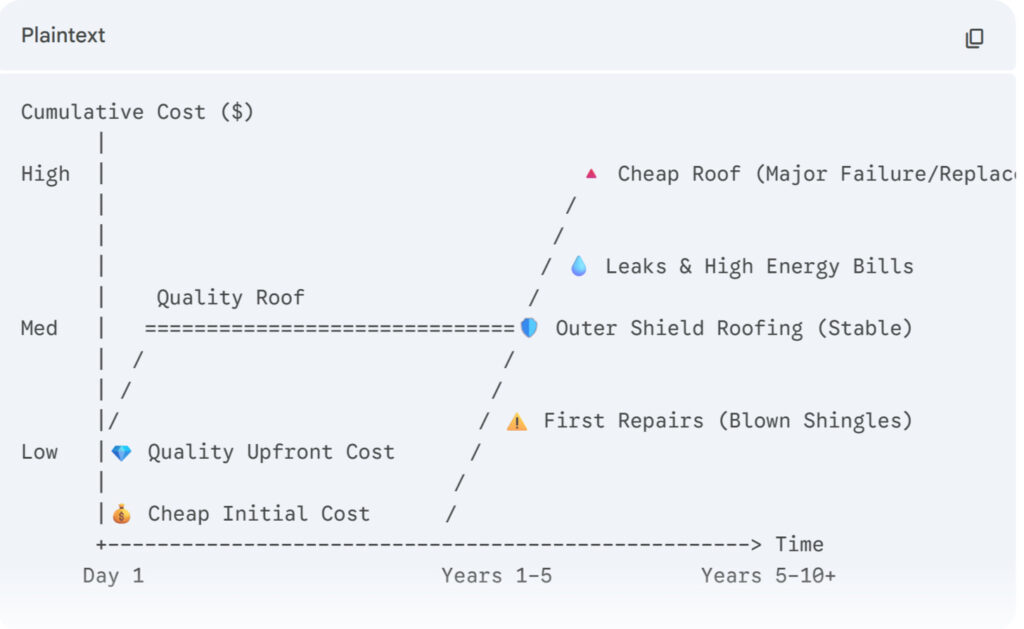
Many homeowners fall into the trap of choosing a roofer wrong by putting cost first. Selecting the lowest bid often leads to short-term savings but higher long-term costs in repairs, reduced roof lifespan, and poor performance. When hiring a roofing contractor, prioritize proven quality and workmanship over the cheapest quote.
The Risks of Cheap Roofing Solutions
Contractors who cut corners in roofing may use inferior materials, skip critical steps in installation, or rush the job to lower costs. Those shortcuts can be invisible at first but typically show up as leaks, blown-off shingles, or early failure during storms — creating expensive repair needs down the road.
Long-Term Costs of Poor Installation
What looks like a bargain often becomes the homeowner’s problem: higher energy bills from poor insulation, interior damage from leaks, and decreased home value. A low bid that avoids proper flashing, underlayment, or ventilation will cost far more once replacement or major repair is necessary.
Quality Materials vs. Budget Cuts
Investing in higher-quality materials and a skilled roofing contractor reduces lifetime costs. Outer Shield Roofing recommends balancing material quality, installation standards, and warranty coverage rather than chasing the lowest price. Ask contractors to explain material brands, installation steps, and how they ensure quality work before you sign a contract.
🔄 Cause and Effect Flowchart
- Choice A: Choose Lowest Bid ➡️ Contractors Cut Corners ➡️ Early Leaks & Damage ➡️ Higher Long-Term Costs
- Choice B: Prioritize Quality ➡️ Proper Materials & Installation ➡️ Weather Resistant & Insulated ➡️ Lower Lifetime Costs
Mistake 2: Not Checking Licenses and Insurance
A very common mistake is skipping checks on a roofing contractor’s licensing and insurance. Failing to verify credentials can leave homeowners exposed to liability, failed inspections, and denied insurance claims. Make sure the contractor you hire is properly licensed and insured for roofing work.
Why Proper Licensing Matters
Licensing shows that a roofer understands building codes and follows state requirements. A properly licensed contractor is more likely to deliver quality work and to pull required permits. When you contact Outer Shield Roofing, we provide clear proof of our licenses and explain what classifications apply to your project.
The Role of Insurance in Roofing Projects
Insurance protects both you and the workers on site. Active general liability coverage and workers’ compensation mean the contractor’s policy — not your homeowner’s policy — should cover property damage or worker injuries. Ask to see certificates and verify policy dates so you aren’t surprised later.
How to Verify Credentials
Use this quick three-step checklist when vetting any roofing company:
- Ask: Request the contractor’s license number and insurance certificates up front.
- Request: Get copies of the insurance declarations page and written license details.
- Verify: Confirm licensing and policy status with the state licensing board or ask Outer Shield Roofing to help verify credentials for you.
Doing these three steps helps homeowners avoid hiring roofing mistakes and prevents liability concerns. If a roofer resists or can’t produce proof, treat that as a major red flag.
Before hiring a roofing contractor, it’s important to verify that they are properly licensed in California. The state provides a public license lookup through the California Contractors State License Board (CSLB), which regulates contractors and helps protect homeowners from unlicensed work.
Homeowners can search a contractor’s license by entering the company name or license number on the CSLB website. This lookup allows you to confirm that the license is active, check the contractor’s classification, view bond and insurance information, and see whether there are any disciplinary actions on record.
Verifying a contractor’s license is a simple step that can help ensure you are working with a qualified professional who meets California’s legal requirements for performing roofing work.
Mistake 3: Ignoring Recommendations and Reviews
Recommendations and reviews reveal how a contractor performs on real projects. Homeowners who ignore references lose the chance to learn about responsiveness, timeliness, quality work, and warranty follow‑through.
Importance of Online Reviews
Online reviews give a snapshot of customer satisfaction and common issues. Look for patterns — repeated complaints about missed deadlines, clean-up, or workmanship are warning signs. Ask for recent project references and check the contractor’s local reviews to confirm their reputation. For example here is a link to our reviews as we maintain above a 4.9 star rating, when you are looking for a roofer our listing is an excellent example of a qualified professional.
You can read what customers are saying about their experience with us here:
https://share.google/UfvJfQ55a2UQFsJCs
Learn more about our services at:
https://outershieldroofingcorp.com/
How to Seek Out Reliable Recommendations
Start by asking neighbors, friends, or family who had recent roofing projects. Request references from the contractor — ideally local homeowners with similar roofs — and call them. Ask specific questions: Did the crew show up on time? Was the estimate accurate? Were warranty claims handled promptly?
Using Local Associations for Trusted Contractors
Local industry groups add credibility. Instead of general directories, check membership or affiliation listings such as regional contractor associations. Outer Shield Roofing participates in local industry networks and can point you to trusted association resources like RCA SoCal and local contractor directories.
Combining online reviews, personal references, and association memberships gives homeowners the best picture of a contractor’s track record and reduces the risk of hiring mistakes.
Mistake 4: Skipping Detailed Estimates
Skipping a detailed estimate is one of the most common mistakes homeowners make when hiring a roofing company. A clear, itemized estimate protects you from unexpected costs and scope creep during the project. Before you commit, make sure the estimate spells out materials, labor, permits, and any exclusions.
What to Look for in a Roofing Estimate
A thorough estimate should list brand and type of materials, quantities, labor hours or rates, permit fees, disposal or haul‑away charges, and the projected timeline. It should also define the project scope (what is included and what is not), payment schedule, and warranty details so you know exactly what you’re buying.
Understanding the Cost Breakdown
| ComponentDescriptionCost | ||
| Materials | Type and quantity of materials (e.g., shingles, underlayment, flashings) | Specified in estimate |
| Labor | Projected hours, crew size, and labor rates | Specified in estimate |
| Additional Fees | Potential extra costs such as permit fees, disposal, or unforeseen repairs | Specified in estimate |
| Total | Sum of all the above costs | Specified in estimate |
Questions to Ask Before Committing
- Can you provide a full list of materials and brands being used, and the related warranties?
- Are there any additional fees or potential change orders not included in the initial estimate?
- What is the projected timeline, and what factors could lead to delays?
Request a written estimate from each contractor and compare them line by line. If you prefer an example, Outer Shield Roofing provides a sample estimate and a free project consultation so you can see exactly how costs and scope are presented — request your detailed estimate and free consultation via our contact page.
Mistake 5: Underestimating the Need for Inspections
Many homeowners undervalue regular roof inspections and routine roof maintenance. Professional inspections identify problems you can’t see from the ground — underlayment failures, damaged flashing, ventilation issues, or early material breakdown — letting you address them before they escalate into costly repairs or a premature roof replacement.
Outer Shield Roofing recommends an annual inspection plus additional checks after major storms. Regular inspections reduce long‑term costs, extend the life of your roof, and protect your home from water damage. Learn more about our inspection and maintenance plans here.
| Inspection FrequencyTypical Issues IdentifiedBenefits | ||
| Annual and Post-Weather Events | Loose/missing shingles, leaks, damaged flashing | Prevents escalation, lowers long-term repair costs |
| Upon Visible Damage or Leakage | Structural sagging, moisture intrusion, mold growth | Ensures safety, reduces replacement urgency |
| At Real Estate Transaction | Inadequate installations, past repairs | Supports disclosure, improves sale confidence |
Scheduling routine inspections is a small investment that saves time and expense later. After an inspection, Outer Shield Roofing will provide a prioritized maintenance plan and estimate so you can budget for repairs or replacement on your timeline.
Mistake 6: Overlooking Warranty and Guarantees
A major mistake is ignoring roofing warranties. Material warranties (from manufacturers) and workmanship warranties (from the contractor) protect your investment — but only if you understand their terms, duration, coverage limits, and claim process.
Material warranties vary by product and typically cover defects in the roofing components. Workmanship warranties cover installation errors and are issued by the roofing company. Make sure the estimate or contract spells out who is responsible for labor and materials if a claim arises, whether warranties are transferable, and what actions (like missed maintenance) could void coverage.
Before you sign, ask: How long does each warranty last? What specifically is covered? How do I file a claim? Who pays for shipping, replacement materials, and labor? Outer Shield Roofing provides written warranty terms for every job and will walk you through the claims process so you know your coverage and what to expect over time.
Mistake 7: Not Planning for Weather-Related Issues
Choosing the right roofing contractor means planning for the local weather. Failing to account for storm, heat, and seasonal stresses is a common mistake that can lead to costly damage and shorter roof life. Outer Shield Roofing builds contingency and maintenance plans so your roof is ready for whatever the season brings.
The Impact of Storm Damage on Roofing
Storms can remove shingles, tear off flashings, and expose underlayment, quickly turning a repair into a full roof replacement project. How a roof performs in storms depends on materials, installation quality, and ongoing maintenance. Homeowners in Hemet, CA should schedule a prompt post-storm inspection with a trusted roofer to assess damage and limit further issues.
Understanding Seasonal Challenges for Roofing
Different seasons stress roofs in different ways: intense summer sun causes UV and heat damage, while rare freezes or heavy rains can accelerate material wear or cause leaks. Proper ventilation, quality underlayment, and heat‑resistant materials reduce the risk of seasonal damage. Outer Shield Roofing recommends material choices and installation details tailored to local climate conditions to protect your home year-round.
Importance of Having a Contingency Plan
Even the best-installed roof can suffer storm damage. Having a contingency plan—an inspector on call, temporary covering procedures, and a prioritized repair plan—prevents small problems from turning into large claims. After severe weather, contact Outer Shield Roofing for emergency assessment and a prioritized repair estimate so you can act quickly.
Case Studies: Real Roofing Experience Insights
Learning from real projects highlights common failure modes like flashing failures, underlayment wear, and heat damage to roofing materials. Outer Shield Roofing documents these issues on local projects and uses those lessons to improve material selection and installation practices.
Flashing Failures and Their Consequences
Improper flashing around chimneys, vents, and valleys allows water to bypass shingles and enter the structure. Case studies show that correctly specified and carefully installed flashing prevents leaks, mold, and structural rot — saving significant repair costs down the line.
Addressing Underlayment Wear for Longevity
Underlayment is the roof’s secondary barrier against moisture. Over time, poor ventilation or prolonged exposure can degrade it. Replacing worn underlayment during a repair or replacement greatly increases the roof’s lifespan; Outer Shield Roofing inspects underlayment condition as part of every assessment.
The Effects of Heat Damage on Roofing Materials
Excess heat can make shingles curl, lose granules, or warp tiles. Using heat-resistant materials, reflective coatings, and correct attic ventilation limits heat damage. For more information on coatings and temperature mitigation, consider industry resources like roofcoatings.org or discuss coating options with our team.
- Regular checks for installation integrity, particularly of flashings.
- Timely replacement or repair of worn underlayment during planned projects.
- Selection of heat-resistant materials and proper roof ventilation to reduce heat effects.
These examples show that selecting the right materials, ensuring correct installation, and maintaining a regular inspection schedule are the best defenses against weather-related roofing damage. Outer Shield Roofing combines local experience with targeted maintenance plans to protect your roof and your home.
How Outer Shield Roofing Can Help You
At Outer Shield Roofing, we understand how critical it is to hire the right roofing company for your home. Our mission is to deliver quality roofing services, protect your property, and guide you through each step of the roofing project so you avoid the common mistakes other homeowners make.
Comprehensive Roof Consultations
Every project begins with a thorough roof consultation. Outer Shield Roofing evaluates your roof’s condition, reviews material options, and outlines the scope, timeline, and costs so you can make an informed decision. Our consultations include clear information about material warranties, workmanship coverage, and expected lifespan to help you choose the right roofing solution for your home.
Request a free consultation and estimate to see how we recommend balancing cost, quality, and longevity for your roof.
Expert Inspections and Maintenance Services
Routine inspections and proactive maintenance are core to keeping your roof performing well. Outer Shield Roofing provides professional inspections that identify underlayment issues, flashing concerns, ventilation problems, and signs of premature material wear. After each inspection we deliver a prioritized maintenance plan and a clear estimate so you can budget repairs and extend the life of your roof.
Schedule an inspection to protect your home from leaks and costly future repairs.
FAQ
What are common signs indicating the need for roof repair?
How do I decide between roof repair and replacement?
Why are regular roof inspections important?
What are the pros and cons of asphalt shingle roofing?
What are the benefits and challenges of concrete tile roofing?
How should I weigh material lifespan and costs when choosing roofing materials?
What are the risks of prioritizing cost over quality in roofing?
Why does proper licensing matter for a roofing contractor?
What role does insurance play in roofing projects?
How can I verify a roofing contractor’s credentials?
What is the importance of online reviews when choosing a roofer?
How do I find reliable recommendations for roofing contractors?
What should a comprehensive roofing estimate include?
What components are essential during a roof inspection?
When should I schedule a roofing inspection?
What is the difference between material and workmanship warranties in roofing?
How do warranties protect homeowners?
Why should I consider the weather when hiring a roofer?
How do flashing failures affect roofing integrity?
What impact does underlayment wear have on a roof?
How can Outer Shield Roofing assist me with my roofing needs?
Hiring a roofer is one of the most important decisions a homeowner will make when planning a roof repair or roof replacement. While many focus on price and speed, make sure you also evaluate licensing, insurance coverage, warranty terms, and local experience. If you’re ready to move forward, contact Outer Shield Roofing for a free consultation and detailed estimate.
Accidents, injuries, and property damage happen more often than homeowners expect. When a roofing contractor cuts corners on licensing, insurance, or labor practices, liability and repair responsibility can shift from the contractor to the homeowner — often long before the homeowner realizes it.
Below are seven of the most costly mistakes homeowners make when hiring a roofer, and how to avoid them with help from Outer Shield Roofing.
How Verifying the Right Roofer Protects Your Home/Condo
At Outer Shield Roofing, protecting homeowners is our priority. We maintain proper licensing and active insurance coverage, carry workers’ compensation for our crews, and provide written workmanship warranties so customers know what to expect long after the job is finished.
We serve the local communities around Hemet and the Inland Empire, and stand behind every project with transparent estimates, documented insurance and licensing, and clear warranty terms. Hiring the right roofing contractor should protect your home — not create legal or financial exposure.
For help verifying credentials, obtaining a detailed estimate, or scheduling an inspection after storm events, contact Outer Shield Roofing. Helpful resources for homeowners and contractors are also available through local association listings and industry organizations.