
Fact: Homes that get a professional inspection in late summer cut their risk of early-season leaks by up to 60%. That single check can save thousands in water damage repair.
You can protect your home by acting while there’s still time. Scheduling an inspection in late summer gives professionals space to spot loose shingles, worn flashing, or small gaps that lead to leaks once the heavy rain arrives.
Outer Shield Roofing serves homeowners across Hemet, Temecula, Murrieta, Menifee, Moreno Valley, Riverside, and Fallbrook. Our team specializes in asphalt shingle and concrete tile roofing, so we match repairs to local weather challenges.
Plan a proactive repair and you extend the life of your covering, limit water entry, and avoid urgent calls when contractors get booked.
Key Takeaways
- Late-summer inspections reduce the risk of first-rain leaks.
- Professional checks catch small issues before they become major damage.
- Asphalt and concrete tile expertise helps address local weather risks.
- Scheduling early ensures access to timely repairs and quality work.
- Proactive action extends lifespan and protects your investment.
Why Roof Maintenance Before Rainy Season Is Essential
A timely check of your home's protective system saves money and stress during heavy storms. Hurricane season begins in June, so acting early protects structure and reduces the chance of emergency calls when contractors are fully booked.
Homeowners in Murrieta and Menifee should prioritize inspections to find hidden issues in the roofing system. Regular inspections identify loose shingles, worn flashing, and other problems that lead to leaks and water damage.
Waiting until peak weather often means long wait times and higher costs, a point KAM Roofing Services highlights. Proactive care for both residential and commercial roofing assets keeps properties safe and reduces repair bills.
- Save time and stress: schedule an inspection early to avoid emergency repairs.
- Catch small issues: early repairs prevent extensive water damage.
- Protect commercial roofing: keep business assets secure through storms.
For guidance on correct shingle work and timely upgrades, see our guide to asphalt shingle installation. Acting now is the best way to avoid costly emergency repairs later.
Common Signs of Roofing Damage to Watch For
Identifying visible wear and hidden weak points now prevents small defects from becoming costly leaks later.
Flashing Failures and Underlayment Wear
Flashing that has loosened or split is a common access point for water. Years of heat and UV exposure can make metal flashings brittle. Worn underlayment also loses its ability to shed water.
“Flashing failures often occur after years of heat damage, leaving your home vulnerable to water intrusion during the first heavy rain.”
Missing Shingles and Cracked Tiles
Missing shingles and cracked tiles are obvious signs you need attention. High winds can dislodge damaged shingles quickly. Small openings let water seep into attics and cause water damage if not fixed in time.
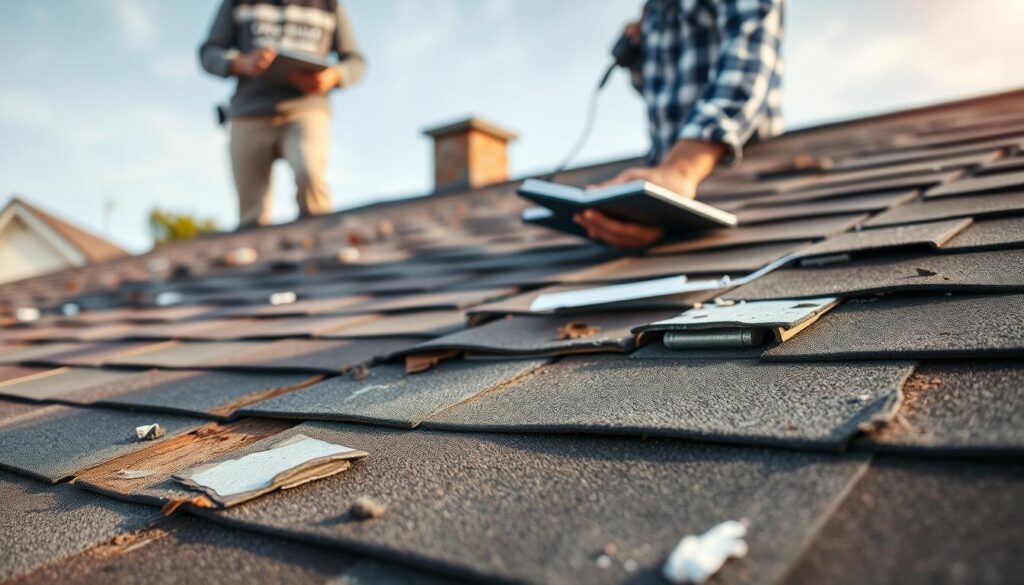 roof maintenance. In the background, capture a clear sky with the soft glow of late summer sunlight, enhancing the mood of proactive care. The branding "Outer Shield Roofing" should be subtly visible on the inspector's clipboard or shirt, emphasizing expertise. Ensure a balanced composition and natural colors to evoke a sense of urgency and professionalism in roof maintenance.” title=”A detailed and realistic image depicting common signs of roofing damage, focusing on a residential setting. In the foreground, show worn-out asphalt shingles with missing pieces, curling edges, and signs of discoloration from weather wear. In the middle, include a close-up view of a professional roofing inspector in modest casual clothing examining the roof with a clipboard and a flashlight, highlighting the importance of roof maintenance. In the background, capture a clear sky with the soft glow of late summer sunlight, enhancing the mood of proactive care. The branding "Outer Shield Roofing" should be subtly visible on the inspector's clipboard or shirt, emphasizing expertise. Ensure a balanced composition and natural colors to evoke a sense of urgency and professionalism in roof maintenance.” width=”800″ height=”457″ class=”aligncenter size-large wp-image-8890″ />
Heat Damage and Aging Roofs
Older coverings show curling, granule loss, and surface cracks. Debris from nearby trees traps moisture and accelerates rot.
- Check for loose or missing material after strong winds.
- Look for soft spots in attics that signal leaks.
- Schedule inspections to catch small issues early.
For practical tips and local guidance, see our collection of articles at roofing resources.
Preventive Steps to Protect Your Home from Water Intrusion
A smart, early sweep of gutters and a quick ventilation test protect your home from common water risks. These two tasks reduce pooling and lower indoor moisture that can damage structural elements and flashing.
Gutter Cleaning and Ventilation Checks
Start by clearing debris from gutters and downspouts. Proper cleaning directs water away from your foundation and prevents pooling that leads to leaks. Outer Shield Roofing uses specialized equipment to remove clogs quickly and safely.
Next, check attic ventilation to stop moisture buildup. Good airflow prevents rot and extends the life of shingles and underlayment. A professional inspection finds weak spots, damaged flashing, or small leaks and lets our team repair them before heavy rain.
- Keep drains clear: unclog gutters and test downspouts for flow.
- Check vents: ensure attic vents and fans move air freely.
- Schedule an inspection: identify and repair issues early to avoid emergency repairs.
For practical steps to prepare your home, see our guide to prepare your home for wet weather. Taking these simple actions now protects your home’s integrity and reduces water damage risk when the rain starts.
When to Choose Between Roof Repair and Replacement
A clear, expert review will help you choose the best path for protecting your property as storms approach.
Evaluating Experience and Local Reputation
Start with a professional inspection that checks shingles, flashing, and underlayment. That review shows the condition and remaining lifespan of the system.
If you see multiple leaks, widespread cracking, or severe heat damage, a full replacement often makes more sense than repeated repairs. Emergency repairs can stop a leak temporarily. But they may not prevent future problems.
“A targeted consultation gives homeowners confidence and a clear plan to protect the home.”
Understanding Service Areas and Estimates
Outer Shield Roofing offers expert consultation to homeowners in Riverside and Fallbrook. We evaluate shingles and flashing and explain whether a repair will restore integrity for the upcoming rainy season.
We provide detailed estimates for Moreno Valley owners so you understand time, costs, warranty options, and long-term value. A replacement brings a comprehensive manufacturer warranty. Repairs are faster but may be temporary.
| Indicator | When to Repair | When to Replace |
|---|---|---|
| Extent of damage | Localized leaks or a few cracked shingles | Multiple leaks, widespread cracks, or large debris impact |
| Remaining lifespan | More than 5 years left | Less than 5 years; aging system |
| Cost outlook | Lower immediate cost; possible repeat repairs | Higher upfront cost; lower long-term stress and risk |
Selecting the Right Roofing Contractor for Your Needs
Your best protection is a team with proven local experience and transparent documentation. Choose a contractor who shows clear records and timely communication. This gives you confidence and peace of mind.
Evaluating Experience and Local Reputation
Check local references and past work. Ask for examples of similar projects in Hemet, Temecula, Murrieta, Menifee, Moreno Valley, Riverside, and Fallbrook.
Confirm licensing, insurance, and documented warranties. Inspect photos and speak to past clients. That helps you spot patterns in quality and response to issues.
Understanding Service Areas and Estimates
Get a written estimate with clear scope and timeline. A professional contractor outlines materials, equipment needs, costs, and warranty terms.
“A clear, itemized estimate removes surprises and helps you make an informed decision.”
- Verify capacity for residential or commercial roofing projects.
- Ensure contractors carry proper equipment and insurance.
- Ask for documentation and a clear warranty on work performed.
| Check | What to Request | Why It Matters |
|---|---|---|
| Reputation | Local references and reviews | Shows reliability and timely work |
| Documentation | Written estimates and contracts | Prevents misunderstandings and protects your property |
| Warranty & Equipment | Manufacturer warranty and proper tools | Ensures lasting repairs and safe work |
For trusted, local service, consider scheduling a consultation with Outer Shield Roofing and learn about our reliable roof repair services.
Conclusion
A timely inspection gives you a clear plan to prevent leaks and extend your system's lifespan.
Be proactive and watch for early signs of damage. Catching small problems now helps avoid larger water issues later and preserves the integrity of your shingles and coverings.
Outer Shield Roofing provides expert inspections and targeted repairs to keep your property secure. We document work clearly and back our teams with reliable warranties to protect your investment and give you peace of mind.
Contact our team today to schedule an inspection and make sure your roof is ready for the next rainy season.