
Fact: sun-warmed surfaces in California can reach 150°F or higher, creating stress on shingles and membranes that many homeowners underestimate.
You face intense conditions in places like Hemet, Temecula, Murrieta, Menifee, Moreno Valley, Riverside, and Fallbrook. Outer Shield Roofing works with you to spot vulnerabilities early and plan durable solutions.
Understanding how high surface temps accelerate wear is the first step. Our team explains practical roofing measures and maintenance steps so you can keep your home stable through the peak season.
Expect clear guidance on inspection timing, materials that reflect heat, and simple fixes you can schedule now. We combine technical know-how with caring service so your investment lasts longer and your family stays comfortable.
Key Takeaways
- Roof surface temps can top 150°F and speed up damage.
- Outer Shield Roofing serves homeowners across key Inland Empire cities.
- Early inspection finds weak spots before they fail.
- Reflective materials and targeted repairs extend lifespan.
- Simple, timely steps keep your home safer and more comfortable.
Understanding the Impact of Summer Heat on Your Roof
Long hours of sunlight push some roof surfaces to extreme temperatures, accelerating aging of common materials. When surface readings top 150°F, your roofing experiences physical stress that shortens service life.
Thermal Expansion and Material Stress
Intense daytime temperatures cause materials to expand and then contract as they cool. This cycle weakens fasteners, seals, and seams in many roofing systems.
Metal roofs and asphalt shingles respond differently, but both can warp, crack, or loosen under repeated thermal movement.
UV Radiation Effects on Asphalt Shingles
Constant sunlight wears down the granules that shield asphalt shingles. Loss of granules means faster aging and more frequent repairs.
“Even high-quality roofing systems can degrade when exposed to relentless California sunlight over long stretches.”
- Higher surface temperatures force your air conditioning system to work harder and raise monthly cooling costs.
- Regular maintenance reduces cracking and material loss on older roofs.
How to Protect Roof From Extreme Summer Heat
Simple upgrades taken before the heat cycle peaks can add years to your roofing system. Schedule a professional assessment with Outer Shield Roofing to check materials, flashings, and ventilation.
Implement a cool roof strategy. Reflective membranes and light-colored shingles reduce absorbed energy and lower attic temperatures. These cool roof options also help your HVAC run less and save on cooling costs.
Keep surfaces clear. Regularly removing debris and trimming overhangs helps coatings and shingles reflect sunlight better. Ventilation upgrades and protective coatings work together to slow material wear.
Plan inspections in spring so issues get fixed before the hottest weeks. In Hemet, Temecula, and Murrieta, routine checks by trained crews confirm that ventilation, seals, and coatings stay effective.
“Proactive maintenance and smart material choices are the best ways to extend the life of residential roofs under intense sun.”
- Assess materials and fasteners before peak temperatures.
- Choose cool roofing membranes or coatings for higher reflectivity.
- Upgrade attic ventilation to reduce trapped heat.
| Measure | Benefits | Best For |
|---|---|---|
| Cool roofing membrane | Lower surface temps, longer shingle life | Asphalt and low-slope roofs |
| Reflective coatings | Improves reflectivity, seals small cracks | Older roofs needing refresh |
| Ventilation upgrade | Reduces attic temperature, cuts HVAC load | Homes with poor airflow |
| Routine inspection | Early detection of failures, targeted repairs | All residential roofs |
Identifying Common Signs of Heat-Related Roofing Damage
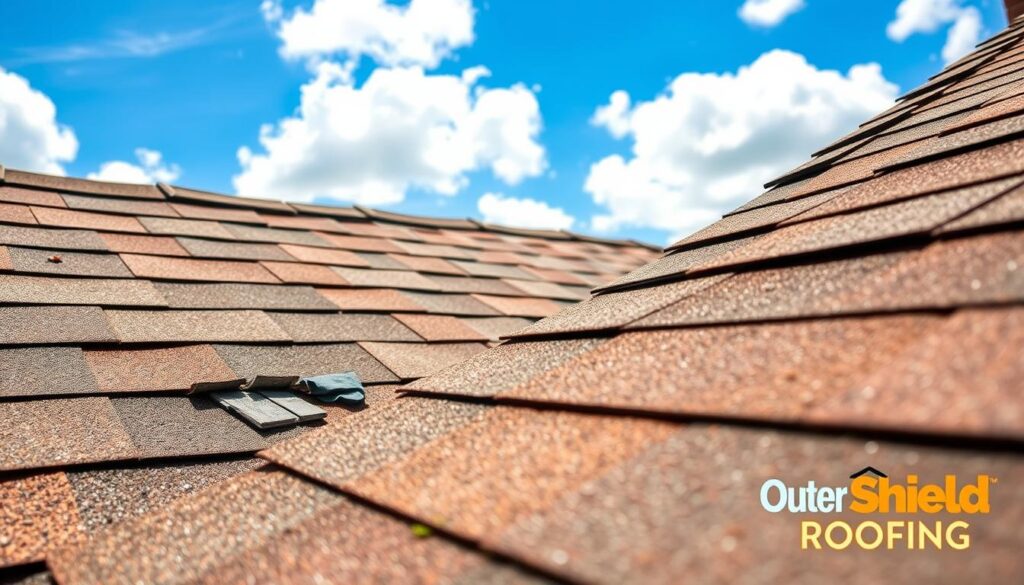
Small visual cues on shingles and metal trim often reveal larger problems caused by prolonged sun exposure. Spotting these early helps you schedule repairs before moisture reaches critical parts.
Flashing Failures and Sealant Degradation
Check flashings around chimneys, vents, and valleys for cracked sealant or gaps. Flashing failures often occur when sealants break down under stress, letting moisture into the underlayment in Menifee, CA.
Cracked Roof Tiles and Underlayment Wear
Look for cracked or curled tiles and signs of underlayment wear. Our teams in Riverside and Moreno Valley find blistering and worn underlayment that signal the roofing is struggling with prolonged heat.
Missing Shingles and Granule Loss
Cracked, curled, and missing shingles are common on asphalt shingles. Outer Shield Roofing often documents significant granule loss on asphalt shingles during inspections, which shortens service life and raises leak risk.
- If you spot missing shingles or metal corrosion, address the issue as a critical part of maintenance.
- Surface blistering and granule depletion can lead to expensive leaks after rain.
Need a closer look? Review common signs and next steps with our guide on common roof problems.
The Role of Proper Attic Ventilation in Temperature Control
Balanced ventilation stops hot air from stagnating and helps your whole roofing system run better. Proper airflow is a vital part of long-term maintenance.
Attic vents work together to move hot air out and draw cooler air in. Ridge vents, soffit vents, and attic fans form a simple, effective system.
Attic Fans and Ridge Vents
Installing ridge vents and attic fans helps regulate temperature in your attic. This lowers the load on your HVAC and improves home energy use in Fallbrook, CA.
Without enough air movement, trapped heat can warp decking and shorten the life of shingles in Hemet, CA. Outer Shield Roofing stresses a balanced approach to avoid moisture and material stress.
- Ridge vents provide passive exhaust along the peak of the roof.
- Soffit vents bring in fresh air at the eaves to feed ridge vents.
- Attic fans boost airflow when natural movement is insufficient, and our Temecula teams confirm fans are operating correctly.
| Component | Benefit | Best Use |
|---|---|---|
| Ridge vent | Continuous passive exhaust, low maintenance | Homes with long ridgelines |
| Soffit vent | Supplies cool intake air, balances flow | Houses with enclosed eaves |
| Attic fan | Active ventilation during peak conditions | Attics with poor natural airflow |
Want practical guidance? Learn more roofing guidance on our blog posts.
Benefits of Installing Reflective Roofing Materials
A well-chosen reflective layer turns intense sunlight into less absorbed energy and measurable savings.
Cool roof shingles from brands like Owens Corning and CertainTeed can lower surface temperatures by up to 50°F. That drop slows granule loss and reduces wear on shingles. Lower surface temperatures also help your air conditioning unit run less and last longer.
Radiant barriers and reflective coatings act as a thermal barrier. Expect a typical reduction in cooling costs of about 5–10% when barriers are installed correctly.
“Reflective materials reduce heat transfer and keep attics cooler, improving comfort and cutting energy bills.”
Metal roofs with reflective coatings are another strong option for Murrieta and nearby areas. They naturally reflect sunlight and lower indoor temperatures on the hottest day.
- Reduce heat absorption and extend shingle life.
- Lower energy bills and ease strain on cooling systems.
- Professional installation of radiant barriers improves overall performance—Outer Shield Roofing offers this service in Menifee, CA.
Learn more about certified approaches in the cool roofs guide.
Why Regular Roof Inspections Are Essential for California Homes
A yearly check gives you clarity on the remaining lifespan of an asphalt covering. Asphalt roofs typically last 20 to 30 years, but that range depends on maintenance and local climate.
Outer Shield Roofing recommends annual inspections in Fallbrook and across Moreno Valley, CA. Our teams in Riverside perform detailed reviews that catch early wear, loose flashing, and granule loss before leaks start.
Scheduling routine work preserves value and extends service life. Professional roofing assessments find fastener issues, ventilation gaps, and sealant failures that short visual scans miss.
You get a clear plan and timeline when technicians document needed repairs and prioritize actions. This helps you budget and avoid emergency fixes.
- A regular inspection by Outer Shield Roofing helps keep your home in peak condition.
- Inspections limit costly repairs and support the 20–30 year lifespan of asphalt systems.
- Trust certified crews to monitor roofing health through seasonal changes.
Managing Overhanging Branches and Debris
Overhanging branches and accumulated debris shorten material life and raise leak risk on many neighborhood homes.
Maintain a minimum of 6 feet of clearance between tree limbs and your roof to stop scraping and impact damage. Trim limbs before they touch shingles and fasteners. This reduces direct abrasion to roofing materials and lowers repair needs.
Leaves, needles, and stuck debris trap moisture. Trapped moisture feeds moss and algae that eat at shingle granules and underlayment. Removing debris helps the surface reflect sunlight better and slows wear caused by prolonged heat.
Outer Shield Roofing advises homeowners in Hemet to manage tree growth near their home. Our Temecula team can identify hazardous branches and recommend safe trimming or removal to keep roofs durable and safe.
- Trim branches to maintain 6 feet of clearance and avoid abrasion to your roof.
- Clear gutters and valleys frequently to prevent trapped moisture and biological growth.
- Schedule seasonal checks with professionals to spot weak spots and dangerous limbs.
Need guidance? Review our recommended installation practices in the asphalt shingle installation guide to align trimming and maintenance with long-term roofing care.
Applying Protective Coatings to Extend Roof Lifespan
A reflective coating can turn an aging surface into a durable, energy-saving layer in just one day. These products add a bright, UV-resistant barrier that slows thermal cycling and granule loss on asphalt shingles and metal panels.
Elastomeric and Cool Roof Coatings
Elastomeric and cool roof coatings go directly over existing shingles, metal, or flat systems. They create a continuous film that reduces surface temperature and resists sunlight-driven wear.
- Cost-effective: coatings extend the life of your roofing materials without a full replacement.
- Versatile: compatible with asphalt shingles, metal, and low-slope roofs.
- Energy benefits: a properly applied cool roof coating can lower attic temperatures and help reduce energy use.
- Color choice matters: lighter shades and reflective materials maximize the ability to reduce heat.
- Professional application ensures adhesion and long-term performance for varied roofing systems.
Outer Shield Roofing uses high-quality coatings that match local climate needs in Murrieta and Menifee, CA. With the right color and reflective materials, you cut surface stress and reduce heat absorption, so roofs last longer and need fewer repairs.
Choosing the Right Roofing Contractor for Your Needs
A contractor who inspects, explains, and documents work gives you peace of mind.
Outer Shield Roofing offers roof repair, roof replacement, asphalt shingle roofing, concrete tile roofing, and routine roof inspections tailored to your home in Moreno Valley and Hemet.
Ask about roofing materials, coatings, and proper installation methods. Choose a team that assesses ventilation, fasteners, and flashing so the whole system performs as intended.
Compare Outer Shield Roofing to Weathertight Roofing and Valdez Construction Roofing. Look for clear warranties, licensed crews, and documented inspections.
- Comprehensive services: leak repair, maintenance, and full replacement.
- Specialties: asphalt shingle roofing and concrete tile roofing.
- Options: reflective coatings, metal repairs, and material recommendations.
“Choose a local contractor who stands behind their work and communicates clearly.”
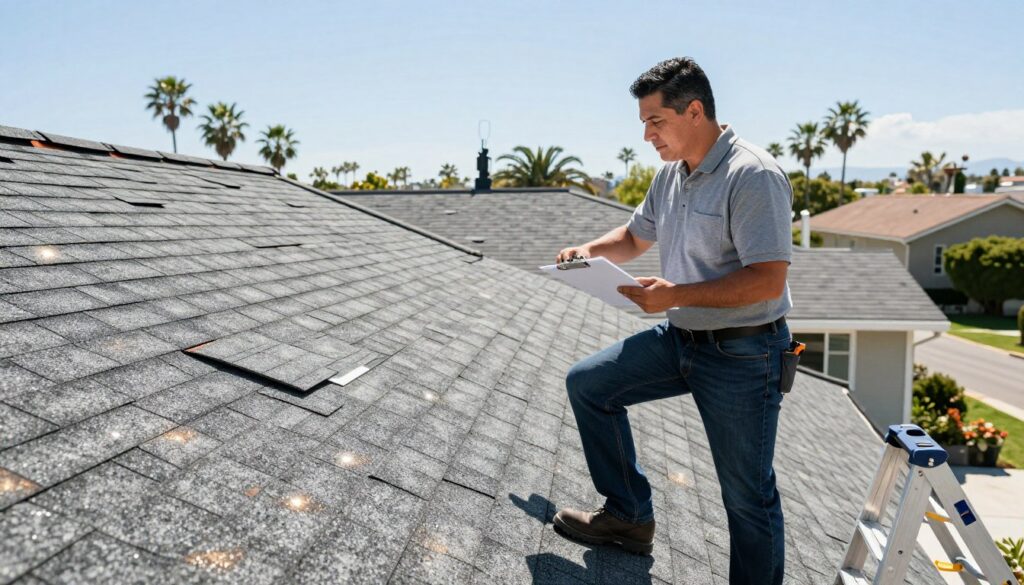
Make your decision based on references, proof of insurance, and a written plan. The right partner ensures durable roofs and reliable roofing systems for your long-term needs.
Strategic Shading Techniques for Home Cooling
Adding shade where sunlight hits hardest can make a clear difference in indoor comfort and energy use.
Install awnings, pergolas, or shade sails to block direct rays at windows and entries. These elements lower the surface temperature on nearby roofing and cut solar gain into the attic.
Awnings over entryways and windows cool the air next to your home, easing demand on your air conditioning and trimming energy bills.
“Strategic shading and reflective materials act together to create a thermal barrier that keeps your home cooler on the hottest day.”
- Shading reduces the load on shingles and other roofing materials.
- Reflective awning fabrics and light-colored pergola finishes help reflect sunlight and reduce heat absorption.
- Less solar load means lower cooling costs and longer material life.
| Shading Option | Benefit | Best Use |
|---|---|---|
| Awnings | Immediate window shading, lowers indoor temperature | Entries and sun-facing windows |
| Pergolas with reflective finish | Blocks sun, pairs with cool roof and coating strategies | Patios and roof-adjacent areas |
| Shade sails | Flexible placement, low cost, quick install | Yards and parking areas |
| Vegetative shade (trees) | Long-term cooling, air filtration, energy benefits | South and west exposures |
Conclusion
Preparing your home ahead of peak sun helps control energy use and limits costly repairs later. A short plan of inspections, reflective coatings, and improved ventilation pays dividends over time.
Regular maintenance and timely professional checks spot wear early. Use reflective materials and smart airflow upgrades to slow material aging and cut cooling load.
Don't wait for visible problems. Take proactive steps that match your home's specific needs and budget. Contact Outer Shield Roofing for a consultation and a clear plan you can trust.