
The typical commercial roof in Southern California can last between 20 to 70 years. This depends on the materials used and how well it's installed. Heat-reflective properties and regular upkeeps play a big role in how long roofs last.
For property owners, knowing the lifespan of a commercial roof is key. It helps protect their investments against the area's unique weather, like strong UV rays and rare severe storms. Services like those from Outer Shield Roofing help roofs stay in top shape.
Picking the right materials and following a strict maintenance plan can make a commercial roof last longer. This means better protection and more peace of mind for you.
Key Takeaways
- The lifespan of commercial roofs in Southern California ranges from 20 to 70 years, depending on materials and installation quality.
- Heat-reflective, or cool roof materials, are highly recommended to extend the roof's life span.
- Regular maintenance is essential for maximizing roof longevity.
- Severe weather and intense UV exposure can affect roof longevity, making professional care crucial.
- Expert services like those from Outer Shield Roofing ensure roofs maintain their integrity over time.
Understanding the Lifespan of Commercial Roofs
To extend the life of your commercial roof, knowing what affects its lifespan is key. The type of material, weather conditions, and how well you maintain the roof play big roles. Knowing this helps you make smart choices for your roof's long life and good performance.
Factors That Influence Roof Longevity
Many things affect how long a commercial roof can last. The material quality, how often it's maintained, the climate, and how well it's installed are important. Roofs in harsh weather, like constant sun or lots of rain, don't last as long. Keeping up with maintenance and repairs helps fight these issues and keeps your roof in good shape longer.
Common Roofing Materials and Their Durability
Roofing materials vary in how long they last. For example:
- Built-Up Roofing (BUR): This type has many layers, offering strong protection, and can last up to 40 years with proper care.
- Metal Roofing: It's very durable and can last over 50 years, especially in mild climates.
- Single-Ply Membranes: PVC and TPO membranes can last about 30 years if they're well-maintained.
Choosing the right materials is critical for your roof's resilience and lifespan. It's important to consider your needs and the local climate when selecting. At Outershield we use products that are at the atmost quality to insure the longest lasting roofing experience for your home.
At OuterShield Roofing, we take pride in delivering reliable roofing services backed by honest communication and quality workmanship. Our commitment to doing the job right has earned us 28 five-star reviews on Google, reflecting the trust homeowners place in our team.
Customers consistently highlight our professionalism, attention to detail, and dependable service throughout their roofing projects. This strong reputation is something we work hard to maintain on every job.
You can read what customers are saying about their experience with us here:
https://share.google/UfvJfQ55a2UQFsJCs
Learn more about our services at:
https://outershieldroofingcorp.com/
Average Lifespans of Different Roof Types
Knowing how long different roofs last helps with planning investments. Here's a quick guide:
| Roof Type | Average Lifespan |
|---|---|
| Built-Up Roofing (BUR) | 20-40 years |
| Metal Roofing | 40-70 years |
| Single-Ply Membrane (TPO/PVC) | 20-30 years |
| Modified Bitumen | 10-25 years |
Choosing the right roof type for your needs helps improve its durability. Select materials that suit your climate and how much maintenance you can do. This ensures a solid roof over your business and a better investment return. Check out our free tool, to learn when to replace your roof.
What Roofing Materials Last Longer For Commercial Roofs
| Roof Material | Typical Lifespan | Replacement Risk in SoCal | Why |
|---|---|---|---|
| Built-Up Roofing (BUR) | ~15 years | High | UV and heat dry out asphalt layers |
| Modified Bitumen | ~15 years | High | Expansion and contraction from heat |
| TPO | ~20 years | Medium | UV resistant but seams can weaken |
| PVC | ~25 years | Low | Excellent UV and chemical resistance |
| EPDM | ~20 years | Medium | Heat exposure can accelerate aging |
| Spray Foam (SPF) | ~20 years | Medium | Requires recoating due to UV |
| Metal Roofing | ~40+ years | Very Low | Reflective and highly durable |
Indicators It Might Be Time for Replacement
Knowing when to replace a commercial roof can prevent expensive repairs and damage. Look out for these signs:
Signs of Aging Roofs
Old roofs show clear signs. Signs of aging roofs include discoloration, brittleness, and losing shingle granules. These signs mean the roof materials are breaking down and might not protect well.
Damage from Storms and Weather Events
Storm damage on roofs is critical in deciding to replace your roof. Severe weather like rain, hail, and wind can damage the structure, leading to leaks. Checking your roof after storms is important to find and fix these problems.
Cracked Roof Tiles and Missing Shingles
Visible damage such as cracked roof tiles and missing shingles shows your roof needs care. This damage affects both the roof's look and function, increasing the risk of leaks and more damage.
It's important to spot and handle these signs early. Working with reliable roofers like Outer Shield Roofing can provide thorough evaluations and smart fixes, keeping your property safe.
Check out our free tool to understand how when you should replace your roof.
Chart For Understanding When To Repair And When To Replace
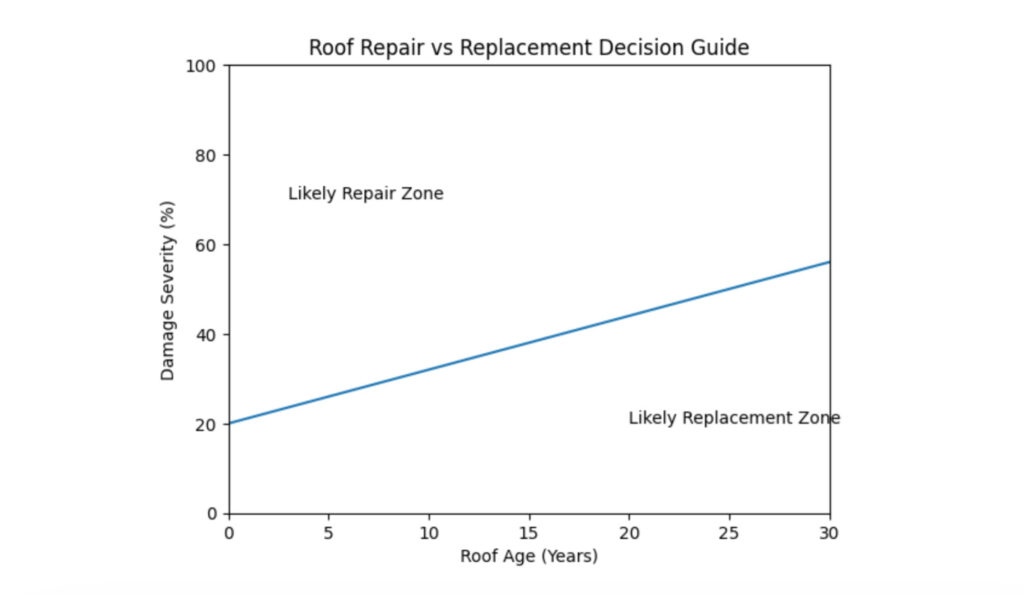
- Newer roofs (0–10 years) → Usually repairable unless major structural damage exists.
- Mid-life roofs (10–20 years) → Depends on the extent of damage.
- Older roofs (20–30 years) → Replacement is often the better long-term investment.
If a roof is relatively new and the damage is limited to a small section, repairs are usually the most cost-effective option. However, when a roof becomes older or has widespread damage affecting large areas, a full replacement is often recommended to prevent recurring problems and additional repair costs.
The Importance of Regular Roof Inspections
It's crucial for homeowners to get regular roof inspections to keep their roofs in top shape. Checking for problems early, like flashing failures or wear in the underlayment, can save a lot of money. It prevents bigger issues down the road. By looking over your roof regularly, you protect your home from unexpected damage.
What to Expect During a Roof Inspection
Inspectors do a thorough check during a roof inspection. They look at the surface, drainage, and structure closely. They search for any damage, wear, or water issues. This close look helps find problems early, making repairs quicker and keeping the roof strong.
Identifying Flashing Failures and Underlayment Wear
Flashings and underlayment are key parts that get looked at during inspections. Flashing stops water from getting in by sealing off areas. But it can get damaged or move out of place. The underlayment is another layer that keeps moisture out. Catching issues with these parts early can stop major roof damage. Learn more about putting a good roof over your head by checking out our essential guide.
The Role of Inspections in Maintenance
Doing a roof inspection every year is super important for keeping your roof in good condition. It helps find small problems before they grow into big ones. This upkeep means your roof will last longer, fight off weather, and work well for many years.
| Inspection Component | Common Issues Detected | Recommended Actions |
|---|---|---|
| Surface Examination | Cracks, leaks | Prompt repair, sealing |
| Drainage Systems | Blockages, corrosion | Cleaning, replacement |
| Structural Inspection | Flashing failures, underlayment wear | Repair, preventive maintenance |
Roof Maintenance Strategies for Longevity
Investing in smart roof maintenance is key for a longer-lasting commercial roof. Doing regular checks can stop big repair costs and keep your roof strong. Here's how to ensure your roof stays in great shape:
Routine Maintenance Tips
Some simple care tips can greatly impact your roof's life. It's vital to clean gutters and downspouts to stop water damage. Keep debris and leaves off to avoid roof problems. Making sure to check for small damages often and fix them early is wise.
Professional Maintenance Services Offered by Outer Shield Roofing
Outer Shield Roofing provides expert services to maintain your roof's best state. Their skilled team performs in-depth checks and maintenance, keeping your roof in top condition. Their knowledge helps you spot and repair issues quickly, preventing leaks.
When to Call for Roof Leak Repair
Knowing the right time to address roof leaks is crucial to stop major damage. If you see water stains on your ceiling or walls, you need help fast. Quick action is necessary to save your roof and home from worse harm.
Repair vs. Replacement: Making the Right Choice
Deciding whether to fix or swap your roof involves checking it well. It's important to know how bad the damage is. This helps homeowners decide wisely. Though repairs might look cheaper at first, replacing the roof may be more worth it in the end.
Assessing the Extent of Damage
Expert inspections are a must to understand roof damage. They look at both visible and hidden problems. A few leaks or missing shingles might just need a quick fix. But big problems, like serious water damage, might mean you need a new roof.
Cost Considerations for Roof Repair
When you're thinking about fixing or replacing, costs are a big deal. Initially, repairs are cheaper than getting a new roof. But, if you keep needing repairs, it might end up costing more. Companies like Outer Shield Roofing can help figure out the costs for both options.
Long-Term Benefits of Roof Replacement
Choosing a new roof has benefits beyond just money. It can raise your home's value and make it more energy-efficient. Plus, you'll get a new warranty, which is reassuring. Investing in a new roof cuts down on future repair bills. It also protects your home better against the weather.
Understanding Common Roofing Problems
Spotting common roofing issues early can save a lot of time, money, and headache. Regular check-ups are key to stopping small problems from turning into big repairs.
Roof Leaks After Heavy Rain
Heavy rain puts your roof to the test, often showing any weak spots that might cause leaks. If not fixed, these leaks can damage your home's interior badly. By inspecting your roof often, you can find and fix these issues before the rain starts.
Heat Damage to Roofing Materials
In places like Southern California, the intense sun can really harm your roof. Over time, the heat can make materials like shingles brittle and less effective. For example, asphalt shingles might crack or warp, which can shorten your roof's life. Watching for heat damage and using things like reflective coatings can help protect your roof.
The Consequences of Ignoring Minor Issues
Even small roofing problems can get worse if you ignore them. If not fixed, they can hurt your home's structure, lead to mold, and make your energy bills go up because your insulation isn't working right. Fixing problems quickly not only keeps your roof in good shape but also makes your home safer and more efficient.
Outer Shield Roofing has expert tips and solutions for your roofing needs.
Selecting a Reliable Roofing Contractor
Choosing the right roofing contractor is key for homeowners wanting a strong and safe roof. You'll need to look at different factors to find a trustworthy contractor. It's important to know what makes a professional stand out.
Credentials to Look For
Start by checking a contractor's credentials. Look for proper licensing, insurance coverage, and experience. Having these credentials means they are skilled. It also gives you peace of mind knowing your project meets local rules and is safe.
Questions to Ask Potential Contractors
Talking in detail with potential contractors helps you choose wisely. Ask about how they solve roofing problems, their experience, and their pricing. Clear answers show they value transparency and customer happiness. For an interactive chat, use roofing virtual consultations some offer.
How Outer Shield Roofing Stands Out
Outer Shield Roofing is known for being reliable, honest, and skilled. They focus on making customers happy and doing great work. They pick contractors carefully and have a great track record. They're known for clear talks and services that match what you need.
Resources for Further Roofing Information
Looking for info on roof upkeep or makeover in Hemet, CA? You'll find lots of helpful insights from roofing experts. Joining groups like the National Roofing Contractors Association (NRCA) and the Roofing Contractors Association of California (RCAC) is smart. They share the latest on good practices, new materials, and tech advancements in roofing.
Using these resources keeps you up-to-date with industry trends and novel ideas. It's a great way to learn.
Industry Associations and Their Importance
Being part of reputable roofing groups brings big benefits. The NRCA offers guides on how to install roofs safely and maintain them. The RCAC gives advice specific to California's weather, helping your roof last longer. This info lets you make smart choices for your roofing needs.
Homeowner Insurance Resources
Knowing about insurance for your roof is essential. The California Department of Insurance has guides on insurance policies. These include storm damage and wear and tear coverage. Getting to know your policy helps you deal better with insurance companies. Reviewing your insurance regularly is good to keep it updated with your roofing situation.
Additional Reading on Roofing Solutions
If you want to learn more, there's lots of material online about different roofing methods. For those interested in concrete tile roofs, there's a detailed guide here. Reading trusted sources improves your knowledge. This helps you make decisions that keep your roof in top shape for a long time.