
Surprising fact: roof surfaces in Southern California have been measured above 140°F on peak summer afternoons (roof-surface, not air temperature), a level of heat that accelerates wear, shortens service life, and raises cooling bills.
Hemet homeowners need clear, local solutions that protect their property and cut energy costs. Our family-run roofing company combines decades of Riverside County experience with up-to-date California Title 24 knowledge to recommend durable, energy-smart roofing materials for this climate.
Outer Shield Roofing delivers honest consultations, accurate estimates, and skilled installation whether you need a focused roof repair or a full replacement. We specialize in asphalt shingle and concrete tile systems that balance long-term durability and energy efficiency under intense sun.
Count on our team for thorough inspections, quick leak repair, and workmanship backed by a clear warranty. For homeowners prioritizing budget and speed, see our asphalt shingle installation guidance.
Key Takeaways
- Hemet’s heat and sun should drive your choice of roofing materials and ventilation strategy.
- Energy-efficient roofing systems lower cooling loads and help meet Title 24 requirements.
- Asphalt shingles (cost-effective) and concrete tile (long-lasting) are top local options.
- Regular inspections and timely repairs prevent small issues from becoming major jobs.
- Trust a licensed, local crew for accurate estimates, quality workmanship, and warranty-backed roofing services.
Understanding Hemet’s Unique Roofing Climate
Hemet’s hot summers and sudden storms shape how roofs age and what repairs you’ll need. Typical summer highs often push roof surfaces far above ambient temperatures, and seasonal downpours can expose weak spots quickly — so targeted, local guidance matters. Our roofing company provides focused inspections and practical solutions designed for Hemet properties.
Impact of High Temperatures
Intense sun and repeated heat cycles cause roof materials to expand and contract; over time that movement accelerates cracking, sealant failure, and granule loss on asphalt surfaces. Proper attic ventilation and reflective materials reduce attic temperatures, slow material degradation, and lower cooling energy use.
Action step: Have your contractor evaluate attic ventilation (soffit intake + ridge/exhaust), check insulation levels, and recommend reflective coatings or materials suited to Hemet’s heat.
Managing Seasonal Rainfall
Hemet’s occasional heavy rains test gutters, valleys, and underlayment. Poor drainage or blocked gutters lets water pond and eventually reach the roof deck, causing hidden rot and leaks that often show up weeks later as interior stains.
Action step: Schedule a post-storm inspection to clear gutters, check valleys and flashings, and repair underlayment failures before they become a larger roof repair job.
| Climate IssueTypical EffectRecommended Action | ||
| High daytime heat | Thermal expansion, aging shingles | Improve ventilation; use heat-resistant systems |
| Temperature swings | Cracks and seal failures | Choose durable flashing and regular inspections |
| Heavy seasonal rain | Ponding and leaks | Ensure proper gutters, underlayment, and prompt maintenance |
| Long-term exposure | Shortened service life | Plan replacements with your local team and trusted local services |
Example: a Hemet homeowner who delayed gutter cleaning after a summer storm discovered deck rot under the underlayment — the subsequent repair doubled the job size and cost. Don’t wait: book an inspection now to protect your roof and avoid larger future jobs.
Best Roofing Materials Hemet CA Homeowners Should Consider
Choose roofing materials that balance longevity, fire resistance, and energy efficiency so your property performs well in Hemet’s hot, sunny climate.
Asphalt shingles are the practical choice for many homeowners: lower upfront cost, straightforward installation, and decent heat resistance. In Southern California they typically last about 15–25 years depending on product grade and ventilation; good-quality asphalt with proper attic airflow can stretch toward the high end of that range.
Concrete tile delivers superior longevity and fire resistance — expect roughly 30–50 years when installed correctly. Tile’s thermal mass and natural airflow beneath panels help with energy efficiency, making it a strong long-term value for homeowners planning to stay 10+ years.
“Professional installation makes the difference between a short-term fix and a durable, warrantied roof.”
Outer Shield Roofing is a licensed roofing contractor that helps homeowners select the right materials for each job and follows manufacturer rules to preserve warranty coverage and workmanship quality. Our crew manages the full roofing project: inspection, material selection, installation, and final touch-up.
- If you plan to stay < 10 years or need a lower-cost option, consider asphalt shingles.
- If you want the longest lifespan and best fire resistance, choose concrete tile.
- If energy efficiency and lifespan are top priorities and budget allows, ask about metal or cool-roof systems (we discuss these in other sections).
Example homeowner scenario (approximate lifecycle cost over 20 years): asphalt shingles — lower upfront, potential replacement once; concrete tile — higher upfront, likely no full replacement and lower long-term maintenance. Request a tailored materials estimate to compare real numbers for your roof size and condition.
Material-selection checklist: roof age, expected years in home, roof pitch, structural capacity (tile is heavy), energy goals, and budget. Ready to compare options? Request a free materials estimate from our team and we’ll show side-by-side costs and long-term value.
The Role of Energy Efficiency in Local Roofing Systems
Reflective and well-designed roofing systems reduce attic temperatures and lower cooling demand on long, sunny Hemet days. That relief for your HVAC can translate into measurable energy savings and a more comfortable home.
Benefits of Reflective Roofing Materials
Reflective roofing materials and cool-roof coatings limit heat absorption by reflecting solar radiation away from the surface. In climates like Hemet, properly specified cool roofs and reflective metal panels commonly reduce attic temperatures and can lower summer cooling energy by roughly 10–25% depending on house construction and insulation levels (results vary by home).
- Improving energy efficiency reduces monthly utility bills and lowers peak HVAC load in hot weather.
- California Title 24 and local building codes set energy requirements for many reroof projects—choosing compliant systems protects your investment and avoids rework.
- Proper installation of reflective membranes, coatings, and insulated underlayment is critical; poor workmanship can erase expected savings.
- Our team recommends solutions (cool coatings, reflective metal, or insulated roof assemblies) based on your roof slope, orientation, and insulation to maximize performance.
“A correctly installed reflective layer can cut attic temperature significantly and extend the life of your roof.”
Quick decision guide:
- Want the lowest upfront cost and some efficiency gains — consider coated asphalt shingles with high solar reflectance.
- Want the greatest lifetime energy savings — consider reflective metal or a cool-roof system with upgraded insulation.
- Want long-term, passive cooling benefits — concrete or clay tile with reflective treatments and ventilation can help.
Example: on a typical Hemet home, lowering attic temperatures by 20°F through a cool-roof upgrade can reduce summer cooling use noticeably — homeowners often see savings in the range above. Ask us for a site-specific estimate and a simple payback calculation that includes potential Title 24 compliance and any available incentives.
Ready to lower your energy bills? Schedule an energy-efficiency roof consultation with our team — we’ll evaluate roofing systems, materials, and insulation to recommend the best solution for your home and budget.
Identifying Common Signs of Roof Damage
Not all damage is obvious — spotting early warning signs saves time and money. Inspect your property when the weather is calm and use the checklist below to decide whether you need a simple repair or a larger roofing project. If you’re unsure, book a professional inspection.
Flashing Failures and Leaks
Flashing around chimneys, vents, and skylights can pull away, corrode, or lose sealant. Flashing failure is one of the most frequent causes of leaks after rain and is often visible as interior water stains.
If you see: rusted metal, gaps at roof penetrations, or water stains on ceilings — call for a professional roof repair and an inspection right away.
Granule Loss and Shingle Wear
Granules in gutters or bald spots on shingles indicate aging asphalt roofs. Granule loss reduces UV protection and exposes the asphalt layer to faster deterioration.
Check gutters and downspouts after strong winds or storms and photograph any granule accumulation for documentation.
Cracked Tiles and Structural Sagging
Missing shingles, cracked tiles, and sagging deck areas usually point to storm damage or long-term heat stress. These problems can let water reach the underlayment and decking, leading to rot.
Structural sagging is a safety concern — contact a licensed contractor to assess framing, underlayment, and load capacity before proceeding.
- If you spot missing pieces or cracked tiles after a storm, schedule an inspection within 48–72 hours.
- Water stains inside almost always require immediate attention to avoid structural harm.
- Our team spots flashing failures, underlayment wear, and heat-related damage common in this climate.
- Whether it’s a small job or emergency repairs, our crew provides reliable roofing services and clear next steps.
| Visible SignLikely CauseRecommended Action | ||
| Water stains on ceiling | Flashing failure or leak | Schedule roof repair and professional inspection |
| Granules in gutters | Aging asphalt shingles | Plan shingle replacement; improve ventilation |
| Cracked or missing tiles | Wind or heat damage | Repair tiles; check underlayment and flashing |
| Roof sagging | Deck rot or structural loss | Immediate contractor structural assessment |
What to photograph for insurance: close-ups of damaged shingles/tiles, photos of interior ceiling stains, shots of gutters with granules, and wide-angle images showing roof slope and problem areas. Don’t climb on a steep roof — take photos from the ground or use a drone/ladder safely.
Typical cost examples (Hemet area, ballpark): Minor shingle repair or flashing patch — $200–$800; local storm tile repair — $500–$2,500; full asphalt shingle replacement — $8,000–$15,000 (depends on roof size and complexity). These are typical ranges; request an on-site estimate for accurate pricing.
“Early inspections save money and extend the life of your roofs.”
Emergency repairs available: If you have active leaks or major storm damage, contact us for emergency tarping and prioritized repair scheduling — we’ll document damage for insurance and get your roof stabilized fast.
When to Choose Roof Repair Over Replacement
Deciding between a targeted roof repair and a full replacement starts with a clear assessment of damage, age, and long-term goals for your property.
If damage is localized — a few missing shingles, a small flashing leak, or a limited area of granule loss — a focused repair usually restores protection quickly, keeps costs down, and can add several more years of service life.
Consider a new roof when the system shows widespread wear, recurring leaks, significant decking issues, or when the assembly is near the end of its expected lifespan (for many asphalt roofs in hot climates that can be close to 15–20 years; tile and metal typically last longer). In those cases, replacement is the more reliable long-term solution and often the better value for homeowners staying in the home long-term.
Professional inspections help you decide whether need a repair or full replacement: a qualified contractor will identify root causes so the selected job fixes the real issue the first time and avoids repeat work.
- We provide both emergency repairs and full replacement services with written scope and cost estimates.
- Our consultations focus on cost-effective maintenance, lifecycle value, and honest assessment of whether repair or replace is best for your roof and budget.
- All work comes with a clear labor warranty and documentation to preserve manufacturer warranties when applicable.
| ConditionLikely ActionWhy | ||
| Few missing shingles | Repair | Localized, cost-effective fix; often no permit required |
| Small, isolated leak | Repair | Root-cause fix prevents escalation and delays replacement |
| Widespread wear, repeated leaks, or sagging | Replace | Long-term protection, code compliance, and improved energy performance |
Quick decision checklist: If damage is localized, roof age < 15 years (asphalt) — repair is often best. If roof age > 20 years, widespread granule loss, or structural concerns — request a replacement estimate.
Typical cost ranges (Hemet, ballpark): small repair $200–$1,200; flashing or localized leak repair $300–$1,500; full asphalt shingle replacement $8,000–$15,000 depending on size and complexity. Ask us for an on-site estimate to get precise numbers for your job.
Ready to decide? Get a free repair vs replacement estimate from our licensed contractor — we’ll evaluate your roof, explain permit requirements if replacement is needed, and provide a clear, written project plan.
The Importance of Professional Roof Inspections
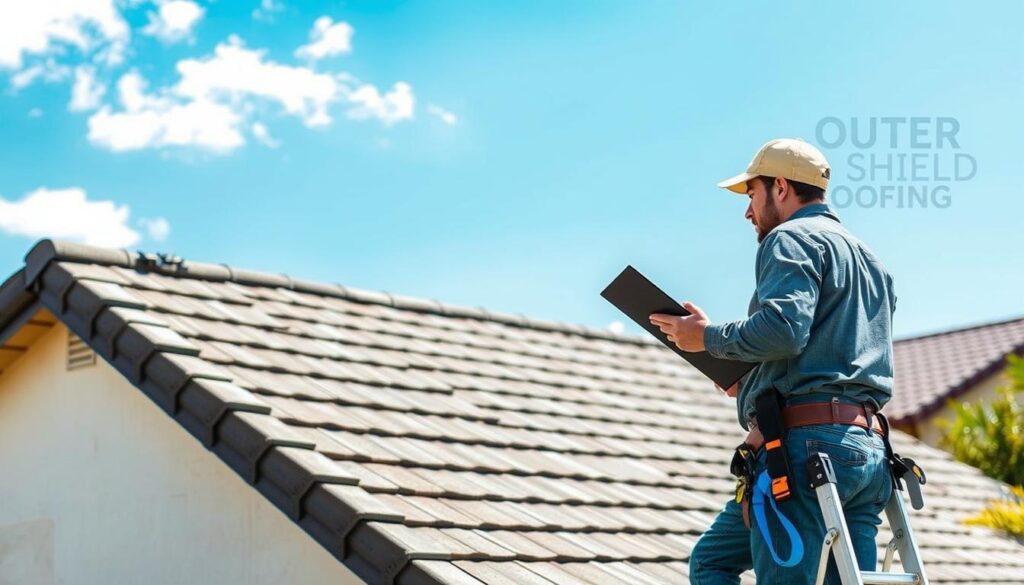
A yearly roof check uncovers small issues before they become costly emergencies — and always schedule an inspection after any major storm to catch new vulnerabilities early.
Preventive Maintenance Strategies
Regular inspections spot loose flashing, missing shingles, and granule loss before they force a larger roof repair. A proper inspection includes a roof walk (where safe), flashing checks, gutter and valley inspection, and attic ventilation and insulation assessment.
Simple maintenance extends service life: clear gutters, trim overhanging branches, remove debris, and replace deteriorated sealants to prevent water pooling and accelerated wear.
Our maintenance plans include a scheduled roof walk or visual inspection (safety permitting), photographic documentation, a written report with prioritized recommendations, and a clear estimate for any recommended repairs.
- Inspections catch small issues before they require major roof repair or emergency work.
- We provide scheduled maintenance services to keep your roof in peak condition across the seasons.
- Each inspection delivers a detailed report with photos and an accurate estimate for any recommended repairs.
- We focus on quality workmanship so repairs and installations meet warranty requirements and last for years.
- Local customers rely on our family-run company and experienced crew for dependable service and clear communication.
Inspection checklist (what our crew looks for): loose or missing shingles, granule loss, flashing condition at chimneys/vents, cracked tiles, gutter blockages, valley and penetration integrity, underlayment signs (when visible), and attic ventilation and moisture issues.
Example ROI: a routine inspection and minor repairs (often under $300) commonly prevent more extensive repairs that can cost $3,000+ if left unchecked — preventive maintenance is typically far cheaper than emergency replacements.
“Preventive maintenance is the most effective way to protect your home and preserve warranty coverage.”
Ready to lock in peace of mind? Enroll in an annual or bi-annual inspection plan with our team — we’ll send reminders, document each visit, and provide a transparent estimate for any work needed. Contact us to learn plan pricing and availability.
Navigating California Building Codes and Regulations
Meeting Title 24 and local building codes matters for every roof replacement or major upgrade — these rules set minimum energy efficiency, fire-resistance, and wind-uplift standards that shape product choice and installation methods.
Hire a licensed roofing contractor and you get help with permits, required inspections, and documentation so your project stays on schedule and avoids costly rework or failed inspections.
Compliance can also make some projects eligible for energy-related rebates or incentives; when followed correctly, codes protect safety and preserve the long-term value of your home.
Our company stays current on Title 24 updates and local permit requirements. We specify roofing systems and materials that meet state rules and perform well in Hemet’s climate.
“Proper installation to code preserves warranties and prevents avoidable safety issues.”
- We handle permit submissions and coordinate inspections so you don’t have to.
- We ensure installations meet Title 24 energy requirements and local building codes.
- Our contractors guide homeowners through approval steps, timelines, and documentation for each roofing project.
| RequirementWhy It MattersWhat We Do | ||
| Title 24 energy rules | Reduces attic heat and lowers cooling load | Specify compliant products, reflective solutions, and documentation for inspection |
| Local permit approvals | Ensures legal, safe installations | Prepare and submit plans; manage inspector coordination |
| Installation standards | Preserves warranty and structural integrity | Follow manufacturer and code-mandated methods; provide installation records |
What to expect in the permit process: permit application, plan review, scheduled inspections (during and after installation), and final sign-off — we manage each step and include the required paperwork in your written estimate.
Have questions about compliance or incentives? Ask us to include Title 24 compliance options on your estimate and we’ll show which systems meet code and which may qualify for rebates.
Protecting Your Home from Heat and Storm Damage
Both blistering sun and seasonal storms expose small roof faults that can quickly turn into costly leaks. Acting early with the right maintenance and emergency steps protects your property and your energy systems.
Act early. Regular inspections catch weak flashing, lost granules, and loose shingles before wind or heavy rain worsens the problem — reducing the need for major roof repair.
We use durable roofing materials and proven installation methods to limit heat stress and storm damage. For targeted advice on shielding your roof from extreme temperatures, see our guide on how to protect your roof from high heat.
- Preventive maintenance extends service life and reduces emergency repairs.
- Our team secures asphalt shingles, replaces failing underlayment when needed, and completes every job to code.
- We offer timely roof repair services after storms to stabilize damage and protect your home’s interior and energy performance.
“A quick inspection after a storm often saves more than a full replacement.”
| ThreatCommon SignRecommended Action | ||
| High heat | Cracked or curled shingles | Upgrade ventilation; inspect and repair shingles |
| High winds | Missing pieces, lifted flashing | Secure flashing; replace or repair loose shingles |
| Heavy rain | Ceiling stains, active leaks | Immediate roof repair, moisture check, and drying |
After‑Storm Checklist (quick priorities)
- Ensure safety first — don’t climb on a wet or steep roof. Photograph visible damage from the ground.
- Take temporary measures: tarping or temporary sealant to stop active leaks.
- Document damage for insurance (photos of interior stains, damaged shingles/tiles, and gutters).
- Call a licensed contractor for prioritized roof repair and emergency tarping if needed.
Emergency response available: If you have active leaks or major storm damage, contact our team for prioritized tarping, quick inspections, and a clear estimate for repairs — we’ll document damage for insurance and get your roof stabilized fast.
Choose a contractor and company that prioritizes inspections, clear estimates, and durable solutions. Learn more about our approach and recent projects in our blog posts.
Why Experience Matters for Your Roofing Project
Seasoned contractors anticipate structural surprises before they become expensive problems — and that local experience directly protects your schedule, budget, and warranty coverage.
Your roof protects the whole property, so choose a team with decades of local know-how. Our experienced crews combine practical Hemet-area experience with up-to-date code knowledge to deliver predictable results.
Experienced crews provide accurate estimates, stick to timelines, and handle hidden deck or framing damage without delays. That expertise reduces callbacks, shortens project schedules, and limits cost overruns on both small roof repair jobs and full replacements.
- Clear, written estimate before every job, including scope, materials, timeline, and permit requirements.
- Licensed contractors familiar with local code and permit procedures to speed approvals.
- Work backed by a solid workmanship warranty plus manufacturer warranties where applicable.
“Experience turns tough problems into reliable, long-term solutions.”
| What Experience ProvidesBenefit to YouTypical Outcome | ||
| Accurate scope and estimate | Fewer surprises | Project completed on budget |
| Skilled crew and proven workmanship | Fewer callbacks | Longer roof service life |
| Local code and permit knowledge | Faster approvals | Compliant, warrantied work |
Mini case: hidden deck repair avoided a major delay
During a planned shingle replacement, our crew discovered partial deck rot under the underlayment. Because the contractor included a thorough pre-removal inspection and plan, the team quickly addressed framing repairs, adjusted the timeline by one day, and prevented a potential structural failure — a classic example of how experience saves time and money.
Want confidence on your next roofing job? Request a written estimate and references from our team — we’ll document expected scope, required permits, and warranty details so you can compare bids with clarity.
Conclusion
Smart decisions today reduce emergency repairs and extend a roof’s service life.
Investing in quality materials, proper ventilation, and routine inspections protects your property from Hemet’s heat and seasonal storms. Schedule regular inspections to catch issues early and avoid costly emergency roof repair or premature replacement.
Whether you need a small repair or a full new roof, our team delivers clear, written estimates and dependable roofing services tailored to your home and budget. Learn more about long-lasting options in our concrete tile installation guide.
- Next steps: 1) Inspect (or schedule our inspection), 2) Get a written estimate, 3) Compare options and timelines.
- We provide transparent project plans, permit support, and workmanship backed by documentation so you know what to expect.
Ready for a free estimate in Hemet? Call our local team today or click to schedule a convenient inspection — get an accurate quote, references, and a timeline for your roofing project. Count on a licensed roofing company that treats every job with care and delivers quality workmanship so your roof stays safe and energy efficient.