
Quick note: routine roof inspections significantly reduce the chance of major water damage — homeowners who inspect seasonally report far fewer costly repairs.
You live in a part of Southern California where long, hot summers followed by sudden fall rains can expose hidden roof problems. Outer Shield Roofing provides local roof maintenance and repair services across Hemet, Temecula, Murrieta, Menifee, Moreno Valley, Riverside, and Fallbrook.
Use this simple fall roof maintenance checklist to keep shingles and granules doing their job. A short exterior check can reveal system weaknesses early and prevent expensive roof repairs down the line.
Our team pairs professional roofing knowledge with straightforward, homeowner-friendly tips. For step-by-step local guidance and product recommendations, see our blog posts.
Key Takeaways
- Seasonal inspections spot weak points before water can enter and cause major damage.
- Check shingles, gutters, flashing, and attic ventilation to protect your home’s primary barrier.
- Outer Shield Roofing serves Hemet and neighboring communities with local roofing expertise.
- Professional guidance helps you choose the right products and maintenance for long-term rooftop protection.
- Visit our blog for practical tips and local maintenance checklists tailored to Southern California weather.
Why Seasonal Roof Care Matters
Proactive seasonal attention helps your rooftop resist UV stress and nighttime contraction.
In Hemet and surrounding Southern California communities, long hot days followed by cool nights cause constant expansion and contraction in roofing materials. These temperature swings and changing weather gradually weaken shingles, underlayment, and sealants—small splits grow, flashing can loosen, and moisture finds its way in.
Regular roof maintenance focuses on those early, localized problems so they don't become bigger, more expensive repairs. A timely inspection keeps your roofing system in good condition and extends the useful life of shingles and related materials.
- Protects shingles: Catch curling, cracking, or granule loss early to avoid premature material failure.
- Extends lifespan: Seasonal maintenance preserves the roof so it stays in good condition year-round.
- Peace of mind: Fixing small problems now reduces the chance of costly roof repairs later.
Three quick seasonal checks: inspect shingles, check attic ventilation, and clear gutters. Take the time this fall—one short inspection can prevent big problems and save time and money down the road.
Essential Fall Roof Maintenance Checklist
A quick visual routine catches small issues before they become expensive roof repairs.
Start with an exterior walkaround: scan the roofline from the ground and note any loose or missing shingles, bare spots with granule loss, and torn or separated flashing near chimneys, vents, and walls.
Check gutters and downspouts next. Remove leaves and debris so water can drain freely and won’t back up under shingles. In Hemet, where late‑summer storms can wash extra debris onto roofs, inspect gutters after heavy winds. Consider gutter guards or kick‑out flashing where gutters meet walls to reduce clogging.
Visual Inspection Techniques
If you avoid climbing, use binoculars from the ground to examine valleys, vents, roof penetrations, and exposed edges. Look for cracked shingles, curled tabs, and missing granules (granules collected in gutters are an early warning sign).
Open the attic to check insulation and attic ventilation. Proper attic ventilation helps control temperatures and moisture that accelerate shingle aging—review manufacturer guidance (for example, Owens Corning recommendations) when in doubt.
Safety Precautions for Homeowners
Safety comes first. Don’t attempt steep or wet roof work yourself; hire a licensed pro for any repairs that require walking on the roof.
- Do not walk steep, wet, or unstable roofing surfaces.
- Document any damage with date-stamped photos—email them to your contractor for a faster remote estimate.
- Schedule professional roof repair when you find missing shingles, exposed underlayment, torn flashing, or significant granule loss.
| AreaWhat to look forAction | ||
| Shingles | Missing pieces, curling, heavy granule loss | Repair or replace affected shingles to prevent water entry |
| Gutters | Clogged with leaves, granules, or debris | Clear debris; install guards if needed; test downspouts |
| Flashing & Penetrations | Cracks, separations, loose pipe boots | Reseat or seal flashing; hire a pro for flashing repairs |
| Attic | Blocked vents, damp insulation, uneven insulation depth | Improve ventilation and insulation to protect the roofing system |
Identifying Common Signs of Roof Damage
A careful inspection lets you spot early wear so you can repair it before water does major damage.
Detecting Missing Shingles and Granule Loss
If you see missing shingles or heavy granule buildup in gutters, act quickly: these are early warnings that the shingle surface has lost UV protection and is more vulnerable to water. Photograph bare spots and any granules collected in downspouts (date-stamped images help when you contact a contractor).
When you find these signs, do a short follow-up inspection of adjacent shingles and the attic for stains—if you notice interior damp spots, schedule roof repairs within two weeks.
Recognizing Cracked Tiles
Cracked or broken clay or concrete tiles allow moisture into the underlayment. Walk the perimeter and scan valleys and areas around vents and chimneys for shifted or cracked tiles.
When you spot cracked tiles, replace the broken pieces promptly and check nearby flashing and pipe seals. If multiple tiles are affected, call a pro to evaluate whether more extensive repair or replacement is needed.
Signs of Heat Damage
Heat and UV exposure often make shingles brittle, causing curling, splitting, or cupping. These problems accelerate granule loss and shorten shingle life—if you observe widespread curling, get a professional inspection to determine whether targeted repairs or a roof replacement is the best option.
Warranty status matters. Before committing to large work, confirm what your product and workmanship warranties cover and whether maintenance records or documented inspections are required to keep coverage valid.
| SignWhat it meansRecommended action | ||
| Granule loss | UV wear; reduced surface protection | Document with photos; inspect surrounding shingles; patch or replace as needed |
| Missing shingles | Immediate water entry risk | Schedule roof repairs quickly; protect attic if interior leaks appear |
| Cracked tiles | Localized breach allowing moisture | Replace tiles; inspect flashing and pipe seals |
| Debris near flashing | Traps moisture at critical points | Clear debris and reseal or replace flashing; call a pro if sealant is failing |
The Importance of Attic Ventilation and Insulation
Balanced attic airflow keeps temperatures steady and helps roof materials last longer.
Proper attic ventilation prevents warm, moist air from accumulating in the attic where it can cause mold, rot, and shortened material life. Quality insulation reduces heat transfer into the attic that can warp shingles and accelerate granule loss.
In Hemet’s hot summer days and cooler nights, a balanced attic system is especially important: it stabilizes attic temperatures, lowers stress on shingles, and reduces the chance of moisture-related problems after seasonal rains. (Manufacturer guidance, such as Owens Corning recommendations, emphasizes good ventilation paired with adequate insulation for best results.)
Outer Shield Roofing installs ventilation products and insulation designed to regulate attic temperatures and limit moisture. We also inspect soffits, ridge vents, and gutters to ensure airflow paths are clear so the whole roof system performs as intended.
- Optimize airflow: clear vents and soffits so the attic stays dry and material wear slows down.
- Control temperatures: proper insulation and ventilation reduce shingle stress from heat transfer.
- Manage moisture: ensure bathroom and dryer vents exhaust outdoors and remove obstructions that trap humidity.
Attic quick‑check: look for damp spots, musty smells, blocked vents, and uneven insulation depth. These simple checks take little time but can prevent bigger roof and attic problems—schedule a professional inspection if you find issues.
Managing Debris and Gutter Health
When runoff can't move freely, trapped moisture shortens shingle life and invites damage.
Keep gutters clear so water exits your rooftop quickly. Leaves, seed pods, and branches hold moisture against shingles and flashing; that trapped moisture accelerates aging and increases the risk of water intrusion and insulation damage.
Outer Shield Roofing recommends cleaning gutters at least twice a year—typically in spring and again in fall before the rainy season in Hemet. After late‑summer winds or storms, check gutters for extra buildup. Use a gutter scoop, flush downspouts with a hose, and test flow to confirm drainage.
Preventing Moisture Buildup
Clean gutters and proper attic ventilation work together to stop moisture from accumulating at eaves and in the attic. Consider zero‑penetration rooftop supports for HVAC or solar equipment to limit new roof penetrations that collect debris and trap water.
- Professional service: scheduling a pro reduces the risk of missed spots and protects insulation and roofing materials.
- Targeted tools: use hand scoops and low‑pressure flushing to remove organic buildup without stripping protective granules.
- Seasonal schedule: plan cleaning in spring and fall, and check again after heavy winds or storms.
| IssueCauseActionRecommended Frequency | |||
| Clogged gutter | Leaves, seed pods | Clear channels; install guards | Twice a year (or more if near trees) |
| Debris near flashing | Trapped organic matter | Remove debris; reseal flashing | Inspect each season |
| Equipment debris | Poor rooftop supports | Use zero-penetration supports | When installing gear |
Inspecting Flashing and Roof Penetrations
A tight seal around each penetration is the single best defense against leaks after heavy rain or other seasonal weather.
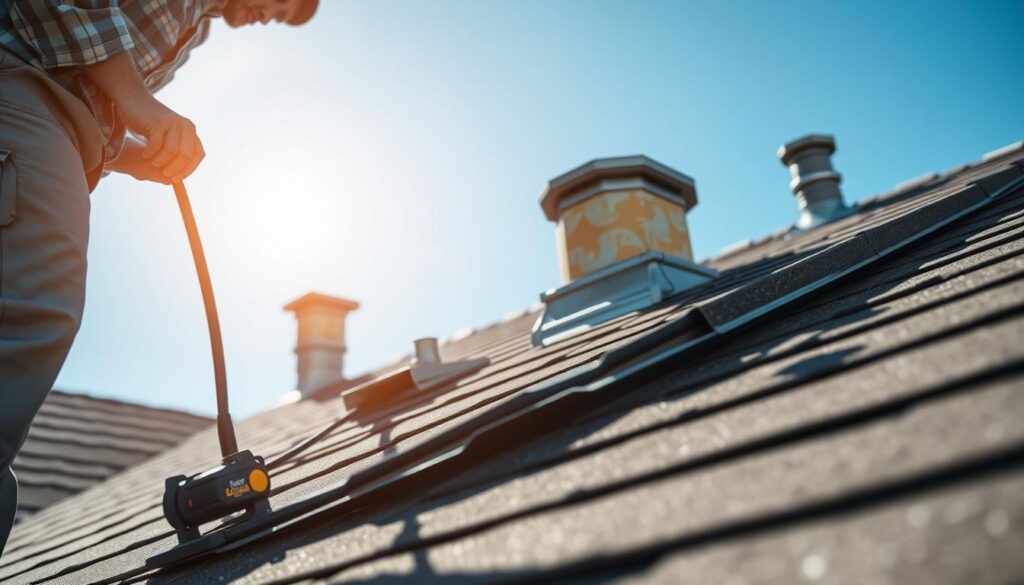
Flashing creates the watertight connection around pipes, vents, skylights, and other roof penetrations. If flashing corrodes, separates, or the pipe boots crack, water can enter the attic and damage insulation and framing.
Outer Shield Roofing inspects every flashing point and pipe support on each roof. We check for rust, loose fasteners, cracked sealant, and debris that can trap water or abrade flashing materials.
“Protecting each penetration protects the whole rooftop — prevention beats repair.”
- If you see rust or a gap at a flashing seam, photograph it and schedule a repair within two weeks to avoid leaks.
- We use high-quality sealants and correctly sized pipe boots to close gaps around vent and plumbing flashings.
- Zero-penetration supports (for equipment) reduce new roof penetrations and limit debris collection that leads to leaks.
- If flashing or pipe boots are damaged, you may need professional repair or replacement to keep the home watertight—don’t delay.
| IssueWhat to checkAction | ||
| Corroded flashing | Rust, cracks at the seam | Replace flashing; reseal adjacent shingles |
| Loose pipe supports | Wobble or gap at base | Install zero-penetration supports; seal edges |
| Debris buildup | Leaves or granules near penetrations | Clear debris; inspect for hidden leaks |
When to Choose Repair Versus Replacement
Deciding between a targeted repair and a full replacement begins with a clear inspection of remaining material life and hidden damage.
Choose repair when damage is localized — a few missing shingles, a damaged pipe boot, or a small area of flashing failure. Targeted repairs are lower cost, extend the life of a sound roof, and address immediate leaks without replacing the entire system.
If you observe widespread granule loss across large roof sections, repeated leaks in multiple places, or structural issues like decking rot or sagging, a new roof is often the more durable, cost‑effective long‑term solution. Outer Shield Roofing evaluates the extent of damage and the expected remaining life of your roofing products to recommend the best path.
We check warranty status and review flashing, pipe seals, and underlayment so repairs comply with manufacturer and workmanship requirements. If recurring leaks persist or repair costs approach replacement costs, you may need a new roof to protect your home interior.
- Repair: best for isolated issues, quick fixes, and when warranty or product life supports repair.
- Replacement: recommended for pervasive aging, frequent problems, or major material failure.
Ask your inspector: “How much of the roof shows active granule loss? Are leaks isolated or recurring? What does my warranty cover?” Request a written repair vs. replacement estimate so you can compare costs and timelines.
Selecting a Professional Roofing Contractor
Hire a local, licensed team that uses industry-standard inspection forms and documents findings clearly. Outer Shield Roofing records every site visit with an inspection checklist and photos so you can see recommended repairs and understand the scope of work.
You deserve a contractor who explains warranty implications, provides clear photo documentation with estimates, and answers questions about materials and expected service life. That transparency helps protect your coverage and guides the decision between targeted roof repairs and a new roof.
We serve Hemet, Temecula, Murrieta, Menifee, Moreno Valley, Riverside, and Fallbrook. Our crew installs and repairs asphalt shingle and concrete tile roofs, handles roof leak repair, and completes full roof replacement projects to local code with documented workmanship and product information.
A few practical questions to ask any contractor: Do you carry license and insurance? Which products and warranties do you recommend? Will you provide a written timeline and cleanup plan? For example, ask to see the inspection checklist and photo documentation that will accompany your estimate. Learn more about proper asphalt installation in our guide: asphalt shingle installation.
“A documented inspection protects your warranty and gives you confidence in every repair decision.”
| ServiceWhat we documentBenefit | ||
| Roof inspections | Checklist, photos | Clear scope for repairs and warranty support |
| Roof repairs | Material list, repair notes | Durable fixes and transparent pricing |
| New roof | Installation plan, warranty terms | Long-term protection and value |
For seasonal guidance and homeowner-friendly inspection tips, see our linked checklist: inspection tips for homeowners. To schedule a Hemet inspection, contact us for a documented assessment and clear recommendations.
Conclusion
A short inspection now saves time, money, and stress later.
Maintaining your roof in good condition is the most effective way to protect your home from Southern California weather. Follow a fall maintenance checklist—inspect shingles, check flashing and attic ventilation, and clean gutters—to catch small issues before they become costly roof repairs.
Outer Shield Roofing offers professional roof maintenance and repair services across Hemet and nearby communities. Proactive inspections, documented findings, and timely repairs are the best path to keep your roof in good condition and extend the life of roofing materials.
Ready to schedule a documented inspection or need targeted roof repair? Call now to book a Hemet inspection and get a clear repair vs. replacement recommendation.